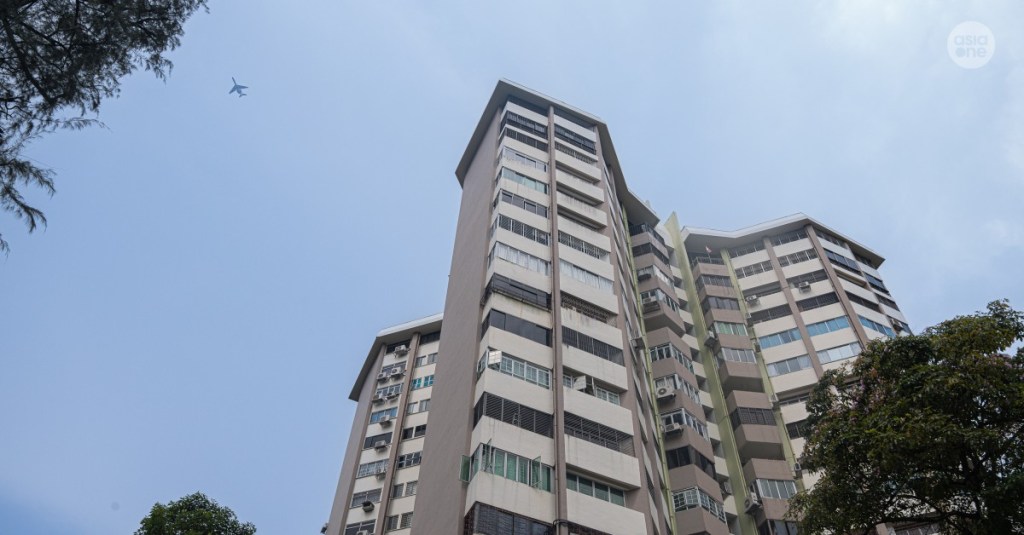
The Ministry of National Development (MND) is looking at ways to improve governance, liveability and maintenance in strata-titled properties such as apartments and condominiums, said Second Minister for National Development Indranee Rajah.
Indranee, who is also Second Minister for Finance and Minister in the Prime Minister’s Office, noted concerns from Management Corporation Strata Title (MCSTs) and unit owners about rising maintenance costs, ageing facilities, and the challenges of collective decision making to make improvements.
“We must address these to ensure that these developments continue to be liveable and meet residents’ needs, especially for our seniors,” said Indranee during MND’s Committee of Supply debate on Wednesday (March 4).
The measures being reviewed to strengthen the Building (Strata Management) Act are: helping MCSTs work towards accumulating adequate sinking funds; reducing consent thresholds for essential work; strengthening self-governance frameworks; and, clarifying the responsibilities of strata-titled stakeholders.
Limiting proxies, maintaining sinking funds
To make estate management fairer and more efficient, the Building and Construction Authority (BCA) is considering limiting the percentage of total proxies which can be held by each household.
It is also considering training for MCST council members to ensure that they can carry out their duties appropriately.
The considerations follow feedback on situations where a small group collects many proxy votes and controls decisions.
“This may not necessarily reflect the best interests of the majority of owners,” the second minister explained.
To address the issue of MCSTs not having sufficient sinking funds to carry out essential repair and replacements such as lifts, MND and BCA are also studying the feasibility of mandating MCSTs to submit and publish key information about their budgets and finances in a standard format.
“This would make it easier for unit owners and prospective buyers to understand and track the financial health and sinking fund adequacy of the MCSTs,” added Indranee.
Improving safety, accessibility of older buildings
On an ageing population and increased accessibility needs, Indranee noted that many older buildings were built in the years when accessibility standards were less well developed.
To better support seniors, persons with disabilities and families, she said that MND is reviewing potential enhancements to the accessibility fund (AF), which was introduced in 2007.
This provides co-funding to encourage private building owners to upgrade their properties with accessibility and universal design features.
However, the fund does not presently cover active ageing and dementia-friendly features.
“Under the review, we will consider expanding AF funding to cover senior-related features, such as senior-friendly fitness stations and dementia friendly signages.
“These enhancements aim to create living spaces that enable seniors to stay mobile and physically active, and continue living comfortably in familiar surroundings as they age,” Indranee said.
She added that MND is exploring the expansion of AF eligibility to include more private buildings, beyond those built before the implementation of the 1990 and 2013 Code on Accessibility.
It is also reviewing the amount of co-funding support with details to be announced at a later date.
Meanwhile, MND is also exploring providing co-funding support to eligible private building owners and operators to enhance the safety of older lifts and escalators.
The proposed funding support will be for selected essential safety features, such as those which regulate speed and movement. https://www.asiaone.com/singapore/mnd-cos-2026-mcst-review-accessibility-liveability-lifts-escalators

 2026NowNews