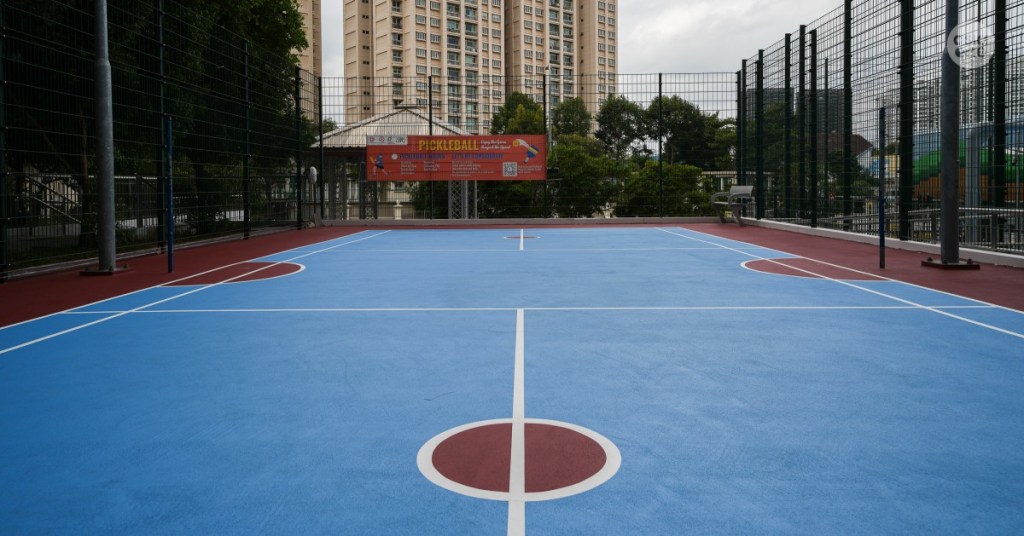
A total of 50 multipurpose courts for badminton or pickleball will be built over the next five years as part of plans by Sport Singapore (SportSG) to democratise sports in the community, said Acting Minister for Culture, Community and Youth David Neo.
Neo, who is also Senior Minister for Education, made the announcement at the Ministry of Culture, Community and Youth’s (MCCY) Committee of Supply debate on Thursday (March 5).
The 50 courts include the recently opened eight dual-use pickleball courts at The Kallang and soon-to-be completed eight pickleball courts at the Little India Bus Terminal.
The acting minister acknowledged that there may be issues relating to noise levels at courts near residential estates, adding that SportSG will work with community stakeholders to mitigate this.
Citing efforts by Mountbatten SMC to manage noise levels by using foam balls, Neo said this is an example of “We First” in action.
MCCY will also activate underutilised spaces such as those under viaducts so that facilities can be conveniently located to Singaporeans, but far enough to manage noise levels.
Heartland sporting spaces
Neo also updated the House on the status of sport facilities in the heartlands.
He said that renovation work on four facilities, including Delta Sport Centre and ActiveSG Sport Park @ Teck Ghee, have been completed, alongside 15 development projects such as Bukit Canberra.
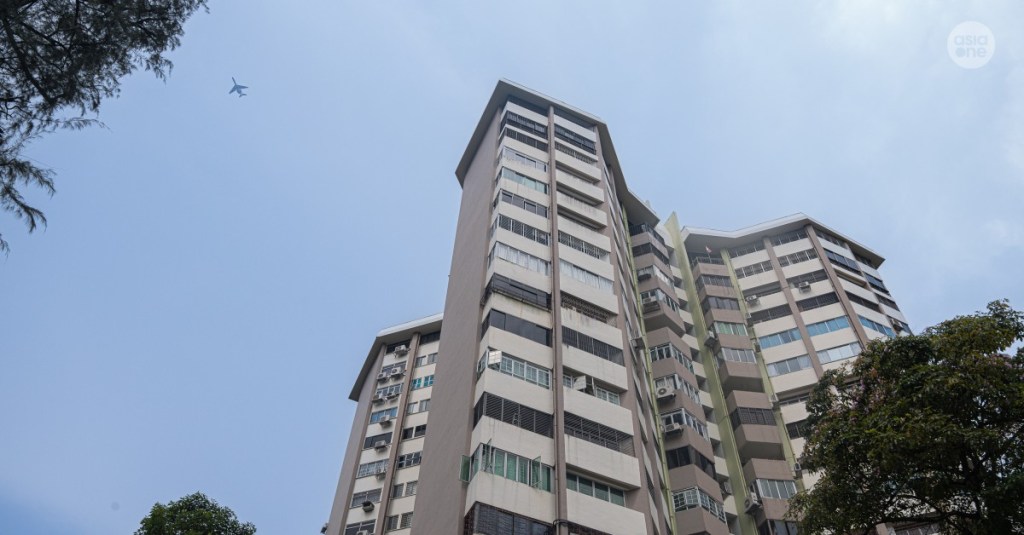
The Ministry of National Development (MND) is looking at ways to improve governance, liveability and maintenance in strata-titled properties such as apartments and condominiums, said Second Minister for National Development Indranee Rajah.
Indranee, who is also Second Minister for Finance and Minister in the Prime Minister’s Office, noted concerns from Management Corporation Strata Title (MCSTs) and unit owners about rising maintenance costs, ageing facilities, and the challenges of collective decision making to make improvements.
“We must address these to ensure that these developments continue to be liveable and meet residents’ needs, especially for our seniors,” said Indranee during MND’s Committee of Supply debate on Wednesday (March 4).
The measures being reviewed to strengthen the Building (Strata Management) Act are: helping MCSTs work towards accumulating adequate sinking funds; reducing consent thresholds for essential work; strengthening self-governance frameworks; and, clarifying the responsibilities of strata-titled stakeholders.
Limiting proxies, maintaining sinking funds
To make estate management fairer and more efficient, the Building and Construction Authority (BCA) is considering limiting the percentage of total proxies which can be held by each household.
It is also considering training for MCST council members to ensure that they can carry out their duties appropriately.
The considerations follow feedback on situations where a small group collects many proxy votes and controls decisions.
“This may not necessarily reflect the best interests of the majority of owners,” the second minister explained.
To address the issue of MCSTs not having sufficient sinking funds to carry out essential repair and replacements such as lifts, MND and BCA are also studying the feasibility of mandating MCSTs to submit and publish key information about their budgets and finances in a standard format.
“This would make it easier for unit owners and prospective buyers to understand and track the financial health and sinking fund adequacy of the MCSTs,” added Indranee.
Improving safety, accessibility of older buildings
On an ageing population and increased accessibility needs, Indranee noted that many older buildings were built in the years when accessibility standards were less well developed.
To better support seniors, persons with disabilities and families, she said that MND is reviewing potential enhancements to the accessibility fund (AF), which was introduced in 2007.
This provides co-funding to encourage private building owners to upgrade their properties with accessibility and universal design features.
However, the fund does not presently cover active ageing and dementia-friendly features.
“Under the review, we will consider expanding AF funding to cover senior-related features, such as senior-friendly fitness stations and dementia friendly signages.
“These enhancements aim to create living spaces that enable seniors to stay mobile and physically active, and continue living comfortably in familiar surroundings as they age,” Indranee said.
She added that MND is exploring the expansion of AF eligibility to include more private buildings, beyond those built before the implementation of the 1990 and 2013 Code on Accessibility.
It is also reviewing the amount of co-funding support with details to be announced at a later date.
Meanwhile, MND is also exploring providing co-funding support to eligible private building owners and operators to enhance the safety of older lifts and escalators.
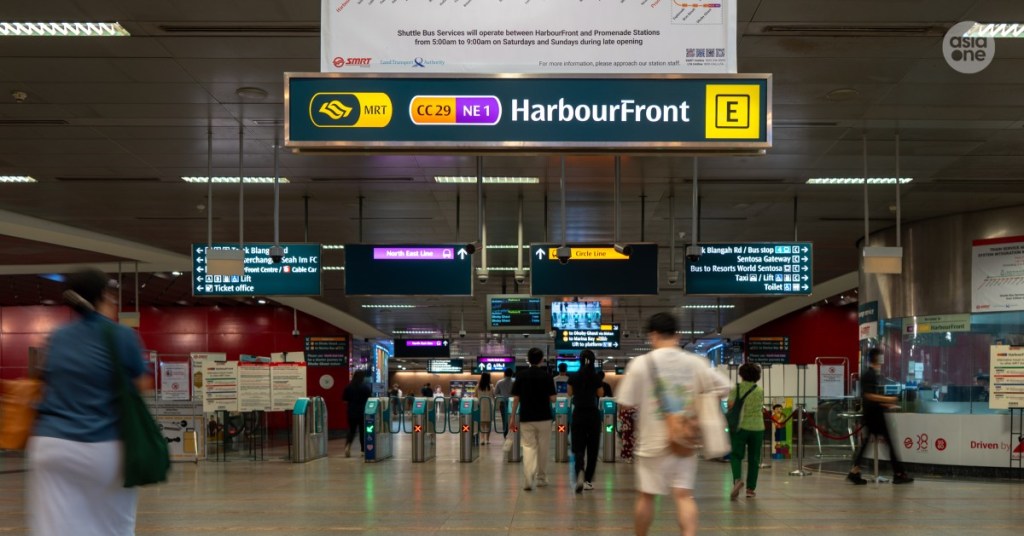
The Land Transport Authority will close the loop on the Circle Line (CCL) by the middle of the year, said Acting Minister for Transport Jeffrey Siow during the Committee of Supply debates in Parliament on Wednesday (March 4).
As part of Circle Line Stage 6, three new stations will open between HarbourFront and Marina Bay stations — Keppel, Cantonment and Prince Edward Road stations.
The opening of the final three stations comes 17 years after the first stretch between Bartley and Marymount stations opened in May 2009. In all, the CCL will have 33 stations, including 12 interchange stations that connect to other rail lines.
Separately, three new stations under the Thomson-East Coast Line Stage 5 (TEL5) and Downtown Line 3 extension (DTL3e) are also on track to open in the second half of the year, according to the Ministry of Transport (MOT).
“An MRT Line takes about 15 years to build, but in just 20 years, we have almost doubled the length of our MRT network. This is a remarkable achievement and we are still building,” Siow said.
Seletar Line engineering studies to start this year
Siow also said that engineering studies for the Seletar Line, Tengah Line and West Coast extension of the Jurong Region Line (JRL) are set to begin later this year.
The Seletar Line in particular will provide more travel options for residents in the north-east.
It could serve areas such as Woodlands, Sembawang, Sengkang West, Serangoon North, Whampoa, Kallang and the Greater Southern Waterfront, former Transport Minister Chee Hong Tat told Parliament during last year’s Committee of Supply debates.
Additionally, MOT will explore the possibility of a corridor serving the Sengkang West and Serangoon North areas, and how to connect this to the Cross Island Line and Circle Line.
New station added to Jurong Region Line
Under the JRL, a new J2SA station will be added between the JS2 and JS3 stations that will serve commuters in the Tengah area in the future.
This will bring the total number of stations along the JRL to 25, with construction for this new station underway.
The station will open in tandem with the completion of other developments in the area, which will likely take place around the mid-2030s, Siow said.
“Many of my residents, especially in Tengah, are looking forward to it (the JRL), because it will be a game changer for them in terms of their transport options,” he added.
However, the opening of the JRL will be shifted to mid-2028, six months after the original expected timeline of end-2027 due to construction delays and testing.
Two interim shuttle bus services will be introduced towards the end of 2027 to improve transport capacity and connectivity within the area that the JRL Stage 1 is meant to serve.
More details on this will be announced when ready, said MOT.
NEL commuters shift away from morning peak period
Around eight per cent of commuters along the North East Line (NEL) have shifted off the morning peak periods, said Acting Minister Siow.
Siow said the shift can be attributed to free morning off-peak travel on the NEL and Sengkang-Punggol LRT which was introduced in Dec 27 last year.
“This has resulted in a less crowded ride for other commuters travelling during morning peak hours,” he said, adding that the decrease in crowd is akin to the effect of adding two extra trains or 20 buses.
MOT shared that the proportion of commuters who shifted out of the morning peak has increased over the months from about six per cent in early January to nearly eight per cent in the week of Feb 2.
 2026NowNews