
Eurozone Inflation Rises Unexpectedly, With Further Risks on the Horizon

Eurozone inflation picked up unexpectedly in February, and could accelerate further if the rise in energy prices that followed U.S. and Israeli attacks on Iran is sustained.

Consumer prices in the 21-member currency area were 1.9% higher than a year earlier compared with a 1.7% rise in January, the European Union’s statistics agency Eurostat said Tuesday. That was above a consensus of economists polled by The Wall Street Journal, which expected the inflation rate to remain unchanged on month.

The ECB targets an inflation rate of 2%, and forecasts price growth to average 1.9% in the first quarter.

The bank has said it expects consumer prices to average 1.9% this year, and to fall a little further in 2027, before rebounding to target in 2028. At its latest meeting in early February, the ECB voted to keep its key interest rate unchanged at 2%, reiterating that policy remains in a “good place.”

But higher energy prices following the attacks on Iran may push inflation even higher. The price of Brent crude oil, the international benchmark, topped $80 a barrel on Tuesday, and analysts have said prices could hit $100 if the conflict is prolonged. European natural-gas prices have risen more than 75% in the last two days. The price of oil and gas declined over 2025, but began picking up at the start of this year following multiple geopolitical shocks.

However, fresh geopolitical uncertainty could weaken confidence and damp growth, thereby cooling inflation. It could take time before policymakers can discern which of those effects are dominant, and respond.

“Should disruptions to oil markets or key transport routes materialize and become more permanent, this could increase costs and thereby influence inflation in Europe,” said Martin Kocher, head of Austria’s central bank, in an interview. “At the same time, heightened geopolitical tensions can weigh on investment and economic activity.”

While Europe isn’t highly reliant on energy resources from the Persian Gulf region, an increase in global prices for oil and natural gas would ultimately feed through to prices in Europe, regardless of limited physical imports.

Restrictions on gas imports are a particular concern for the bloc, as storage levels currently remain low. On Monday, a drone attack on QatarEnergy’s Ras Laffan gas complex caused European prices to soar.

The European Central Bank has previously said a 14% increase in oil prices could drive an increase in the inflation rate of half of a percentage point. Commerzbank estimates that a prolonged war in the Middle East could raise eurozone price growth by a full percentage point.

Eurozone energy prices, which are heavily influenced by international markets, slipped 3.2% in February compared with a 4% fall in January. Services inflation edged up to 3.4%.

Higher energy prices could prompt the ECB to consider raising interest rates, Point72 economist Soeren Radde said in a note. “In practice, the ECB will be wary of mistaking a very persistent energy price shock for a transient shock.”

But the ECB shouldn’t rush to draw comparisons with a spike in energy prices in 2022, said Guntram Wolff, professor of economics at the Universite Libre de Bruxelles. Russia’s war on Ukraine hit Europe particularly hard due to reduced supplies of natural gas and prolonged uncertainty over sanctions, which don’t apply in the case of Iran, he said.

“For now it’s a temporary shock, and as a central bank you want to look through this. Even if it’s a permanent shock, in the long term it will shuffle consumption away from other areas of demand towards energy use, offering some counterbalancing effect,” Wolff said.

In response to the 2022 spike in energy prices, the ECB raised its key interest rate by four-and-a-half percentage points between July 2022 and September of the following year. Inflation peaked in late 2022, and spent much of last year hovering around the 2% target.

A stronger euro, weak consumer demand and an influx of cheap goods from China have all put downward pressure on prices. https://www.wsj.com/economy/global/eurozone-inflation-remains-below-target-but-risks-loom-3e6bc673?mod=global_more_article_pos1
OECD Sees Rising Refinancing Risk as Bond Sales Surge

Governments in rich countries are set to sell a record amount of bonds this year in an increasingly risky environment, while a small number of companies plan to borrow heavily to fund the “enormous” cost of building AI capacity, the Organization for Economic Cooperation and Development said Wednesday.

In its annual report on debt issuance, the OECD said rich-country governments led by the U.S. will have to sell $14.5 trillion in bonds just to replace securities that are maturing, a process known as refinancing. New borrowing will likely bring total issuance to around $18 trillion, an increase of $1 trillion from last year, and a new record.

The increase in refinancing needs partly reflects a shift to selling bonds with shorter maturities, a response to the increased cost of selling longer-dated securities as borrowing surged during the Covid-19 pandemic and in subsequent years.

However, that shift to shorter maturities brings risks. The more often outstanding bonds need to be replaced with new issues, the more vulnerable the government is to a shock that leads investors to temporarily withdraw or demand sharply higher compensation to lend.

“The risk of refinancing may be high, especially in a geopolitical context with a lot of variability,” said Carmine Di Noia, the OECD’s director for financial affairs.

Yields on government bonds have risen sharply since the U.S. and Israel attacked Iran, a move that would increase the cost of refinancing if sustained.

According to the OECD’s figures, the U.S. faces the largest refinancing requirement among its membership, with bond sales equivalent to 31% of gross domestic product in 2025. Japan had the next highest requirement, at 25%, while Italy had the largest in Europe at 16.8%.

The U.S. accounts for an increasing share of total refinancing needs. It was responsible for 70% in 2025, up from 57% in 2020 and just 35% in 2007, the year before the global financial crisis struck.

New borrowing will likely bring total issuance to $18.3 trillion, an increase of more than $1 trillion from last year, and a new record. Governments from developing economies are expected to sell $3.6 trillion in bonds, up from $3.4 trillion last year.

Despite the rapid rise in sales amid increased trade disputes and international conflict, bond markets are “showing few signs of strain,” Di Noia said.

But that could change.

“The resilience debt markets have shown in the face of major pressures should not be taken for granted,” he said. “It rests on a foundation of rigorous monetary policy frameworks, serious commitments to sound fiscal policy, and trust in the integrity of the institutions governing these markets.”

The OECD also expects bond sales by businesses to reach a record high of $6.9 trillion this year, up from $6.8 trillion last year and $4.8 trillion in 2019.

“Given the scale of capital expenditure required to finance the expansion of AI, corporate borrowing needs are expected to continue increasing substantially,” the Paris-based research body said.

That surge in AI-related borrowing could take the corporate bond markets into uncharted territory, with degrees of concentration similar to those seen in equity markets over recent years.

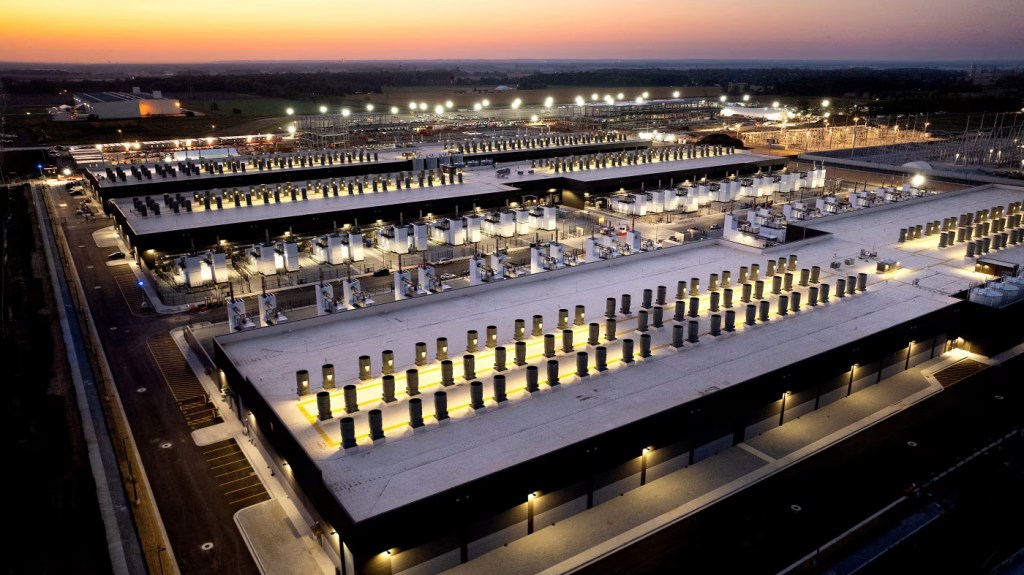
The OECD estimates that nine “hyperscalers” alone are planning capital expenditures of $4.1 trillion between 2026 and 2030, or 36% more than total capital expenditure by all non-financial U.S. companies in 2025.

If half of those investments were financed through bond markets, the OECD calculates the nine would account for issuance of bonds equivalent to 15% of average annual sales by all non-financial businesses globally in the years 2020 to 2025.

“These developments may be setting corporate debt markets on course to become more equity-like,” the OECD said. “Combined with the enormous AI-related financing needs of other sectors, from energy providers to construction companies, AI financing is set to transform these markets.”

Copyright ©2026 Dow Jones & Company, Inc. All Rights Reserved. 87990cbe856818d5eddac44c7b1cdeb8

Paul Hannon is economics editor for Dow Jones Newswires in London. Paul rejoined Newswires after a decade at The Wall Street Journal, where he was an editor for central banks and reported on the impact of the Covid-19 pandemic on the global economy. https://www.wsj.com/economy/global/oecd-sees-rising-refinancing-risk-as-bond-sales-surge-448ff986?mod=global_news_article_pos3