Afghanistan’s Response and the Price of Empty Words

Afghanistan does not need a softer public relations line. It needs proof that it can act like a responsible state. That means controlling armed groups, respecting borders, treating its own people with dignity, and showing neighbours that Afghan soil will not be used to spread fear. Right now, the country cannot ignore the scale of its crisis. The OCHA 2026 humanitarian plan says 21.9 million people, about 45 percent of the population, will need humanitarian help in 2026, and the response plan seeks $1.71 billion to reach 17.5 million people. At the same time, the World Bank December 2025 assessment says GDP is projected to grow 4.3 percent in 2025 after 2.5 percent in 2024, while the World Bank development update makes clear that poverty, weak jobs, and falling income per person still define daily life. In plain words, Afghanistan is too fragile to remain isolated and too proud to admit how much normal state behaviour now matters.

If Kabul wants credibility, it must take visible and verified action against banned groups such as TTP and ISKP. This is where the world is least willing to trust words. The UN monitoring report from December 2025 stated that TTP carried out numerous high profile attacks in Pakistan from Afghan soil, and the follow up report in February 2026 said ISIL K retained significant capability despite pressure. Afghanistan should stop pretending that denial is a strategy. It should arrest commanders, shut training routes, seize weapons depots, freeze financing channels, and set up a permanent intelligence contact group with Pakistan, Central Asia, China, and Iran. A government is judged by what it prevents, not by what it denies. If one cross border attack can undo months of diplomacy, then strict action against these groups is not a favour to outsiders. It is the entrance fee for legitimacy.

A Good Neighbour Is A Safe Neighbour

Afghanistan also must prove that it can live with its neighbours without dragging the whole region into another cycle of revenge. The OHCHR appeal for lasting peace came after a sharp rise in border violence. A Reuters report on 42 civilians killed and 104 wounded showed the human cost early in March, and another Reuters report on more than 100,000 displaced showed how fast a border crisis becomes a civilian disaster. This is why good neighbour policy cannot be a vague slogan. It must mean no shelter for militants who target nearby countries, no state tolerance for recruitment networks, and no use of Afghan territory to destabilize Pakistan, Iran, or Central Asia. The world can work with a difficult neighbour. It cannot trust a dangerous one.

Afghanistan still has one great advantage, its location. It can either be the broken hinge of the region or the bridge between Central and South Asia. That choice is still open. The CASA 1000 project is built around 1,300 MW of seasonal electricity trade and about 4.6 billion kWh a year, while the TAPI pipeline project is designed to move 33 billion cubic meters of gas annually. These are not just infrastructure dreams. They are tests of whether Afghanistan can protect transit, contracts, and cross border commerce. The warning signs are already visible. The World Bank Economic Monitor says exports in December 2025 fell 15 percent year on year to $162 million after border disruption. Afghanistan should understand the lesson. Stability pays rent. Instability burns revenue. A country that wants investment cannot behave like a corridor of permanent risk.

Human Rights Are Not A Side Issue

Many in Kabul still act as if human rights are a Western add on, something separate from recognition. That is a serious mistake. Human rights are now central to whether Afghanistan is treated as a normal state. The UNESCO and UNICEF warning in January 2026 said Afghanistan remains the only country in the world where girls and women are barred from secondary and higher education. The UNESCO estimate of 2.2 million girls shut out should shame any authority that claims to govern in the national interest, and the UNESCO education situation report shows the damage is not temporary, it is compounding. No country can shut half its future out of classrooms and then ask the world to treat it like a serious partner. Reopening schools and universities to girls, restoring women’s right to work, and ending restrictions on public life would do more for Afghanistan’s image than a hundred diplomatic meetings.

There is one more truth Kabul should face. Recognition will not come from symbolism. It will come from measurable conduct. The UNAMA human rights update shows how restrictions on women and girls continue to shape everyday life, and the UNAMA justice findings say women are nearly four times less likely than men to access formal justice. At the same time, the pressure on Afghan society is getting worse. UNHCR said one million Afghans returned from Pakistan in 2025, the UNHCR returns dashboard shows the flow is still active, the UNDP report on returnees and host communities says more than 2.3 million people returned in 2025, and the UNDP review showing nine in ten households cut daily consumption shows how thin the country’s social cushion has become. My view is simple. Afghanistan should propose a regional compliance compact, publish a public scorecard every six months on counterterror action, border conduct, girls’ education, women’s employment, and transit security, and let the UN and regional states verify it. That would be something new, practical, and hard to dismiss. The world does not expect perfection from Afghanistan. It expects evidence that Afghanistan has finally chosen state responsibility over permanent exception. https://moderndiplomacy.eu/2026/04/15/afghanistans-response-and-the-price-of-empty-words/
Liberia: Benoni Urey, Others Rally Around Ambassador Kemayah and Family After His Mother’s Death

Monrovia-A rare moment of unity that cuts across political lines has set the pace, as some of Liberia’s most prominent political figures have converged in sympathy with former Minister of Foreign Affairs, Amb. Dee-Maxwell Saah Kemayah, Sr., following the death of his mother, the late Ma-Watta Kumba Soliyah Larmie.

Among those leading the latest wave of condolences is Benoni Wilfred Urey, Political Leader of the All Liberian Party (ALP), who paid a solemn visit to Ambassador Kemayah’s residence over the weekend.

Mr. Urey who spent considerable time with Ambassador Kemayah and his bereaved family, described the loss as “deeply personal and profoundly painful,” while emphasizing the importance of standing with one another in times of grief.

“Beyond politics, we are Liberians first,” Urey said, during the visit.  “This is a moment to share in sorrow and to offer strength to a brother who has served this country with distinction.”

He further committed to his full participation in all funeral activities, assuring Ambassador Kemayah of being with him through his period of mourning his beloved mother; stressing “I will be with you the whole day of the funeral of our late mother”.

Former Foreign Minister, Ambassador Kemayah for his part, welcomed Mr. Benoni Wilfred Urey at his residence and expressed thanks and appreciation to him, stating “my family and I are grateful to you, my dear friend and brother, Mr. Urey for the thought and visiting me at my residence in empathy and solidarity with the Kemayah Family and me for the unfortunate passing of my beloved mother, Ma-Watta Kumba Soliyah Larmie and the very painful circumstances she had to endure as a consequence of the relentless persecution against me only and only because of my political affiliation with the 25th President of the Republic of Liberia, H.E. Dr. George Manneh Weah”.

Ambassador Kemayah further commended Mr. Urey for his commitment to spend the day of the funeral with him and fully participate in all of the activities of his mother’s funeral on Friday, April 10, 2026.

An Outpouring of National Support

Benoni Urey’s visit is among a series of high-profile condolences extended to Ambassador Kemayah since the passing of his mother on March 11.

Former President George Manneh Weah was among the earliest dignitaries to visit Kemayah family.

Former President George Manneh Weah was among the earliest dignitaries to visit Former Foreign Minister Kemayah and family. During his visit, Weah emphasized the enduring nature of family bonds and urged the former foreign minister to remain strong in the face of such an irreplaceable loss.

Also paying their respect were some former senior government officials, lawmakers, diplomats, prelates, executives of the Liberia Baptist Missionary and Educational Convention, the Vice Chair and members of the Board of Trustees of the Liberia Baptist Theological Seminary as well as some political leaders from across the spectrum.

Sources close to the family confirmed that some representatives of the current administration, members of the Legislature, and Liberia’s diplomatic corps have all expressed condolences, either through personal visits, verbal or written messages of condolence to former Foreign Minister Kemayah and family.

A senior official of the current Government, speaking on condition of anonymity, described the wave of sympathy as “a reflection of the esteem in which Ambassador Kemayah is held nationally and internationally.”

Circumstances Surrounding Her Passing

Family sources disclosed that Ma-Watta Kumba Soliyah Larmie passed away at the St. Joseph’s Catholic Hospital in Monrovia on the night of this past national decoration day.

According to a source close to the family and some community members who spoke on condition of anonymity, she was hypotensive prior to the situation, but after receiving trauma and shock from her very harsh awakening from sleep in the early hours of the morning and witnessing the search of the residence of her son, Ambassador Kemayah, in Paynesville, including her place of stay in the same residence as she had gone in early June of 2025 to spend some time with her son, Ambassador Kemayah and his arrest, her health situation kept worsening up to her death asserting that “since Ma-Watta personally experienced the very traumatic search of former Foreign Minister Kemayah’s residence, including her place of stay and the arrest of her son, Ambassador Kemayah, she never recovered from the effects of the shock and trauma from the incident and  continued going downhill up to her death on this gone decoration day”, the source close to the family emphasized.

Her death has been described by family members as a great loss, not only to the Kemayah family, but also to the wider community, where she was known for her humility, strength, and dedication to family values.

According what the Kemayah Family has released,  funeral rites for the late Ma-Watta Kumba Soliyah Larmie will be held on Friday, April 10, 2026 at 9:00a.m. prompt with the removal of the body of Ma-Watta Kumba Soliyah Larmie from the Samuel A. Stryker Funeral Home and taken to the Historic Providence Baptist Church on Ashmun Street, Monrovia, Liberia, where the Funeral Service will begin at 9:30a.m. precisely. Following the funeral service on Friday, April 10, 2026 at the Historic Providence Baptist Church, the body of Ma-Watta Kumba Soliyah Larmie will immediately be taken to the Kaiser Memorial Lawn Cemetery in Brewerville, Montserrado County  on the same day, where she will be buried. Right after the burial of Ma-Watta Kumba Soliyah Larmie, loveones, friends, neighbors, community members, sympathizers, guests and well-wishers will all join the Kemayah, Larmie, Golanyon, Otis Mason, Charyoe, Karngba, Bundoedu, Kpaemalo and affiliated Families at the St. Gabriel Catholic Parish Hall in Brewerville, Montserrado County  for the Repast in honor, respect and loving memory of the Late Ma-Watta Kumba Soliyah Larmie.

As preparations intensify, the continuous flow of sympathizers underscores a message, one of unity, compassion, and shared humanity, transcending political affiliations in honor of a life remembered.

For Ambassador Kemayah, the days ahead remain heavy with grief, but also strengthened by the visible solidarity of a nation standing with him in mourning. https://frontpageafricaonline.com/obituary/liberia-benoni-urey-others-rally-around-ambassador-kemayah-and-family-after-his-mothers-death/

Liberians React to Government’s Handling of Guinea–Liberia Border Crisis

Following escalating tensions along the Guinea–Liberia border, the Government of Liberia has been engaging leaders within the Mano River Union, including the Presidents of Guinea, Mamady Doumbouya, and Sierra Leone, Julius Maada Bio.

As tensions continue to rise—particularly after reports that Guinean soldiers crossed into Liberian territory—the Liberian government has called for calm while exploring diplomatic avenues to reach an amicable resolution to the conflict.

In the wake of the government’s response, Liberians have been weighing in. FrontPage Africa spoke with several citizens to sample public opinion and also reviewed comments from prominent figures and officials expressed on social media and at public gatherings.

Leon B. Saydee West Point: “Government is doing her best through the diplomatic means to engage the issue. When the issue first started, we saw how tension was building. We learned that the soldiers from the Guinea crossed to the Liberian side. The government is using diplomatic and so diplomatic approaches don’t come to a conclusion overnight. Looking for what you want to achieve from every engagement doesn’t come over. The government is tightlipped on the real issue because this is a security matter and it has to be classified. However, people are speculating and when people speculate fear becomes the order of the day. The Liberian government is engaging through diplomacy but must come out with some factual information that will satisfy the curiosity of the ordinary people.”

Melvin Doweh, head of Progressive Liberian Working Group: “That issue at the border needs continue round table approach. It is not an issue to be politicized because for us we are calling for this country first narrative. We are all Africans and so there are issues that will come about in such a time. But we believe that government will be very mature enough to sit with their counterpart and resolve the matter. The issue of escalating the matter is not good. We need peace. We cannot go back to war.”

Euodia T. Gbatoe, Gender Activist: “In my view, the Liberian government is not handling the situation the right way. In every conflict there must be a solution. I do believe that the Liberian government is begging the Guinean government to handle things amicably, but then the Guinean government is not listening and they keep invading the land of Liberia. For allowing your neighbor to take over your border is very disappointing. If the diplomatic approach cannot hold, we will use the radical approach. It is not right to see those people on our soil and we keep quiet. If our President can go to Guinea and come back and nothing change, probably the President might be in the know of certain things and they don’t want to tell the public.”

Cyrus Gbaryee Gardnersville: “The way in which our government is handling this border issue with Guinea is very weak. Our government is showing weakness to the whole world. When Joseph Boakai was taking power, he vowed to protect and defend the territory of Liberia. But today we realize that Guinea is taking our land and the government is sitting down and doing nothing about it. So we as Liberians, it means we are weak indeed. This is the same thing that happened those days. If you go Ivory Coast, our land has been occupied by the Ivorians. Guinea has vast of our land today because during those days, our leaders were very weak. And that is the same thing Joseph Boakai is showing to the Liberian people -that Guinea is now taking our land in this dispensation. Government is being silenced. I think the government is hiding something from the citizens regarding this border issue and it’s the wrong way they are proceedings. We expect them to update us but they are not updating us. They are playing games with our lives.”

Cllr. Moriah Yeakula, lawyer and gender advocate: “I’m opposition to this gov’t. I’m not opposition to my country. Internally, I don’t support things they do but when we have to face a foreign foe, I support the gov’t & stand with my country. We can criticize later. May God lead Pres. Boakai today in the MRU talks.”

Titus B. Pakalah, rights activist: “I think the government’s response to the Guinea, Liberia border situation has been too slow and somewhat inadequate, especially considering that this involves a breach of Liberia’s territorial integrity. While it is true that the situation appears to stem from a long-standing border dispute, particularly around the Makona River where there are competing claims over land and mineral resources, that does not justify the level of delay and weak initial response we’ve seen. From the information available, Guinean soldiers crossed into Liberian territory, seized equipment, and even raised their flag. In a situation like that, the expectation is a swift and firm response led by the military, not a delayed or hesitant reaction. The fact that there were reports of late deployment and initial reliance on police raises serious concerns about preparedness and decision-making at the highest level.”

Akiah Precious: “Well! ECOWAS would have been the first choice. That’s exactly one of the reasons for joining a regional body. We cannot always wait for situation to arise before finding solutions. The most prudent approach to take is early preparation and intervention. Just thinking aloud, what if those Guinean came at midnight to plant their flag, and fully armed to defend it? Liberia needs to be on top of their game. Everything is not about rice price.”

Cllr. Tiawon Gongloe: “President Joseph Nyumah Boakai’s decision to suspend mining activities in the Makona River area was commendable. But suspension alone is not enough. There must be a transparent and independent investigation into the source of this dispute. If any individual or entity violated Liberian law or international obligations, then that person or entity must be held accountable. If any government official is implicated in conduct that undermined Liberia’s sovereignty, that official should be dismissed without hesitation. Sovereignty cannot be, should not be, and must never be compromised for profit. National integrity cannot and should not be traded for minerals. At the same time, I urge our Guinean brothers and sisters to remember our shared history. Liberia and Guinea are bound together by more than geography. We are bound by sacrifice and mutual defense of independence. Disputes must be resolved through diplomacy, joint investigation, and respect for law. Liberia must defend its territorial integrity. Guinea must defend its sovereignty. But both must stand together in defense of peace. The Makona River should symbolize cooperation, not confrontation. I call upon Presidents Mamady Doumbouya and Joseph Nyumah Boakai to honor the legacies of Presidents Ahmed Sékou Touré and William V. S. Tubman, who chose peace, principle, and African solidarity over provocation.

Prescilla Abram Cooper, Representative, Montserrado County District #5: “Some of us who lived through our civil war fully understand the horrific experiences our nation endured. We know, firsthand, the pain, loss, and destruction that come when conflict takes root. Weapons of war do not discriminate. They do not recognize where you come from, who you are, your political affiliation, or your religious beliefs. They destroy everything and everyone in their path. That is why we must speak with one voice: Liberia must never return to those dark days. Let it be clearly understood; anyone, regardless of who they are, who attempts to beat the drums of war or acts in ways that are unpatriotic and against the interest of our nation, is undermining the peace we have all fought so hard to sustain. As such, we will support and recommend lawful measures to ensure accountability. Our duty now is to protect that peace, uphold unity, and place the interest of Liberia above all else.”

Thomas Gbollie, Resident of Bushrod Island: “I want to applaud the government for being diplomatic. Somebody cannot come pick fuss on you then you react. Liberia is a non-permanent member of the United Nations Security Council and so when something happens we should be able to take our time because the peace that we are enjoying right now we need to maintain the peace. Abraham B. Wpahplo, Resident of Old Road Community. “I’m somehow satisfied with how President Boakai is using the diplomatic process. By President going to Guinea to meet Guinean President, I must applaud him for that. By exercise that level of restraint. The issue at the border is military. Let them do it to put things under control because the people in Lofa are in fear every day. Richard Koon went to Lofa County to do assessment in that area but because the Guinean soldiers had armed he stood distance. He was afraid because Guinea is a military country. We need the army to go there.”

Emmanuel Pewu, resident of Clay Street: “I’m very disappointed in the President. The first thing, as a country you need to empower the army because in case of infringement, they can be able to stand up for the country. There is nowhere in the world you will be paying man us$ 200 and you expect them to be happy. The government is not telling us the truth; we don’t know the root cause to the problem.” https://frontpageafricaonline.com/news/liberians-react-to-governments-handling-of-guinea-liberia-border-crisis/

Qatar PM demands immediate end to war, condemns Iranian attacks

Qatar’s Prime Minister and Foreign Minister Sheikh Mohammed bin Abdulrahman Al Thani has issued an urgent call for an immediate cessation of hostilities in the region, while strongly condemning Iranian attacks on Arab states. Speaking at a joint press conference alongside Turkish Foreign Minister Hakan Fidan on Thursday, Sheikh Mohammed stressed that the ongoing war benefits no one and that those responsible for dragging the region into conflict are well known.

“We stress the importance of the immediate cessation of Iranian attacks on countries in the region,” Sheikh Mohammed said. “The war must stop immediately, and everyone knows who benefits from it and who is dragging the region into conflict.” His remarks came as the Qatari premier also condemned Iran’s attacks on Türkiye, describing Tehran’s justification of targeting US bases as “unacceptable and unjustified.”

Energy Security and Regional Stability

The Qatari prime minister warned that recent Iranian strikes have direct consequences for global energy markets, specifically pointing to an attack on the Ras Laffan gas facility. “This will have repercussions on energy supplies,” he said, underscoring Qatar’s critical role as one of the world’s largest liquefied natural gas producers. Sheikh Mohammed characterized Iran’s actions as a direct threat to the security and stability of the region, calling for an immediate halt to such operations.

“We believe diplomacy is the first and final solution to conflicts,” Sheikh Mohammed emphasized, reaffirming Qatar’s longstanding commitment to mediation and dialogue as the primary tools for resolving regional disputes.

Escalating Regional Conflict

The Qatari premier’s statements come amid a rapidly intensifying crisis that began with the US-Israeli joint offensive against Iran on Feb. 28, which has claimed approximately 1,300 lives, including former Supreme Leader Ali Khamenei. Iran has responded with drone and missile strikes targeting Israel, Jordan, Iraq, and Gulf nations hosting American military assets. These attacks have caused casualties, damaged critical infrastructure, and disrupted global markets and aviation routes across the region.

Sheikh Mohammed’s joint appearance with Fidan underscored the close coordination between Doha and Ankara in addressing the escalating crisis, with both nations advocating for an immediate ceasefire and a return to diplomatic channels. https://en.yenisafak.com/world/qatar-pm-demands-immediate-end-to-war-condemns-iranian-attacks-3716076

Egypt’s Sisi visits UAE, Qatar, says Gulf security is extension of national security

SHARE

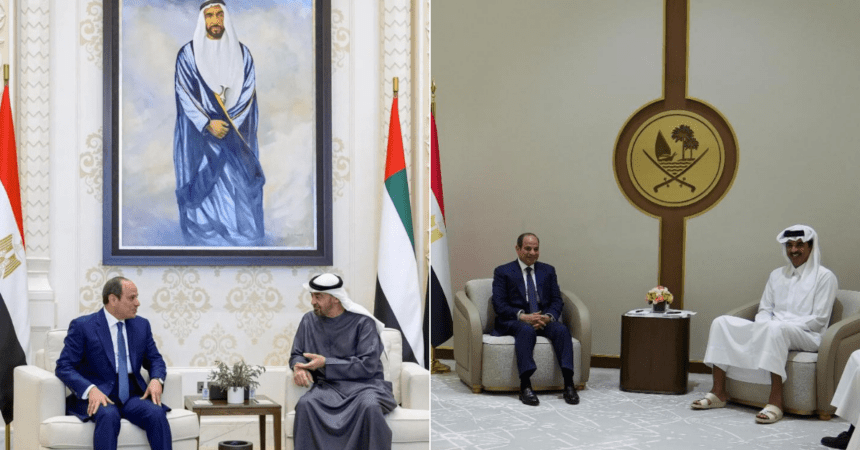
Egypt President Abdel Fattah al-Sisi visited the United Arab Emirates and Qatar on Thursday to declare that the security of Gulf nations is an extension of Egypt’s national security, following what he described as “sinful and unjustified” Iranian attacks on the region.

The Egyptian leader conducted the two-stop tour to express Cairo’s full solidarity with the Gulf Cooperation Council (GCC) under current regional circumstances. During the visit, Sisi emphasised Egypt’s categorical rejection of any attempts to undermine the security or assets of neighbouring Arab states.

In the United Arab Emirates, Sisi was received by President Sheikh Mohamed bin Zayed Al Nahyan and the Egyptian Ambassador to the UAE, Essam Ashour. Following a private bilateral meeting, Sisi affirmed Egypt’s absolute support for the UAE’s measures to maintain its stability and the interests of its people. He specifically condemned Iranian attacks on the UAE and other Arab nations, stating that Egypt is prepared to provide all necessary forms of support to preserve the security of the Gulf.

The official spokesperson for the presidency, Mohamed el-Shenawy, noted that Sisi had conveyed a clear message to Iranian officials stating that Gulf nations are not a party to the ongoing war. Sisi described the Iranian actions as “unacceptable and unjustified,” calling for an immediate cessation of hostilities and a return to diplomatic negotiations based on international law and the UN Charter.

Sheikh Mohamed bin Zayed welcomed the visit, noting it reflects the close brotherly ties between the two countries. He expressed appreciation for Egypt’s steadfast role in maintaining regional peace and stressed the importance of continued coordination to enhance security. The two leaders also discussed bilateral relations and exchanged greetings for Eid al-Fitr.

Following his stop in the UAE, Sisi travelled to Qatar, where he was met at Hamad International Airport by the Emir, Sheikh Tamim bin Hamad Al Thani, and the Egyptian Ambassador to Qatar, Walid el-Feki.

During an expanded meeting with delegations from both nations, Sisi reiterated Egypt’s “full alignment” with Qatar and all Gulf states against the recent condemned attacks. He affirmed Egypt’s support for Qatar’s right to defend its sovereignty and territorial integrity. Sisi briefed the Qatari leadership on Egypt’s efforts to reduce escalation, including direct communications with Iran to demand an end to attacks on sisterly nations.

Sheikh Tamim bin Hamad Al Thani expressed deep appreciation for Sisi’s visit and his proactive communication since the start of the current crisis. The Emir highlighted the “deeply rooted historical relations” between the two countries and stated that Qatar values consultation with Egypt to restore regional stability and reach peaceful solutions.

The leaders agreed to intensify bilateral consultations to focus on de-escalation and the restoration of regional order. Sisi concluded the tour by stating that the shared history and destiny of Egypt and the Gulf necessitate the activation of “collective Arab national security.”

The president returned to Cairo on Thursday evening following the conclusion of the talks. https://www.dailynewsegypt.com/2026/03/19/egypts-sisi-visits-uae-qatar-says-gulf-security-is-extension-of-national-security/?utm_source=rss&utm_medium=rss&utm_campaign=egypts-sisi-visits-uae-qatar-says-gulf-security-is-extension-of-national-security

120,000 taxpayers voluntarily join simplified tax system: Finance Minister

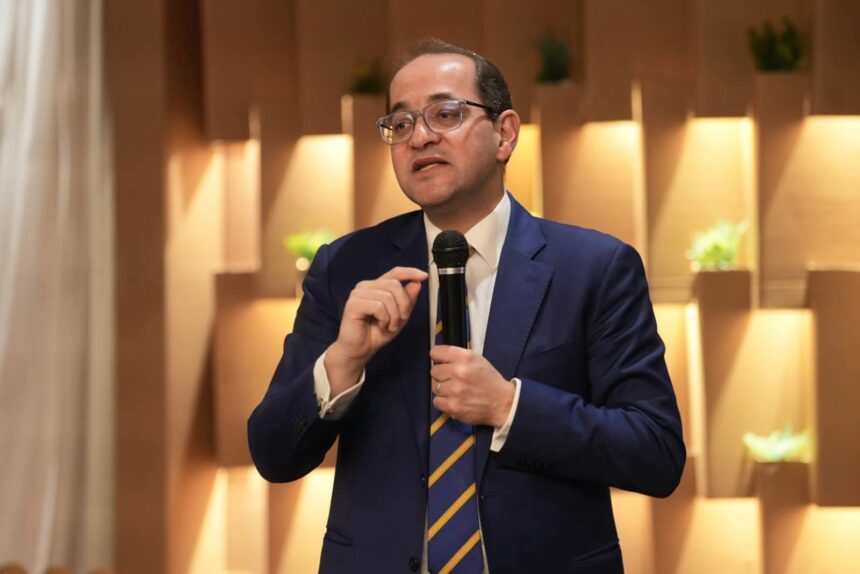
Egypt’s Minister of Finance Ahmed Kouchouk said that the Egyptian government is maintaining direct communication with investors to tackle tax, customs, and financial challenges through practical, actionable solutions. Speaking at the annual conference of the Federation of Small and Medium Enterprises Investors, which brought together entrepreneurs from across the governorates, Kouchouk praised the open dialogue with “ambitious investors” seeking to expand and grow.

“Last year, we promised the first package of tax facilitation measures, and together we delivered on that promise,” Kouchouk said, noting that the positive results confirm that “betting on the private sector always pays off.”

He explained that 120,000 taxpayers have voluntarily joined the simplified tax system. Additional financing initiatives have also been introduced to encourage further participation in this advanced and incentivised framework. Under the programme, taxpayers voluntarily submitted around 660,000 new and amended tax returns, reported business volumes amounting to EGP 1trn, and paid approximately EGP 80bn in additional taxes.

“We are proud of this valuable trust from our partners in the tax facilitation journey,” Kouchouk added. He also noted that a second package of tax facilitation measures will be presented to the House of Representatives after Eid Al-Fitr.

The Finance Minister highlighted that the government continues efforts to stimulate economic activity, expand initiatives in industry, tourism, and exports, and reduce customs clearance times to ease costs and burdens on investor partners.

Khaled Hashem, Minister of Industry, emphasised the ministry’s commitment to strengthening communication with owners of micro, small, and medium enterprises (MSMEs), describing them as a vital link between large-scale projects and micro-enterprises, and a cornerstone of the productive economy system. He noted that sustainable industrial development requires integration and coordination across all sectors.

Hashem stressed the importance of accurate data on markets, commodities, and industrial activities. The ministry is developing mechanisms to collect and analyse economic data scientifically and systematically, linking it within an integrated knowledge framework. This will allow the private sector to utilise data for investment planning and production expansion while supporting policymakers in setting industrial priorities, identifying production gaps, and targeting investments toward high-growth sectors.

He added that the availability of a precise database on production volumes, domestic demand, and export demand will help build a clear vision for industrial development, guide investments toward sectors with the greatest need and growth potential, and boost exports.

Hashem also underlined that the ministry will focus on developing productive activities in villages and rural areas to improve household incomes, create jobs, and reduce migration to major cities. Expanding productive activities in rural regions, he said, is a key pillar of balanced economic development across governorates.

Regarding exports, Hashem explained that Egypt’s upcoming strategy will prioritise increasing the local content ratio in exported products, aiming to deepen domestic manufacturing and reduce reliance on imported inputs. Strengthening feeder industries and raising the added value of Egyptian products will enhance the competitiveness of Egyptian exports in regional and international markets.

Alaa Al-Saqti, Chairperson of the federation, noted that the current phase requires coordinated efforts between all state institutions and the business community to support the national economy and expand productive sectors, thereby increasing employment rates.

Al-Saqti praised the Finance Minister’s field-oriented approach, highlighting his ability to understand and address the challenges faced by small investors. He described this as a positive model of direct communication between government and business, and expressed hope that it could be replicated across other ministries.

He also stressed the federation’s aspiration to maintain direct and continuous engagement with the Ministry of Industry, noting that its role extends beyond highlighting challenges to actively contributing to the formulation of solutions. https://www.dailynewsegypt.com/2026/03/17/120000-taxpayers-voluntarily-join-simplified-tax-system-finance-minister/

Investment Minister reviews General Motors’ $530m Egypt expansion plans

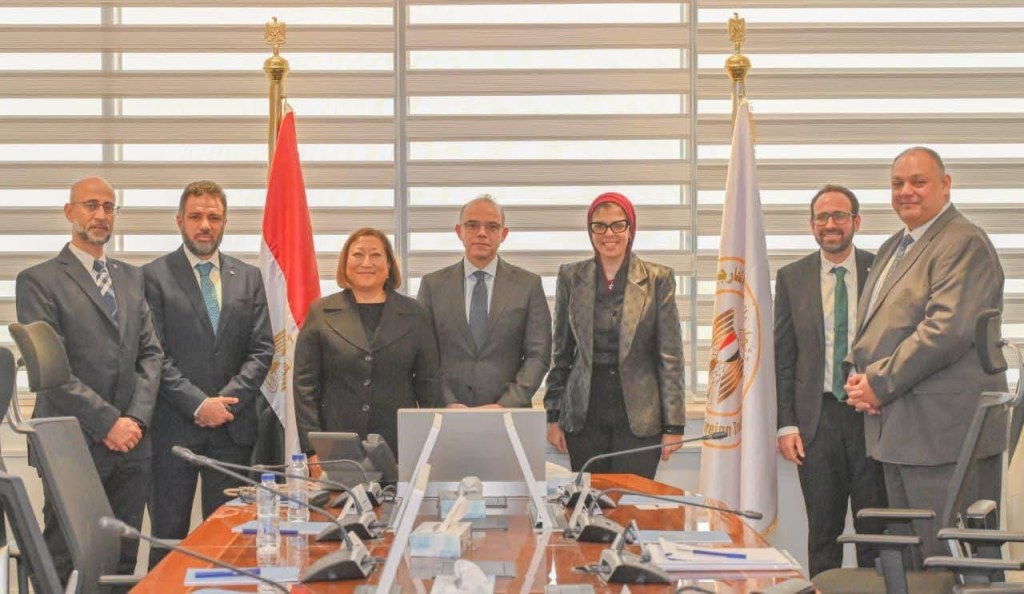
Egypt’s Minister of Investment and Foreign Trade, Mohamed Farid, held talks with Sharon Nishi, Chairperson and Managing Director of General Motors Egypt and Africa, to review the company’s current investments in Egypt and its future expansion plans.

The meeting, held on Tuesday and attended by Jehan Saleh, economic adviser to the Prime Minister, focused on the government’s efforts to localise the automotive industry, increase its contribution to GDP, and align with GM’s expansion strategy in the Egyptian market.

Farid highlighted the government’s broader agenda to localise industrial production, boost exports, attract foreign direct investment, and enhance the competitiveness of the automotive sector and its feeder industries. He underscored the strategic partnership with General Motors, which has maintained a long-standing presence in Egypt and produced more than one million vehicles locally.

The minister noted that GM’s operations have generated around 1,300 direct jobs and over 30,000 indirect jobs, reflecting sustained investor confidence in Egypt’s market and its ability to attract long-term industrial investments.

Discussions also reviewed the status of GM’s investments in Egypt, which exceed $530m, including approximately $50m allocated to robotic systems and advanced manufacturing technologies aimed at enhancing production efficiency.

Farid pointed out that local content levels in some vehicle models now exceed 60%, supporting the state’s strategy to deepen industrial localisation and increase reliance on domestically produced components.

He added that the ministry is working to develop a comprehensive export incentive framework to maximise the advantages of Egypt’s strategic geographic position as a regional production and export hub serving African and Middle Eastern markets. Improving the competitiveness of locally manufactured products, he stressed, remains central to expanding Egypt’s export footprint.

Farid reaffirmed the government’s commitment to continued coordination with General Motors, pledging full support for expanding its investments in the automotive sector and scaling up industrial exports in line with national development priorities.

For her part, Nishi described Egypt as a key pillar in the company’s long-term regional strategy, citing its strategic location and skilled workforce.

She noted that General Motors is implementing a forward-looking plan that includes launching new vehicle models aligned with evolving market dynamics, while expanding production capacity to meet domestic demand and support export growth.

Nishi also highlighted that the company recently marked 100 years of presence in the region, beginning with Egypt, underscoring the country’s central role in its regional footprint and reaffirming GM’s commitment to advancing industrial localisation and positioning Egypt as a regional hub for automotive manufacturing and exports across Africa and the Middle East. https://www.dailynewsegypt.com/2026/03/17/investment-minister-reviews-general-motors-530m-egypt-expansion-plans/?utm_source=rss&utm_medium=rss&utm_campaign=investment-minister-reviews-general-motors-530m-egypt-expansion-plans

Bangladesh parliament meets after uprising, elections ushered in new gov’t

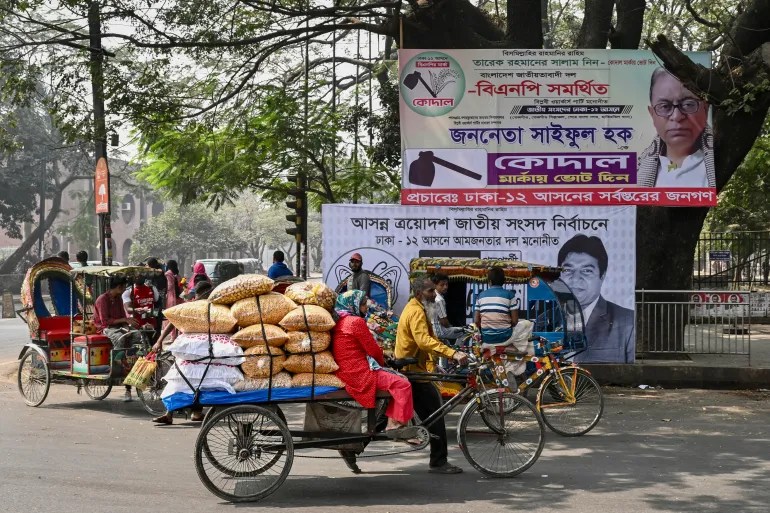
Bangladesh’s parliament has convened for the first time since a deadly 2024 uprising plunged the country into political turmoil and triggered landmark elections last month.

“After more than a decade and a half of fascist and subservient rule, the activities of parliament are beginning today with representatives elected by the people,” the newly elected Prime Minister Tarique Rahman told parliament on Thursday.

Rahman, the leader of the Bangladesh Nationalist Party (BNP), and son of the late leader Khaleda Zia, took over after February 12 elections from the interim administration that had led the country of 170 million people since August 2024.

“The BNP wants to build a prosperous, safe and democratic country,” the party’s leader said, calling on all politicians, whatever their political opinions, to work together.

Rahman blamed the toppled government of Sheikh Hasina, who has been sentenced to death in absentia for the crackdown that killed hundreds, and her Awami League party, for undermining the previous parliament.

About 1,400 people were killed and more than 20,000 injured in the uprising, according to the United Nations.

Hasina, 78 is currently in self-imposed exile in India.

“The fallen dictatorship made parliament dysfunctional, instead of making it the centre of all national activities,” Rahman said, promising it would change under his watch.

“We will make parliament the centre of all debates and arguments aimed at resolving the country’s problems.”

Those urgent problems include tackling a sluggish economy, restoring stability and reviving growth after months of turmoil that rattled investor confidence and strained state finances.

The world’s second largest garment exporter, heavily dependent on fossil fuel imports, has also been hit hard by an oil price spike caused by the war launched by the United States and Israel on Iran.

Bangladesh has closed universities and launched fuel rationing amid a worsening energy crisis linked to reverberations from the conflict in the Middle East and Tehran’s retaliatory strikes across the region.

Rahman’s appeal for unity is a bid to heal rifts in a country polarised by years of bitter rivalry.

A new speaker, Hafiz Uddin Ahmad, and his deputy, Kayser Kamal, were elected to office. Both are members of the BNP.

The parliament building was looted during the August 2024 uprising against Hasina, but has since been repaired.

The BNP-led alliance secured 212 seats, while the BNP alone won 209 seats of the 350-seat parliament.

The leader of the opposition is Shafiqur Rahman, who heads the Jamaat-e-Islami-led alliance with 76 seats, with Jamaat alone holding 68. https://www.aljazeera.com/news/2026/3/12/bangladesh-parliament-meets-for-first-time-after-uprising-elections

Swiss man tied to Las Vegas admits leading multimillion‑dollar fraud scheme

A Swiss man with ties to Las Vegas pleaded guilty to securities fraud Tuesday after he and several others defrauded victims out of close to $6 million as part of a vast scheme, federal officials said.

Martin Schlaepfer, 67, is scheduled to be sentenced in June, according to a news release from the United States Department of Justice. He faces up to 20 years in a federal prison, according to the DOJ.

Schlaepfer was indicted in 2013 but lived overseas before he was arrested in Italy in September 2024 pursuant to an Interpol Red Notice and extradited to the United States last year, the department said.

Three of Schlaepfer’s co-conspirators — Anthony Brandel, James Warras and Sean Finn — were found guilty of conspiracy and multiple counts of wire fraud and securities fraud following separate jury trials in 2015 and 2020. Each were sentenced to over seven years in prison.

A fourth defendant, Joseph Micelli, pleaded guilty to conspiracy to commit wire fraud and securities fraud in 2015 and was sentenced to five years in prison. A fifth defendant, Hans-Jurg Lips, remains at large outside the U.S.

The Justice Department’s Fraud Section alleged that investors were lured by promises of astronomical returns into contributing $100,000 to $1.2 million to a phony Swiss company called the Malom Group.

Securities & Exchange Commission court filings said the Malom Group, an acronym for “make a lot of money,” bilked 30 investors out of more than $11 million between 2009 and 2011. Schlaepfer, the justice department said, identified himself to victims as the chief executive officer of the Malom Group.

Beginning as early as October 2009, Schlaepfer and his co-conspirators in Switzerland and Las Vegas orchestrated a scheme in which they sold investments they knew to be fictitious, the department said.

Schlaepfer and the others told victims that, for an up-front payment, Malom would provide access to investment opportunities and substantial cash loans. Victims were given fabricated bank documents purporting to show that Malom held hundreds of millions of dollars in overseas bank accounts, officials said.

When victims wired their money into an escrow account controlled by the co-conspirators, however, the money was released and disbursed to, among others, Schlaepfer for his own personal use, federal officials said.

The FBI will continue to investigate the case, the department said. https://www.reviewjournal.com/crime/courts/swiss-man-tied-to-las-vegas-admits-leading-multimillion-dollar-fraud-scheme-3723058/?utm_campaign=widget&utm_medium=latest&utm_source=local&utm_term=Swiss%20man%20tied%20to%20Las%20Vegas%20admits%20leading%20multimillion%E2%80%91dollar%20fraud%20scheme

ICE takes 240 from Clark County jail under new pact; ACLU fights deal

Immigration and Customs Enforcement officers have taken at least 240 Clark County Detention Center inmates into custody since a local-federal agreement went into effect at the jail in late 2025.

The 240 were among 264 inmates with ICE warrants issued between mid-December, when the department inked a 287(g) agreement with ICE, and March 5, according to Metropolitan Police Department figures.

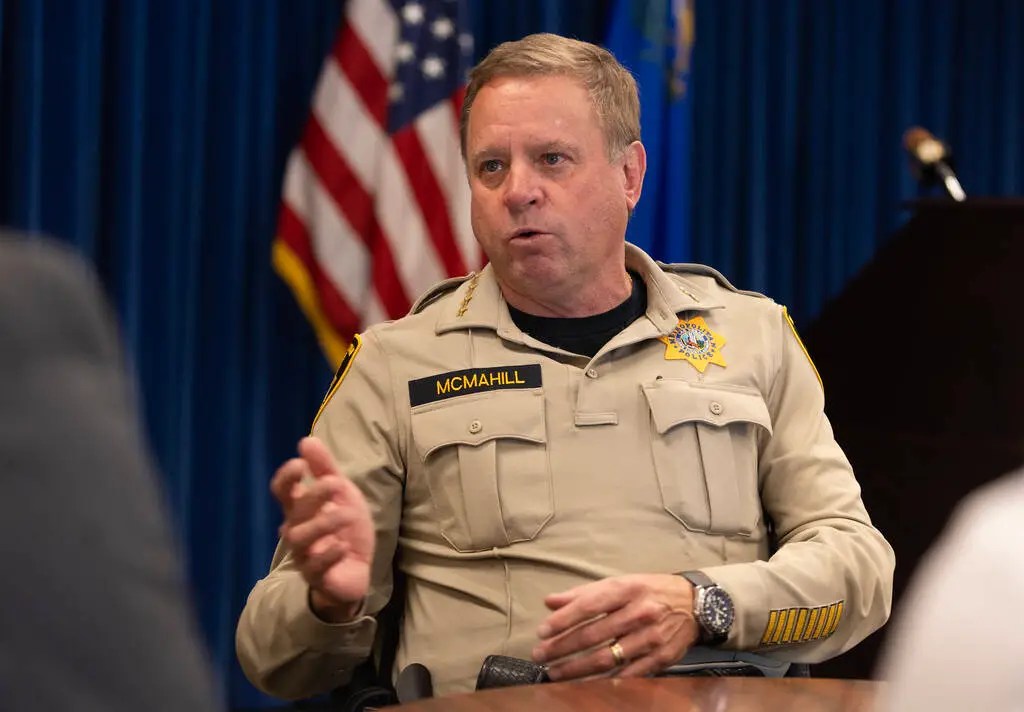
Even so, Sheriff Kevin McMahill said his agency’s relationship with ICE hadn’t changed since it re-entering the jail-based program last year.

“ICE still doesn’t pick up everybody that is eligible, that they’ve said that they wanted to come get from my jail,” McMahill said during a wide-ranging March 5 interview that covered a variety of topics including the department’s cooperation with the Trump administration’s enhanced illegal immigration enforcement.

A 287(g) agreement allows ICE to issue warrants for inmates it wants to pick up for immigration enforcement, giving agents up to 48 hours to pick them up after they’re slated to be released from the jail.

The contract was affirmed in June, but a number of Metro Detention Services Division’s staffers had to complete federal training before it formally went into effect in December, the police department said.

The trained officers flag all foreign-born inmates for ICE, which then conducts background checks on the individuals, McMahill said.

“ICE then takes their personally identifying information, makes a determination whether they’re in the country legally or not, and that they want to deport them or not,” he said.

In some cases, ICE just wants to talk to the inmates, he said. Metro issues a second notification four hours before they are set to be released.

McMahill reiterated that Metro’s role is strictly administrative and limited to the jail.

“I don’t have any way to determine whether or not that person is in the country legally or not,” McMahill said. “That’s why I make the notification.”

Previous informal collaboration

Prior to the agreement, Metro was already notifying ICE when booking foreign-born inmates on allegations of violent crime, DUI and domestic violence. The Laken Riley Act in early 2025 expanded the list of qualifying charges to include theft-related offenses.

About 350 inmates at the county jail had been flagged for ICE on one day in early June, McMahill said last year. At the time, the inmate population fluctuated with an average of 250 overall daily arrests.

The American Civil Liberties Union of Nevada challenged the 287(g) arrangement in a lawsuit. A District Court judge on Friday ruled that the organization didn’t have a standing.

Metro and the city of Las Vegas previously participated in an version of the program at the jails but withdrew in 2019 after a court decision raised concerns about the arrangement’s constitutionality.

“The reality is that whether it’s in this matter or another matter, a court is going to ultimately make a decision on the merits of this agreement, because we will not stop filing challenges on this,” said Athar Haseebullah, executive director of the ACLU of Nevada.

Only Sergio Morais-Hechavarria — who was at the center of the lawsuit — had been held past the 48 hours, said McMahill in the March 5 interview.

In the lawsuit, attorneys said that Metro had delayed the man’s court-ordered release into a treatment facility for weeks before he was taken by ICE. Police argued that he was held because there were no beds available.

McMahill said requests by several federal agencies asking for Metro to participate in immigration enforcement outside the agency’s limited role at the jail have stopped. He told the Review-Journal about a year ago that he had turned down a number of such requests.

McMahill signed the ICE agreement on May 30, a day after President Donald Trump’s administration declared the city of Las Vegas as a so-called sanctuary for undocumented immigrants.

Last year, he said the agreement had been weeks in the making. Nevada landed in a Department of Justice list of sanctuary states months later.

The state was later removed after Gov. Joe Lombardo’s administration signed a memorandum of understanding pledging full collaboration with immigration enforcement.

Deportations without local due process

McMahill gave differing opinions on situations in which undocumented suspects agree to self-deport before their case can be tried in court.

He said he would like undocumented suspects to answer for their alleged local crimes before they’re turned over to immigration authorities.

“I don’t like the fact that ICE is picking up an individual before their case is adjudicated completely,” the sheriff told the Review-Journal.

But on the other hand, he added, “if a guy’s recklessly driving and he kills a woman, why are we releasing them back out into our community?”

He was referring to the case of Angel Antonio Franco Merida, who was allowed to self-deport soon after posting bail in the killing of Amber Brown in 2025.

Metro accused the motorist of running a solid red light before he hit the Las Vegas nurse on a crosswalk. ICE picked up Franco Merida after he posted a $50,000 bond.

McMahill said there were similar cases.

“Same thing with the number of individuals that are charged with sexual assault of a child, and then some judge chooses to let them back out into our community,” he said. “I don’t want them out here.”

Clark County District Attorney Steve Wolfson, Brown’s mother and the suspect’s lawyer lamented that Franco Merida was deported before the U.S. justice system decided his fate.

Should public tensions occur in Las Vegas?

McMahill said he has considered what could happen if the Las Vegas Valley found itself in the position of Minneapolis earlier this year, when federal agents killed protesters Renée Good and Alex Pretti. The two U.S. citizens were shot amid increased immigration enforcement operations.

Enforcement surges have occurred in the Las Vegas Valley, including after Customs and Border Protection agents were dispatched here a while back, McMahill said.

Metro had participated in a tabletop exercise with federal agencies to examine what would happen if someone was shot by officers and what role each entity would play investigating it, the sheriff said.

“It was enlightening to say the least,” McMahill said. “I can tell you, I’m not sure that all of them knew those answers.”

He added: “Trying to get through what these things are going to look like as we move forward, I think is an important part of my role as a sheriff is to lead our way through these things.”

McMahill participates in monthly briefings with federal agencies, including the FBI and the Department of Homeland Security. He said he does so to see how their operations might affect the county.

”I’m confident that we’re complying with the laws that have been asked of us to comply with,” McMahill said. “But as we both know, all of this stuff is very, very unpredictable. So, we’ll be answering tough questions as they come along.” https://www.reviewjournal.com/local/local-las-vegas/ice-takes-240-from-clark-county-jail-under-new-pact-aclu-fights-deal-3723395/?utm_campaign=widget&utm_medium=topnews&utm_source=local&utm_term=ICE%20takes%20240%20from%20Clark%20County%20jail%20under%20new%20pact%3B%20ACLU%20fights%20deal