No, Anthropic’s New Claude Opus 4.7 Model Is Not Mythos Preview

Anthropic on Thursday released a new AI model, and no, it’s not Claude Mythos Preview. Claude Opus 4.7 is now generally available, meant to help developers and vibe coders with their hardest coding tasks.

Opus 4.7, like a well-trained dog, is supposedly better at following instructions. Anthropic wrote in its blog post that Opus 4.7 takes instructions “literally,” where previous models skipped or loosely interpreted prompts. It has improvements to its file-based memory system, so it should be able to recall information from previous sessions and documents. And it can handle larger image files and analyze data from charts more easily. 

Anthropic also said the model is more “tasteful and creative” when creating interfaces, documents and slide decks. There are no details on exactly what Anthropic considers bad versus good taste.

Anthropic made waves earlier this month when it revealed it had created Claude Mythos Preview, its next-generation model, but the model was so good at finding security gaps that the company would be sharing it with tech and internet infrastructure companies — like Cisco, CrowdStrike and Amazon Web Services — so they could address the issues Mythos found. 

The idea is that if tech companies can improve their systems with the help of AI, they will be more resilient to cyberattacks by bad actors who can use publicly available AI models like everyone else.

While Opus 4.7 isn’t the same as Mythos, Anthropic is testing some of its new cybersecurity protections in Opus 4.7. These safeguards, which “automatically detect and block requests that indicate prohibited or high-risk cybersecurity uses,” are the watered-down version of what will be in “Mythos-class” models, the company’s blog post said. But they’re still important as cybersecurity becomes increasingly saturated with AI, both for defense and for attack. https://www.cnet.com/tech/services-and-software/anthropic-drops-claude-opus-4-7-ai-model/
Maine Could Be the First State to Pass a Temporary Ban on New Large Data Centers


As massive amounts of land are being acquired for AI data center expansion across the US, at least one state is hoping to slow down the construction boom, after numerous protests and calls from politicians.

On Tuesday, Maine lawmakers passed a bill that would put a moratorium on the building of new data centers that require more than 20 megawatts of power until October 2027. The pause would give the state time to determine the effects that large data centers have on the energy grid, local utilities and the surrounding environment, Reuters reports. 

The bill still needs to be approved by Gov. Janet Mills. Her office did not immediately respond to CNET’s request for comment. 

Residents living near data centers have also complained about noise and light pollution. 

With the exponential growth, public outcry has erupted from communities where data centers are still being built, as well as from politicians like Rep. Alexandria Ocasio-Cortez and Sen. Bernie Sanders, who previously proposed a bill that would pause all data center constructionSens. Elizabeth Warren and Josh Hawley have also called for greater transparency surrounding data centers.

If Gov. Mills signs the bill, it could set a precedent for other US states  grappling with how to regulate the rapid development of AI instruction, especially given that the Trump Administration has pushed for an acceleration of data center construction. Gov. Mills has 10 days to make her decision.  https://www.cnet.com/tech/services-and-software/maine-could-become-first-state-to-pass-year-long-ban-on-new-large-data-centers/

Opera Adds Browser Connector Feature to Integrate AI Chatbots Into Browsers


Opera announced Thursday a new tool that allows people using its browsers to add more AI chatbots to their browsing experience.

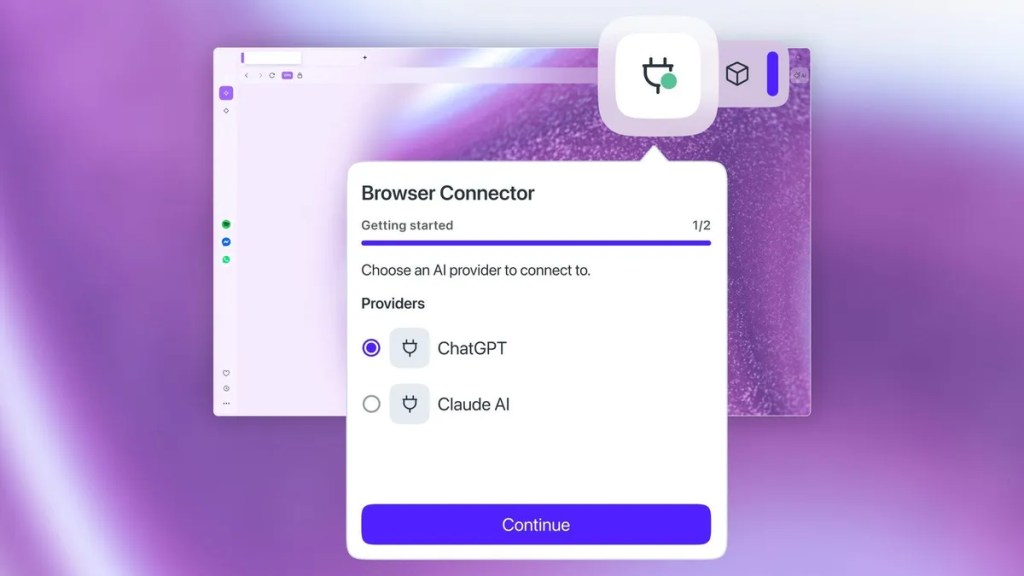
The free feature, called Browser Connector, works with Opera One and Opera GX and lets you integrate AI tools such as OpenAI’s ChatGPT and Anthropic’s Claude into live browsing sessions using Model Context Protocol. The protocol, known as MCP, is an open standard developed by Anthropic that enables a secure two-way connection between AI models, external data sources and tools such as search engines.

Last month, Opera introduced MCP compatibility to Opera Neon, its subscription-based agentic AI browser. Opera says the new feature will allow your AI of choice to provide real-time context of open tabs and active content.

“With Browser Connector, Opera ensures users aren’t bound to a single company’s ecosystem, but are instead free to combine the best tools for their specific needs,” Mohamed Salah, senior director of product at Opera, said in a statement.

To enable the Browser Connector feature, which is now available in Opera’s Early Bird mode, head to Settings in the browser, search for “AI Services” and install it. Then connect ChatGPT or Claude to the feature. https://www.cnet.com/tech/opera-adds-browser-connector-feature-to-integrate-ai-chatbots-into-browsers/