New Clash Between the Registrar and Gustavo Petro Over Source Code

In the same way that the first round of the presidential elections, next May 31, is approaching, tensions are growing between President Gustavo Petro and the National Civil Registry, the entity in charge of organizing the electoral day. Faced with the insistence of the president in asserting that there are risks of fraud, the registrar, Hernan Penagos, made known a robust General Audit Plan to guarantee transparency.

The plan presented by Penagos this Thursday has four strategic components to ensure a comprehensive analysis and a systematic evaluation of the different electoral software systems involved in the process by political organizations, oversight bodies, and electoral observation missions. It includes a specialized international audit led by the Center for Electoral Advisory and Promotion (IIDH / CAPEL).

This audit is aimed at strengthening transparency and confidence in the presidential elections with three modules: specialized international external audit, systems audit, and international technical assistance. “For the first time in the electoral history of the country, there is an international audit of the presidential elections. This audit is in charge of a technical body with broad experience in the matter, which provides independent rigor, international standards, and a comparative perspective,” said Penagos.

Source code will not be delivered, it will be exposed

But perhaps the boldest measure that the Registry is going to take in the interest of transparency is to allow the audit of the source code of the software for the selection of polling jurors, pre-count, scrutiny, and consolidation and dissemination of results by the auditors of the accredited political parties.

At first, the registrar announced that the source code of the four software systems involved in the elections will not be delivered, but will be exposed, something that is planned for two weeks, from May 11 to 24, enough time for party auditors to verify it. In addition, he assured that access to 100% of the code is guaranteed. The process will have the accompaniment of oversight bodies and electoral observation missions.

He then explained why the source code would not be delivered, as requested by President Petro. “Delivering the source code has serious difficulties for processing, for integrity, and for the viability of elections in Colombia,” said Penagos. “The first difficulty generated by that delivery is the possibility of software impersonation, that is, that malicious or ill-intentioned actors want to impersonate it, deriving obviously in the knowledge of the essence and in the possibility of misinforming and establishing fraudulent codes.”

“The delivery of the source code also generates risks because it allows ill-intentioned actors to design attacks on the logic of that source code, causing alterations to it,” continued the registrar. “That also produces evasion of the security controls that are implemented by the IT management, and also allows those actors to look for vulnerabilities to later be able to modify it.”

New clash between Gustavo Petro and the registrar

“The delivery of the source code is not carried out in any democratic nation. In Latin America, no one thinks of delivering or requesting that source code. The risks in terms of vulnerability and attacks on that source code are extremely high,” he concluded.

The response of President Petro was immediate and confrontational: “What registrar Penagos says is a lie. In the world, most countries do not have software with private source codes, but are property of the State. This was ordered by the plenary chamber of the Council of State in 2018, and since that date, all registrars until today have ignored justice,” he wrote on the social network X. “They keep the source code secret in the registry and in the hands of a private company whose owners were prosecuted in the U.S. for bank fraud, and not even the registry can audit it, since it has not learned the lesson when it is its duty.”

In any case, registrar Penagos announced that the process of freezing the pre-count, scrutiny, and digitization software of form E-14, as well as the software for consolidation and national dissemination of results, is planned for May 28. He also reported that as part of the preparatory activities for the presidential elections, multiple simulations will be carried out to evaluate the functionality, security, reliability and productivity of the IT and logistics solutions arranged for these elections.

Among the most decisive simulations are the national and international pre-count simulation, on May 16, the national and consulate scrutiny simulation on May 19 and 20, and the digitization of form E-14 on May 21.

The General Audit Plan also includes carrying out load and stress tests to measure the capacity of the different technological solutions involved in the process: pre-count, scrutiny, consolidation and dissemination, forms E-14 and E-11 (installation record and general voter registry), as well as platforms for jurors, Infovoters, control of polling stations, significant groups of citizens, among others.

The National Civil Registry emphasizes that cybersecurity is an essential component of electoral transparency. Therefore, access to the systems is carried out under controlled schemes, with technical audits, accompaniment of specialized organizations and strict security protocols, which guarantee both the integrity of the process and protection against threats. https://colombiaone.com/2026/04/23/new-clash-between-the-registrar-and-gustavo-petro-over-source-code/
China Central Bank’s Pan Flags AI Risks, Opportunities at IMF

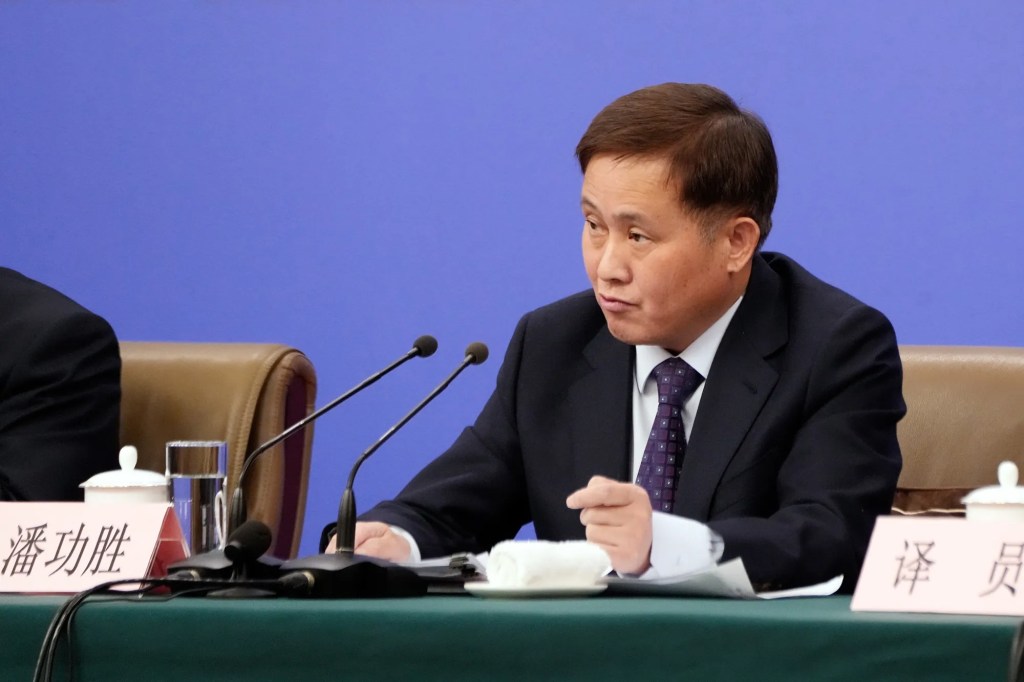
China’s central bank governor Pan Gongsheng said artificial intelligence is driving a new wave of technological and industrial transformation that brings both opportunities and risks to the global economy.

Speaking at an International Monetary Fund meeting in Washington earlier this week, Pan said rising geopolitical tensions, protectionism and trade restrictions are further weighing on global growth and increasing financial market volatility, according to a statement published on the PBOC’s website Saturday.

Pan also called for deeper international policy coordination to safeguard macroeconomic and financial stability and urged countries to uphold multilateralism and free trade.

The remarks came along with meetings this week of major multilateral lenders in Washington, where China’s Finance Minister Lan Fo’an reiterated Beijing’s call for faster World Bank shareholder reform and greater financing for infrastructure and job creation. He also pledged deeper cooperation as China seeks to expand domestic demand and share its development experience with other emerging economies, according to a separate statement on the finance ministry’s website Saturday. https://www.bloomberg.com/news/articles/2026-04-18/china-central-bank-s-pan-flags-ai-risks-opportunities-at-imf?srnd=phx-technology

AI Trusted Less Than Social Media and Airlines, With Grok Placing Last, Survey Says


Google Gemini is the most trusted AI platform among its competition, but many people still have concerns about the technology, according to an American Customer Satisfaction Index poll released Thursday.

In ACSI’s results, AI scored an overall customer satisfaction score of 73 on a scale of 0 to 100, which the authors noted was slightly below social media (74), airlines and mortgage lenders, but in line with energy utilities. 

Of the five platforms mentioned in the survey, Google Gemini led with 76, followed by Microsoft Copilot (74), Claude and ChatGPT (both 73), and Grok and Perplexity (both 71). Meanwhile, TikTok (77) and YouTube (78) both scored better than the AI platforms.

Gemini is one of the most prolific AI services, with access via smart speakersTVsphones and computers, while most ChatGPT users access the AI tool via the ChatGPT website or mobile app, and Grok via social media platform X.

The ACSI poll found that 43% of respondents said reduced human-to-human interaction is their main concern, followed by job loss for future generations (37%) and their own job risk (31%), based on interviews with 2,711 US adults.

Baby Boomers were the most skeptical generation in the poll, with 35% saying they are very concerned about AI’s effects, compared to just 6% who view it extremely favorably.

Disconnect between AI adoption and perception

While platforms such as ChatGPT have up to 1 billion weekly users, there is still a disconnect between AI’s adoption and public perception of it, which is driven by concerns over privacy, the spread of misinformation and the loss of jobs. 

“Consumers spent the last decade learning to distrust how social media platforms handle their data, and AI’s privacy scores suggest they’re carrying that skepticism forward,” said Forrest Morgeson, associate professor of marketing at Michigan State University and director of research emeritus at the ACSI.

21% reported an “extremely favorable” outlook toward AI, while an equal 21% said they are “very concerned about the consequences.” 

These results were in line with another poll published by YouGov this week, which found that only 29% think the positive effects of AI outweigh the negative ones, while 36% think its net effects are negative.

It’s worth noting that more than half of the people interviewed (56%) had no recent experience with AI, but of the 44% who did, half of them use AI at least once a day, and the usage went up with people who earned over $100,000 a year.

Last month, an NBC poll suggested that AI was one of the least-liked things in America, but it was still more popular than the Democratic Party. https://www.cnet.com/tech/services-and-software/ai-trust-survey-acsi-gemini-grok/

Apple and Google Broke Their Own Rules by Promoting ‘Nudify’ Apps, Report Says


If you want an app you built to be downloadable from the Apple App Store or Google Play Store, it has to pass a slew of criteria, including safety standards. 

But a new report on Wednesday alleges that Apple and Google broke their own rules by promoting “nudify” apps that are outlawed in their app store policies.

The Tech Transparency Project, part of a nonprofit tech watchdog, first revealed in January that Apple and Google app stores had over 100 nudify or undressing apps. These are apps with the sole purpose of taking images of people, usually women, and editing them to appear to be that person without clothing, creating what’s called nonconsensual intimate imagery. Many of these apps use generative AI to create deepfakes. 

Apple removed some of the prohibited apps at the time. But many are still out there, as evidenced in a subsequent investigation.

In April, TTP found that Apple and Google still allowed users to search for a number of troubling keywords, including “nudify,” “undress” and “deepnude.” After a deep dive on the top 10 apps across both app stores, TTP found that 40% of the apps advertised themselves as able to “render women nude or scantily clad,” according to the report. 

The new report also found that Google and Apple actually promoted such apps in their stores, increasing their visibility, with Google in particular creating “a carousel of ads for some of the most sexually explicit apps encountered in the investigation.”

Apple and Google both have language in their policies that prohibits apps with “overtly sexual or pornographic material” (Apple) and “sexually suggestive poses in which the subject is nude, blurred or minimally clothed” (Google). And they’ve both enforced these policies in the past — particularly by going after porn apps

But Apple and Google make money from app developers by running advertising and taking a part of paid app subscriptions. Analytics firm AppMagic found that these “nudify” apps were downloaded 483 million times and made more than $122 million in lifetime revenue.

“This revenue stream may be why the two companies have been less than vigilant when it comes to nudify apps that violate their policies,” TTP writes.

Google told CNET that Google Play doesn’t allow apps containing sexual content, and that many of the apps referenced in the report have been suspended for violating its policies. 

Apple told CNET that it has removed 15 of the apps flagged in the report and has contacted six other app developers, notifying them that they need to address issues or risk being removed from the store. It also blocked several additional search terms flagged by TTP.

Nonconsensual graphically sexual content is a growing issue, due in part to AI. We saw in startling clarity how apps with AI can be used to make this illegal and abusive content at the beginning of the year, when Grok users made 1.4 million sexualized deepfakes over a nine-day period. 

Some US senators at the time called on Apple and Google to remove Grok from their app stores, but neither removed it. 

We learned this week that Apple privately reached out to Grok to express its concerns about its abusive AI capabilities and threatened to remove it. Grok is still available in the Apple and Google app stores and is still reportedly able to create abusive AI sexual images, despite the company saying otherwise. https://www.cnet.com/tech/services-and-software/apple-google-app-store-undressing-apps-report-news/

The Race for Fashion Smart Glasses Is On


Like them or not, smart glasses are emerging as a major trend from more companies than it feels possible to even keep track of. With Meta already releasing waves of glasses over the last year and having more on deck for this year, and Google prepping its own, more fashion brands are entering the mix. Apparently, Gucci is one of them.

Gucci-branded, Google-powered Android XR smart glasses are coming next year, Luca de Meo, CEO of fashion eyewear maker Kering, told Reuters on Thursday. 

This isn’t a surprise since Kering — which manufactures multiple fashion eyewear brands, including Gucci — already announced its Android XR glasses partnership a year ago. But it’s a sign that many other familiar brands are now moving fast to develop smart eyewear, whether with Meta, Google or others.

Reebok has prescription-ready smart eyewear, made with Lucyd, and Meta’s own Oakley-branded sports gear is aiming for similar territory. Reports have been floating for over a year that EssilorLuxottica, Meta’s major eyewear partner, could be announcing more brands in its portfolio coming on board beyond just the existing Oakley and Ray-Ban smart glasses. Prada, another luxury brand in the Gucci zone, could still be next.

Google is also expected to debut its line of smart glasses this year, alongside Warby Parker and Korean fashion brand Gentle Monster.

The smartwatch precedent for smart fashion glasses

It reminds me heavily of what happened with smartwatches about a decade ago. When Google launched Android Wear (now Wear OS) smartwatches, a ton of fashion brands that also partnered: Tag Heuer, Montblanc and Fossil Group come right to mind. 

Over time, the number of fashion smartwatches faded as more companies vanished or got acquired, and major tech companies started to take over with their iconic brands. It’s more of a tech brand-driven smartwatch world now.

Apple is expected to launch its own smart glasses in the next year, and they’re likely to be made by Apple… but fashion partnerships could still pop up, too. Apple already has Hermès and Nike Apple Watch variants with custom bands. 

Smart glasses still feel like they ride outside the standard eyewear space, but more prescription-friendly models should be the next trend. It’ll have to happen, because anyone who’s already wearing glasses and wants to switch will be expecting it. 

I’m sure a lot more are coming, especially with Meta and Google being so ready to find fashion partners, and Apple looming. And EssilorLuxottica, as well as Kering, have a lot more brands in their portfolios that haven’t even begun to be tapped. https://www.cnet.com/tech/gaming/todays-wordle-hints-answer-and-help-for-april-13-1759/

No, Anthropic’s New Claude Opus 4.7 Model Is Not Mythos Preview

Anthropic on Thursday released a new AI model, and no, it’s not Claude Mythos Preview. Claude Opus 4.7 is now generally available, meant to help developers and vibe coders with their hardest coding tasks.

Opus 4.7, like a well-trained dog, is supposedly better at following instructions. Anthropic wrote in its blog post that Opus 4.7 takes instructions “literally,” where previous models skipped or loosely interpreted prompts. It has improvements to its file-based memory system, so it should be able to recall information from previous sessions and documents. And it can handle larger image files and analyze data from charts more easily. 

Anthropic also said the model is more “tasteful and creative” when creating interfaces, documents and slide decks. There are no details on exactly what Anthropic considers bad versus good taste.

Anthropic made waves earlier this month when it revealed it had created Claude Mythos Preview, its next-generation model, but the model was so good at finding security gaps that the company would be sharing it with tech and internet infrastructure companies — like Cisco, CrowdStrike and Amazon Web Services — so they could address the issues Mythos found. 

The idea is that if tech companies can improve their systems with the help of AI, they will be more resilient to cyberattacks by bad actors who can use publicly available AI models like everyone else.

While Opus 4.7 isn’t the same as Mythos, Anthropic is testing some of its new cybersecurity protections in Opus 4.7. These safeguards, which “automatically detect and block requests that indicate prohibited or high-risk cybersecurity uses,” are the watered-down version of what will be in “Mythos-class” models, the company’s blog post said. But they’re still important as cybersecurity becomes increasingly saturated with AI, both for defense and for attack. https://www.cnet.com/tech/services-and-software/anthropic-drops-claude-opus-4-7-ai-model/

Maine Could Be the First State to Pass a Temporary Ban on New Large Data Centers


As massive amounts of land are being acquired for AI data center expansion across the US, at least one state is hoping to slow down the construction boom, after numerous protests and calls from politicians.

On Tuesday, Maine lawmakers passed a bill that would put a moratorium on the building of new data centers that require more than 20 megawatts of power until October 2027. The pause would give the state time to determine the effects that large data centers have on the energy grid, local utilities and the surrounding environment, Reuters reports. 

The bill still needs to be approved by Gov. Janet Mills. Her office did not immediately respond to CNET’s request for comment. 

Residents living near data centers have also complained about noise and light pollution. 

With the exponential growth, public outcry has erupted from communities where data centers are still being built, as well as from politicians like Rep. Alexandria Ocasio-Cortez and Sen. Bernie Sanders, who previously proposed a bill that would pause all data center constructionSens. Elizabeth Warren and Josh Hawley have also called for greater transparency surrounding data centers.

If Gov. Mills signs the bill, it could set a precedent for other US states  grappling with how to regulate the rapid development of AI instruction, especially given that the Trump Administration has pushed for an acceleration of data center construction. Gov. Mills has 10 days to make her decision.  https://www.cnet.com/tech/services-and-software/maine-could-become-first-state-to-pass-year-long-ban-on-new-large-data-centers/

Opera Adds Browser Connector Feature to Integrate AI Chatbots Into Browsers


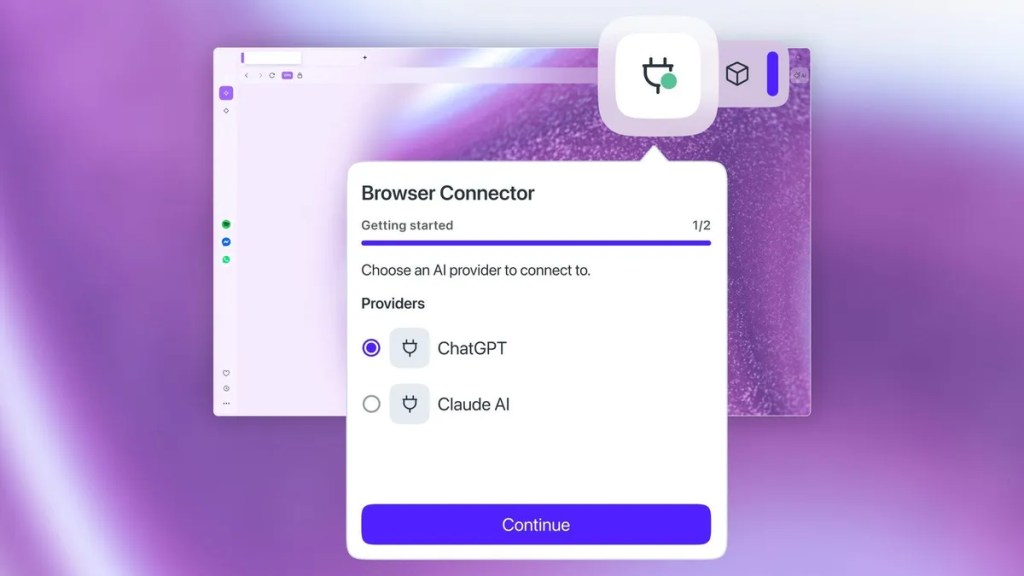
Opera announced Thursday a new tool that allows people using its browsers to add more AI chatbots to their browsing experience.

The free feature, called Browser Connector, works with Opera One and Opera GX and lets you integrate AI tools such as OpenAI’s ChatGPT and Anthropic’s Claude into live browsing sessions using Model Context Protocol. The protocol, known as MCP, is an open standard developed by Anthropic that enables a secure two-way connection between AI models, external data sources and tools such as search engines.

Last month, Opera introduced MCP compatibility to Opera Neon, its subscription-based agentic AI browser. Opera says the new feature will allow your AI of choice to provide real-time context of open tabs and active content.

“With Browser Connector, Opera ensures users aren’t bound to a single company’s ecosystem, but are instead free to combine the best tools for their specific needs,” Mohamed Salah, senior director of product at Opera, said in a statement.

To enable the Browser Connector feature, which is now available in Opera’s Early Bird mode, head to Settings in the browser, search for “AI Services” and install it. Then connect ChatGPT or Claude to the feature. https://www.cnet.com/tech/opera-adds-browser-connector-feature-to-integrate-ai-chatbots-into-browsers/

Oracle faces a high bar for earnings as investors look for an AI payoff

Oracle is pivoting toward cloud infrastructure, and that has proved controversial on Wall Street due to the heavy spending it requires. Can the company sway the doubters with its third-quarter results Tuesday?

Shares of Oracle 

ORCL-0.92% are down 22% so far this year, and they’re off 55% from their September peak. Investor sentiment has remained subdued even as the company announced a $50 billion funding strategy that some analysts thought would remove an overhang around the amount of debt the company will need to take on this year.

Unanswered questions remain regarding Oracle’s ability to execute on AI infrastructure buildouts. Investors are also curious about the ultimate return on investment that will come from all these AI commitments, BNP Paribas global head of software research Stefan Slowinski wrote in a note Friday.

While Slowinski doesn’t expect Oracle’s earnings results to offer definitive conclusions, “we believe simply hitting [fiscal third-quarter] consensus numbers would be a good first step in rebuilding confidence that the company can consistently deliver against expectations,” he wrote. Slowinski maintained his buy rating but lowered his price target to $201 from $290.

Analysts tracked by FactSet are expecting Oracle to report $16.2 billion in sales and $1.70 in earnings per share. Remaining performance obligations, or future revenue not yet recognized, are expected to be $556 billion.

Read: Oracle’s selloff offers a chance to buy an ‘upper-echelon’ growth stock for cheap, analyst says

Last Friday, Bloomberg reported that negotiations for a 600-megawatt expansion at Oracle’s Abilene, Texas, data-center site were canceled due to financing challenges and OpenAI’s shifting needs. However, TD Cowen analyst Derrick Wood wrote in a Monday note that the development could reduce Oracle’s capital-expenditure needs by up to $20 billion in the next few years but not impact Oracle’s RPO, as he believed the deal hadn’t been formally signed.

Oracle has disputed these reports, saying in a statement Sunday that “recent media activity about the Abilene site are false and incorrect.”

Amid AI funding concerns, Oracle is reported to be planning thousands of job cuts as well. Meanwhile, the company is expected have put $14 billion toward capital expenditures in the third quarter, leading to negative free cash flow of $8.1 billion.

Read: Oracle is the canary in the coal mine for Big Tech’s debt-fueled AI spending spree

For Tuesday’s earnings report, Jefferies analyst Brent Thill is focusing on a few key bogeys, or performance benchmarks. These include 86% growth for the company’s Oracle Cloud Infrastructure division, 42% operating margins and $18 billion in net new RPO. However, Thill expects Oracle’s margins to continue declining in the short term as the company’s business becomes more focused on AI infrastructure. He anticipates adjusted operating margins to trough at roughly 33% in fiscal year 2028.

“Overall, we see favorable risk‑reward, with our analysis suggesting the market is assigning negative value to the [OpenAI] deal and the stock already discounting a bear‑case outcome,” Thill wrote in a note last week. https://www.marketwatch.com/story/oracle-faces-a-high-bar-for-earnings-as-investors-look-for-an-ai-payoff-8ecd279e?mod=newsviewer_click