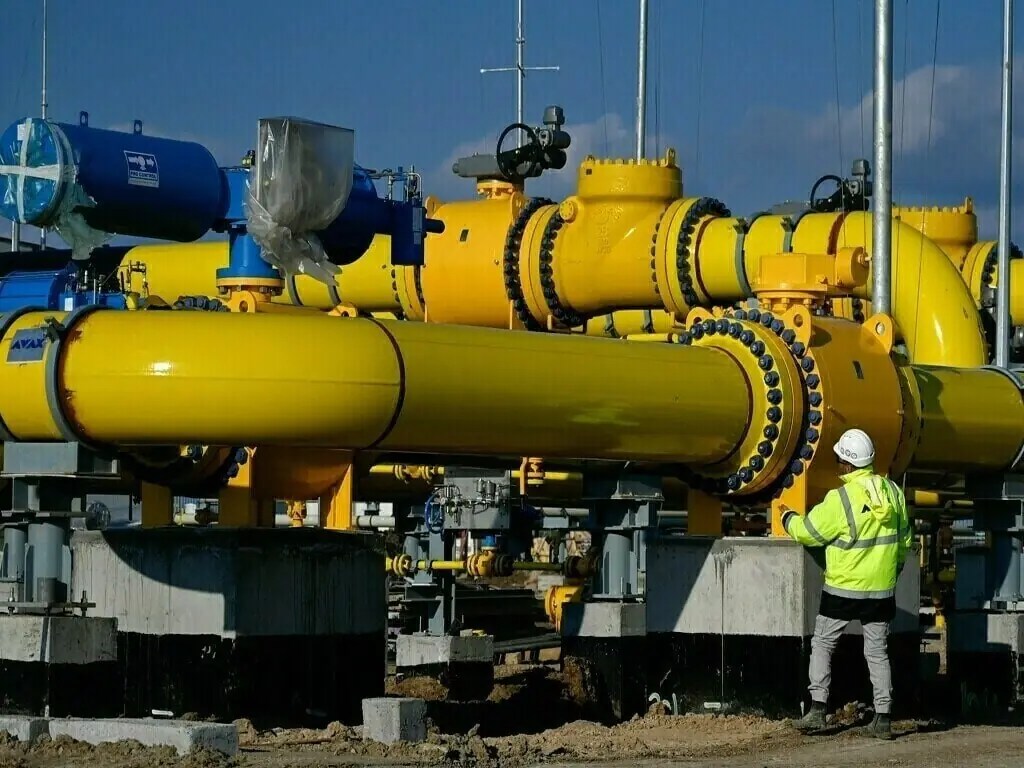
Reuters reported that Central Asian countries and Afghanistan have increased fuel imports from Russia and Belarus following a reduction in fuel supplies from the Middle East.
The news agency reported on Wednesday, April 15, citing trade sources, that fuel imports of these countries increased by more than 50 percent via rail in the first three months of the current year.
According to the report, total fuel imports to the region reached 3.347 million tons between January and March.
The report states that following the European Union’s sanctions on Russian petroleum products in 2023, Central Asia and Afghanistan have become one of the main markets for Russia’s fuel exports.
According to the report, Afghanistan’s imports from Russia and Belarus under Taliban control increased fourfold in the first three months of the current year compared to the same period last year, reaching 530,000 tons.
Afghanistan does not need a softer public relations line. It needs proof that it can act like a responsible state. That means controlling armed groups, respecting borders, treating its own people with dignity, and showing neighbours that Afghan soil will not be used to spread fear. Right now, the country cannot ignore the scale of its crisis. The OCHA 2026 humanitarian plan says 21.9 million people, about 45 percent of the population, will need humanitarian help in 2026, and the response plan seeks $1.71 billion to reach 17.5 million people. At the same time, the World Bank December 2025 assessment says GDP is projected to grow 4.3 percent in 2025 after 2.5 percent in 2024, while the World Bank development update makes clear that poverty, weak jobs, and falling income per person still define daily life. In plain words, Afghanistan is too fragile to remain isolated and too proud to admit how much normal state behaviour now matters.
If Kabul wants credibility, it must take visible and verified action against banned groups such as TTP and ISKP. This is where the world is least willing to trust words. The UN monitoring report from December 2025 stated that TTP carried out numerous high profile attacks in Pakistan from Afghan soil, and the follow up report in February 2026 said ISIL K retained significant capability despite pressure. Afghanistan should stop pretending that denial is a strategy. It should arrest commanders, shut training routes, seize weapons depots, freeze financing channels, and set up a permanent intelligence contact group with Pakistan, Central Asia, China, and Iran. A government is judged by what it prevents, not by what it denies. If one cross border attack can undo months of diplomacy, then strict action against these groups is not a favour to outsiders. It is the entrance fee for legitimacy.
A Good Neighbour Is A Safe Neighbour
Afghanistan also must prove that it can live with its neighbours without dragging the whole region into another cycle of revenge. The OHCHR appeal for lasting peace came after a sharp rise in border violence. A Reuters report on 42 civilians killed and 104 wounded showed the human cost early in March, and another Reuters report on more than 100,000 displaced showed how fast a border crisis becomes a civilian disaster. This is why good neighbour policy cannot be a vague slogan. It must mean no shelter for militants who target nearby countries, no state tolerance for recruitment networks, and no use of Afghan territory to destabilize Pakistan, Iran, or Central Asia. The world can work with a difficult neighbour. It cannot trust a dangerous one.
Afghanistan still has one great advantage, its location. It can either be the broken hinge of the region or the bridge between Central and South Asia. That choice is still open. The CASA 1000 project is built around 1,300 MW of seasonal electricity trade and about 4.6 billion kWh a year, while the TAPI pipeline project is designed to move 33 billion cubic meters of gas annually. These are not just infrastructure dreams. They are tests of whether Afghanistan can protect transit, contracts, and cross border commerce. The warning signs are already visible. The World Bank Economic Monitor says exports in December 2025 fell 15 percent year on year to $162 million after border disruption. Afghanistan should understand the lesson. Stability pays rent. Instability burns revenue. A country that wants investment cannot behave like a corridor of permanent risk.
Human Rights Are Not A Side Issue
Many in Kabul still act as if human rights are a Western add on, something separate from recognition. That is a serious mistake. Human rights are now central to whether Afghanistan is treated as a normal state. The UNESCO and UNICEF warning in January 2026 said Afghanistan remains the only country in the world where girls and women are barred from secondary and higher education. The UNESCO estimate of 2.2 million girls shut out should shame any authority that claims to govern in the national interest, and the UNESCO education situation report shows the damage is not temporary, it is compounding. No country can shut half its future out of classrooms and then ask the world to treat it like a serious partner. Reopening schools and universities to girls, restoring women’s right to work, and ending restrictions on public life would do more for Afghanistan’s image than a hundred diplomatic meetings.
There is one more truth Kabul should face. Recognition will not come from symbolism. It will come from measurable conduct. The UNAMA human rights update shows how restrictions on women and girls continue to shape everyday life, and the UNAMA justice findings say women are nearly four times less likely than men to access formal justice. At the same time, the pressure on Afghan society is getting worse. UNHCR said one million Afghans returned from Pakistan in 2025, the UNHCR returns dashboard shows the flow is still active, the UNDP report on returnees and host communities says more than 2.3 million people returned in 2025, and the UNDP review showing nine in ten households cut daily consumption shows how thin the country’s social cushion has become. My view is simple. Afghanistan should propose a regional compliance compact, publish a public scorecard every six months on counterterror action, border conduct, girls’ education, women’s employment, and transit security, and let the UN and regional states verify it. That would be something new, practical, and hard to dismiss. The world does not expect perfection from Afghanistan. It expects evidence that Afghanistan has finally chosen state responsibility over permanent exception. https://moderndiplomacy.eu/2026/04/15/afghanistans-response-and-the-price-of-empty-words/
– Pakistani army destroyed ammunition depot in eastern Khost province, Pakistan Television reports, citing security sources
KARACHI, Pakistan
Cross-border tensions between Pakistan and Afghanistan continued on Monday, with at least three children killed in ongoing fighting in eastern Kunar province, Afghan media reported.
According to Afghanistan’s broadcaster Tolo News, three children were killed, and two were injured when shells allegedly fired by Pakistani military forces struck a refugee camp in the Khass Kunar district.
However, state broadcaster Pakistan Television reported, citing security sources, that Pakistani army forces destroyed an ammunition depot in eastern Khost province as part of their operations against the “Afghan Taliban regime’s aggression.”
There was no official statement from either party regarding the latest developments.
Pakistan has claimed that its “self-defense” measures ensured that no civilians were targeted.
In a related development, Pakistan on Monday ordered the closure of scores of schools located near the border in the North Waziristan, Mohmand, Khyber, and Bajaur districts until further notice as a precautionary measure in light of the prevailing security situation.
Pakistan’s Information Minister Attaullah Tarar on Monday claimed 435 Afghan Taliban operatives and suspected militants have been killed and more than 630 injured in airstrikes and clashes since Thursday.
Kabul, for its part, claims 56 Pakistani soldiers were killed in the border clashes.
The veracity of casualty claims by Islamabad and Kabul could not be independently verified.
Chinese envoy meets Pakistan’s top diplomat
Separately, Pakistani Foreign Minister Ishaq Dar on Monday received Chinese Ambassador Jiang Zaidong in Islamabad.
“Discussions were held on the evolving regional situation and broader developments,” the Pakistani Foreign Ministry said on the US social media company X.
Dar emphasized the importance of dialogue, diplomacy, and continued consultations, while reaffirming Pakistan’s commitment to peace and stability in the region and beyond.
The statement did not mention whether they discussed border tensions with Afghanistan.
Notably, Beijing has said it was engaging Islamabad as well as Kabul to de-escalate the border situation.
Death toll at 84
Tensions between the two neighbors have been running high since last Thursday, when Kabul launched “retaliatory operations” along the border after Pakistani airstrikes in late February.
According to a tally of figures from both sides of the border, 84 people have been killed so far.
They include 12 Pakistani soldiers and one civilian, while 13 Afghan soldiers and 58 civilians lost their lives during the clashes. One Pakistani soldier remains missing.
Pakistan in late February launched airstrikes on “terror targets,” killing 70 “terrorists,” while Afghan officials and the UN reported civilian deaths, claims Pakistan denies.
 2026NowNews