Afghanistan’s Response and the Price of Empty Words

Afghanistan does not need a softer public relations line. It needs proof that it can act like a responsible state. That means controlling armed groups, respecting borders, treating its own people with dignity, and showing neighbours that Afghan soil will not be used to spread fear. Right now, the country cannot ignore the scale of its crisis. The OCHA 2026 humanitarian plan says 21.9 million people, about 45 percent of the population, will need humanitarian help in 2026, and the response plan seeks $1.71 billion to reach 17.5 million people. At the same time, the World Bank December 2025 assessment says GDP is projected to grow 4.3 percent in 2025 after 2.5 percent in 2024, while the World Bank development update makes clear that poverty, weak jobs, and falling income per person still define daily life. In plain words, Afghanistan is too fragile to remain isolated and too proud to admit how much normal state behaviour now matters.

If Kabul wants credibility, it must take visible and verified action against banned groups such as TTP and ISKP. This is where the world is least willing to trust words. The UN monitoring report from December 2025 stated that TTP carried out numerous high profile attacks in Pakistan from Afghan soil, and the follow up report in February 2026 said ISIL K retained significant capability despite pressure. Afghanistan should stop pretending that denial is a strategy. It should arrest commanders, shut training routes, seize weapons depots, freeze financing channels, and set up a permanent intelligence contact group with Pakistan, Central Asia, China, and Iran. A government is judged by what it prevents, not by what it denies. If one cross border attack can undo months of diplomacy, then strict action against these groups is not a favour to outsiders. It is the entrance fee for legitimacy.

A Good Neighbour Is A Safe Neighbour

Afghanistan also must prove that it can live with its neighbours without dragging the whole region into another cycle of revenge. The OHCHR appeal for lasting peace came after a sharp rise in border violence. A Reuters report on 42 civilians killed and 104 wounded showed the human cost early in March, and another Reuters report on more than 100,000 displaced showed how fast a border crisis becomes a civilian disaster. This is why good neighbour policy cannot be a vague slogan. It must mean no shelter for militants who target nearby countries, no state tolerance for recruitment networks, and no use of Afghan territory to destabilize Pakistan, Iran, or Central Asia. The world can work with a difficult neighbour. It cannot trust a dangerous one.

Afghanistan still has one great advantage, its location. It can either be the broken hinge of the region or the bridge between Central and South Asia. That choice is still open. The CASA 1000 project is built around 1,300 MW of seasonal electricity trade and about 4.6 billion kWh a year, while the TAPI pipeline project is designed to move 33 billion cubic meters of gas annually. These are not just infrastructure dreams. They are tests of whether Afghanistan can protect transit, contracts, and cross border commerce. The warning signs are already visible. The World Bank Economic Monitor says exports in December 2025 fell 15 percent year on year to $162 million after border disruption. Afghanistan should understand the lesson. Stability pays rent. Instability burns revenue. A country that wants investment cannot behave like a corridor of permanent risk.

Human Rights Are Not A Side Issue

Many in Kabul still act as if human rights are a Western add on, something separate from recognition. That is a serious mistake. Human rights are now central to whether Afghanistan is treated as a normal state. The UNESCO and UNICEF warning in January 2026 said Afghanistan remains the only country in the world where girls and women are barred from secondary and higher education. The UNESCO estimate of 2.2 million girls shut out should shame any authority that claims to govern in the national interest, and the UNESCO education situation report shows the damage is not temporary, it is compounding. No country can shut half its future out of classrooms and then ask the world to treat it like a serious partner. Reopening schools and universities to girls, restoring women’s right to work, and ending restrictions on public life would do more for Afghanistan’s image than a hundred diplomatic meetings.

There is one more truth Kabul should face. Recognition will not come from symbolism. It will come from measurable conduct. The UNAMA human rights update shows how restrictions on women and girls continue to shape everyday life, and the UNAMA justice findings say women are nearly four times less likely than men to access formal justice. At the same time, the pressure on Afghan society is getting worse. UNHCR said one million Afghans returned from Pakistan in 2025, the UNHCR returns dashboard shows the flow is still active, the UNDP report on returnees and host communities says more than 2.3 million people returned in 2025, and the UNDP review showing nine in ten households cut daily consumption shows how thin the country’s social cushion has become. My view is simple. Afghanistan should propose a regional compliance compact, publish a public scorecard every six months on counterterror action, border conduct, girls’ education, women’s employment, and transit security, and let the UN and regional states verify it. That would be something new, practical, and hard to dismiss. The world does not expect perfection from Afghanistan. It expects evidence that Afghanistan has finally chosen state responsibility over permanent exception. https://moderndiplomacy.eu/2026/04/15/afghanistans-response-and-the-price-of-empty-words/
Liberia: Benoni Urey, Others Rally Around Ambassador Kemayah and Family After His Mother’s Death

Monrovia-A rare moment of unity that cuts across political lines has set the pace, as some of Liberia’s most prominent political figures have converged in sympathy with former Minister of Foreign Affairs, Amb. Dee-Maxwell Saah Kemayah, Sr., following the death of his mother, the late Ma-Watta Kumba Soliyah Larmie.

Among those leading the latest wave of condolences is Benoni Wilfred Urey, Political Leader of the All Liberian Party (ALP), who paid a solemn visit to Ambassador Kemayah’s residence over the weekend.

Mr. Urey who spent considerable time with Ambassador Kemayah and his bereaved family, described the loss as “deeply personal and profoundly painful,” while emphasizing the importance of standing with one another in times of grief.

“Beyond politics, we are Liberians first,” Urey said, during the visit.  “This is a moment to share in sorrow and to offer strength to a brother who has served this country with distinction.”

He further committed to his full participation in all funeral activities, assuring Ambassador Kemayah of being with him through his period of mourning his beloved mother; stressing “I will be with you the whole day of the funeral of our late mother”.

Former Foreign Minister, Ambassador Kemayah for his part, welcomed Mr. Benoni Wilfred Urey at his residence and expressed thanks and appreciation to him, stating “my family and I are grateful to you, my dear friend and brother, Mr. Urey for the thought and visiting me at my residence in empathy and solidarity with the Kemayah Family and me for the unfortunate passing of my beloved mother, Ma-Watta Kumba Soliyah Larmie and the very painful circumstances she had to endure as a consequence of the relentless persecution against me only and only because of my political affiliation with the 25th President of the Republic of Liberia, H.E. Dr. George Manneh Weah”.

Ambassador Kemayah further commended Mr. Urey for his commitment to spend the day of the funeral with him and fully participate in all of the activities of his mother’s funeral on Friday, April 10, 2026.

An Outpouring of National Support

Benoni Urey’s visit is among a series of high-profile condolences extended to Ambassador Kemayah since the passing of his mother on March 11.

Former President George Manneh Weah was among the earliest dignitaries to visit Kemayah family.

Former President George Manneh Weah was among the earliest dignitaries to visit Former Foreign Minister Kemayah and family. During his visit, Weah emphasized the enduring nature of family bonds and urged the former foreign minister to remain strong in the face of such an irreplaceable loss.

Also paying their respect were some former senior government officials, lawmakers, diplomats, prelates, executives of the Liberia Baptist Missionary and Educational Convention, the Vice Chair and members of the Board of Trustees of the Liberia Baptist Theological Seminary as well as some political leaders from across the spectrum.

Sources close to the family confirmed that some representatives of the current administration, members of the Legislature, and Liberia’s diplomatic corps have all expressed condolences, either through personal visits, verbal or written messages of condolence to former Foreign Minister Kemayah and family.

A senior official of the current Government, speaking on condition of anonymity, described the wave of sympathy as “a reflection of the esteem in which Ambassador Kemayah is held nationally and internationally.”

Circumstances Surrounding Her Passing

Family sources disclosed that Ma-Watta Kumba Soliyah Larmie passed away at the St. Joseph’s Catholic Hospital in Monrovia on the night of this past national decoration day.

According to a source close to the family and some community members who spoke on condition of anonymity, she was hypotensive prior to the situation, but after receiving trauma and shock from her very harsh awakening from sleep in the early hours of the morning and witnessing the search of the residence of her son, Ambassador Kemayah, in Paynesville, including her place of stay in the same residence as she had gone in early June of 2025 to spend some time with her son, Ambassador Kemayah and his arrest, her health situation kept worsening up to her death asserting that “since Ma-Watta personally experienced the very traumatic search of former Foreign Minister Kemayah’s residence, including her place of stay and the arrest of her son, Ambassador Kemayah, she never recovered from the effects of the shock and trauma from the incident and  continued going downhill up to her death on this gone decoration day”, the source close to the family emphasized.

Her death has been described by family members as a great loss, not only to the Kemayah family, but also to the wider community, where she was known for her humility, strength, and dedication to family values.

According what the Kemayah Family has released,  funeral rites for the late Ma-Watta Kumba Soliyah Larmie will be held on Friday, April 10, 2026 at 9:00a.m. prompt with the removal of the body of Ma-Watta Kumba Soliyah Larmie from the Samuel A. Stryker Funeral Home and taken to the Historic Providence Baptist Church on Ashmun Street, Monrovia, Liberia, where the Funeral Service will begin at 9:30a.m. precisely. Following the funeral service on Friday, April 10, 2026 at the Historic Providence Baptist Church, the body of Ma-Watta Kumba Soliyah Larmie will immediately be taken to the Kaiser Memorial Lawn Cemetery in Brewerville, Montserrado County  on the same day, where she will be buried. Right after the burial of Ma-Watta Kumba Soliyah Larmie, loveones, friends, neighbors, community members, sympathizers, guests and well-wishers will all join the Kemayah, Larmie, Golanyon, Otis Mason, Charyoe, Karngba, Bundoedu, Kpaemalo and affiliated Families at the St. Gabriel Catholic Parish Hall in Brewerville, Montserrado County  for the Repast in honor, respect and loving memory of the Late Ma-Watta Kumba Soliyah Larmie.

As preparations intensify, the continuous flow of sympathizers underscores a message, one of unity, compassion, and shared humanity, transcending political affiliations in honor of a life remembered.

For Ambassador Kemayah, the days ahead remain heavy with grief, but also strengthened by the visible solidarity of a nation standing with him in mourning. https://frontpageafricaonline.com/obituary/liberia-benoni-urey-others-rally-around-ambassador-kemayah-and-family-after-his-mothers-death/

Liberians React to Government’s Handling of Guinea–Liberia Border Crisis

Following escalating tensions along the Guinea–Liberia border, the Government of Liberia has been engaging leaders within the Mano River Union, including the Presidents of Guinea, Mamady Doumbouya, and Sierra Leone, Julius Maada Bio.

As tensions continue to rise—particularly after reports that Guinean soldiers crossed into Liberian territory—the Liberian government has called for calm while exploring diplomatic avenues to reach an amicable resolution to the conflict.

In the wake of the government’s response, Liberians have been weighing in. FrontPage Africa spoke with several citizens to sample public opinion and also reviewed comments from prominent figures and officials expressed on social media and at public gatherings.

Leon B. Saydee West Point: “Government is doing her best through the diplomatic means to engage the issue. When the issue first started, we saw how tension was building. We learned that the soldiers from the Guinea crossed to the Liberian side. The government is using diplomatic and so diplomatic approaches don’t come to a conclusion overnight. Looking for what you want to achieve from every engagement doesn’t come over. The government is tightlipped on the real issue because this is a security matter and it has to be classified. However, people are speculating and when people speculate fear becomes the order of the day. The Liberian government is engaging through diplomacy but must come out with some factual information that will satisfy the curiosity of the ordinary people.”

Melvin Doweh, head of Progressive Liberian Working Group: “That issue at the border needs continue round table approach. It is not an issue to be politicized because for us we are calling for this country first narrative. We are all Africans and so there are issues that will come about in such a time. But we believe that government will be very mature enough to sit with their counterpart and resolve the matter. The issue of escalating the matter is not good. We need peace. We cannot go back to war.”

Euodia T. Gbatoe, Gender Activist: “In my view, the Liberian government is not handling the situation the right way. In every conflict there must be a solution. I do believe that the Liberian government is begging the Guinean government to handle things amicably, but then the Guinean government is not listening and they keep invading the land of Liberia. For allowing your neighbor to take over your border is very disappointing. If the diplomatic approach cannot hold, we will use the radical approach. It is not right to see those people on our soil and we keep quiet. If our President can go to Guinea and come back and nothing change, probably the President might be in the know of certain things and they don’t want to tell the public.”

Cyrus Gbaryee Gardnersville: “The way in which our government is handling this border issue with Guinea is very weak. Our government is showing weakness to the whole world. When Joseph Boakai was taking power, he vowed to protect and defend the territory of Liberia. But today we realize that Guinea is taking our land and the government is sitting down and doing nothing about it. So we as Liberians, it means we are weak indeed. This is the same thing that happened those days. If you go Ivory Coast, our land has been occupied by the Ivorians. Guinea has vast of our land today because during those days, our leaders were very weak. And that is the same thing Joseph Boakai is showing to the Liberian people -that Guinea is now taking our land in this dispensation. Government is being silenced. I think the government is hiding something from the citizens regarding this border issue and it’s the wrong way they are proceedings. We expect them to update us but they are not updating us. They are playing games with our lives.”

Cllr. Moriah Yeakula, lawyer and gender advocate: “I’m opposition to this gov’t. I’m not opposition to my country. Internally, I don’t support things they do but when we have to face a foreign foe, I support the gov’t & stand with my country. We can criticize later. May God lead Pres. Boakai today in the MRU talks.”

Titus B. Pakalah, rights activist: “I think the government’s response to the Guinea, Liberia border situation has been too slow and somewhat inadequate, especially considering that this involves a breach of Liberia’s territorial integrity. While it is true that the situation appears to stem from a long-standing border dispute, particularly around the Makona River where there are competing claims over land and mineral resources, that does not justify the level of delay and weak initial response we’ve seen. From the information available, Guinean soldiers crossed into Liberian territory, seized equipment, and even raised their flag. In a situation like that, the expectation is a swift and firm response led by the military, not a delayed or hesitant reaction. The fact that there were reports of late deployment and initial reliance on police raises serious concerns about preparedness and decision-making at the highest level.”

Akiah Precious: “Well! ECOWAS would have been the first choice. That’s exactly one of the reasons for joining a regional body. We cannot always wait for situation to arise before finding solutions. The most prudent approach to take is early preparation and intervention. Just thinking aloud, what if those Guinean came at midnight to plant their flag, and fully armed to defend it? Liberia needs to be on top of their game. Everything is not about rice price.”

Cllr. Tiawon Gongloe: “President Joseph Nyumah Boakai’s decision to suspend mining activities in the Makona River area was commendable. But suspension alone is not enough. There must be a transparent and independent investigation into the source of this dispute. If any individual or entity violated Liberian law or international obligations, then that person or entity must be held accountable. If any government official is implicated in conduct that undermined Liberia’s sovereignty, that official should be dismissed without hesitation. Sovereignty cannot be, should not be, and must never be compromised for profit. National integrity cannot and should not be traded for minerals. At the same time, I urge our Guinean brothers and sisters to remember our shared history. Liberia and Guinea are bound together by more than geography. We are bound by sacrifice and mutual defense of independence. Disputes must be resolved through diplomacy, joint investigation, and respect for law. Liberia must defend its territorial integrity. Guinea must defend its sovereignty. But both must stand together in defense of peace. The Makona River should symbolize cooperation, not confrontation. I call upon Presidents Mamady Doumbouya and Joseph Nyumah Boakai to honor the legacies of Presidents Ahmed Sékou Touré and William V. S. Tubman, who chose peace, principle, and African solidarity over provocation.

Prescilla Abram Cooper, Representative, Montserrado County District #5: “Some of us who lived through our civil war fully understand the horrific experiences our nation endured. We know, firsthand, the pain, loss, and destruction that come when conflict takes root. Weapons of war do not discriminate. They do not recognize where you come from, who you are, your political affiliation, or your religious beliefs. They destroy everything and everyone in their path. That is why we must speak with one voice: Liberia must never return to those dark days. Let it be clearly understood; anyone, regardless of who they are, who attempts to beat the drums of war or acts in ways that are unpatriotic and against the interest of our nation, is undermining the peace we have all fought so hard to sustain. As such, we will support and recommend lawful measures to ensure accountability. Our duty now is to protect that peace, uphold unity, and place the interest of Liberia above all else.”

Thomas Gbollie, Resident of Bushrod Island: “I want to applaud the government for being diplomatic. Somebody cannot come pick fuss on you then you react. Liberia is a non-permanent member of the United Nations Security Council and so when something happens we should be able to take our time because the peace that we are enjoying right now we need to maintain the peace. Abraham B. Wpahplo, Resident of Old Road Community. “I’m somehow satisfied with how President Boakai is using the diplomatic process. By President going to Guinea to meet Guinean President, I must applaud him for that. By exercise that level of restraint. The issue at the border is military. Let them do it to put things under control because the people in Lofa are in fear every day. Richard Koon went to Lofa County to do assessment in that area but because the Guinean soldiers had armed he stood distance. He was afraid because Guinea is a military country. We need the army to go there.”

Emmanuel Pewu, resident of Clay Street: “I’m very disappointed in the President. The first thing, as a country you need to empower the army because in case of infringement, they can be able to stand up for the country. There is nowhere in the world you will be paying man us$ 200 and you expect them to be happy. The government is not telling us the truth; we don’t know the root cause to the problem.” https://frontpageafricaonline.com/news/liberians-react-to-governments-handling-of-guinea-liberia-border-crisis/

Bangladesh parliament meets after uprising, elections ushered in new gov’t

Bangladesh’s parliament has convened for the first time since a deadly 2024 uprising plunged the country into political turmoil and triggered landmark elections last month.

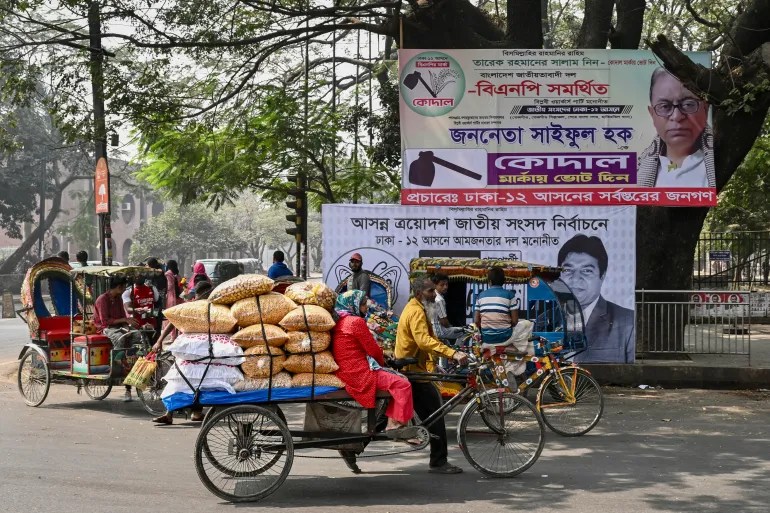
“After more than a decade and a half of fascist and subservient rule, the activities of parliament are beginning today with representatives elected by the people,” the newly elected Prime Minister Tarique Rahman told parliament on Thursday.

Rahman, the leader of the Bangladesh Nationalist Party (BNP), and son of the late leader Khaleda Zia, took over after February 12 elections from the interim administration that had led the country of 170 million people since August 2024.

“The BNP wants to build a prosperous, safe and democratic country,” the party’s leader said, calling on all politicians, whatever their political opinions, to work together.

Rahman blamed the toppled government of Sheikh Hasina, who has been sentenced to death in absentia for the crackdown that killed hundreds, and her Awami League party, for undermining the previous parliament.

About 1,400 people were killed and more than 20,000 injured in the uprising, according to the United Nations.

Hasina, 78 is currently in self-imposed exile in India.

“The fallen dictatorship made parliament dysfunctional, instead of making it the centre of all national activities,” Rahman said, promising it would change under his watch.

“We will make parliament the centre of all debates and arguments aimed at resolving the country’s problems.”

Those urgent problems include tackling a sluggish economy, restoring stability and reviving growth after months of turmoil that rattled investor confidence and strained state finances.

The world’s second largest garment exporter, heavily dependent on fossil fuel imports, has also been hit hard by an oil price spike caused by the war launched by the United States and Israel on Iran.

Bangladesh has closed universities and launched fuel rationing amid a worsening energy crisis linked to reverberations from the conflict in the Middle East and Tehran’s retaliatory strikes across the region.

Rahman’s appeal for unity is a bid to heal rifts in a country polarised by years of bitter rivalry.

A new speaker, Hafiz Uddin Ahmad, and his deputy, Kayser Kamal, were elected to office. Both are members of the BNP.

The parliament building was looted during the August 2024 uprising against Hasina, but has since been repaired.

The BNP-led alliance secured 212 seats, while the BNP alone won 209 seats of the 350-seat parliament.

The leader of the opposition is Shafiqur Rahman, who heads the Jamaat-e-Islami-led alliance with 76 seats, with Jamaat alone holding 68. https://www.aljazeera.com/news/2026/3/12/bangladesh-parliament-meets-for-first-time-after-uprising-elections

Spain defies Trump’s threats over stance on Iran war, says it ‘won’t be vassals’

MADRID — Spain “will not be vassals” to another country, Deputy Prime Minister Maria Jesus Montero said on Wednesday (March 4), defying US President Donald Trump’s threats to cut trade with Madrid over its stance against the US-Israeli strikes on Iran.

Trump floated imposing a trade embargo on Madrid over its refusal to allow US aircraft to use jointly operated naval and air bases in southern Spain for the offensive against Tehran. 

Spain has denounced the US and Israeli bombings of Iran as reckless and illegal, while most other European nations have withheld direct critique of the attacks.

“We are certainly not going to be anybody’s vassals, we won’t tolerate any threats and we’ll defend our values,” Montero told reporters, citing support for Spain from the European Commission.

The Commission said in a statement on Wednesday it expected the US to abide by its trade deal with the European Union (EU) and expressed “full solidarity” with member states, but stopped short of naming Spain. 

The EU requires that third countries treat it as a single customs bloc.

In a televised address earlier on Wednesday, Spanish Prime Minister Pedro Sanchez reiterated Spain’s anti-war stance, warning that the conflict risked triggering a major global disaster.

“We’re not going to be complicit in something that’s bad for the world, nor contrary to our values and interests, simply to avoid reprisals from someone,” said Sanchez.

One of the most outspoken critics of both Trump and Israeli Prime Minister Benjamin Netanyahu, Sanchez criticised leaders who “use the fog of war to hide their failure” at home.

“This is how humanity’s great disasters start … You cannot play Russian roulette with the destiny of millions,” he said, highlighting the negative knock-on effects of the Iraq war, from a rise in jihadist terrorism to soaring energy prices, to argue that the consequences of the attack on Iran were just as nebulous.

Spain has refrained so far from involving itself in defensive operations, even as Britain, France, and Greece have sent armaments to Cyprus, which was struck by a drone on Monday, and British Prime Minister Keir Starmer authorised use of UK bases for defensive strikes on Tehran.

Israel has criticised Sanchez, accusing him of “standing with tyrants”.

Trump says he can impose embargoes

Trump on Tuesday claimed the Supreme Court’s ruling in February, which declared that he could not use the International Emergency Economic Powers Act to impose tariffs because they were a tax measure, confirmed his right to apply embargoes.

Imposing a trade embargo would require making the case that Spain’s refusal to permit use of its bases constituted a national emergency and posed an “unusual or extraordinary” threat to the US, said Peter Shane, a US law professor at New York University.

“It’s hard to see how Spain denying us the use of air bases on its territory for us to launch an unprovoked attack on Iran poses an extraordinary threat to our national security,” Shane said.

Spain sells more to the US than it buys, but certain sectors like pharmaceutical products and olive oil are more exposed through high exports.

A source at Spanish olive oil producer Dcoop expressed worry about possible sanctions, adding it could bring orders forward. “We are farmers who want to market our products without obstacles,” he said.

https://www.asiaone.com/world/spain-defies-trumps-threats-over-stance-iran-war-says-it-wont-be-vassals

Khamenei’s death brings Khomeini’s grandson into focus

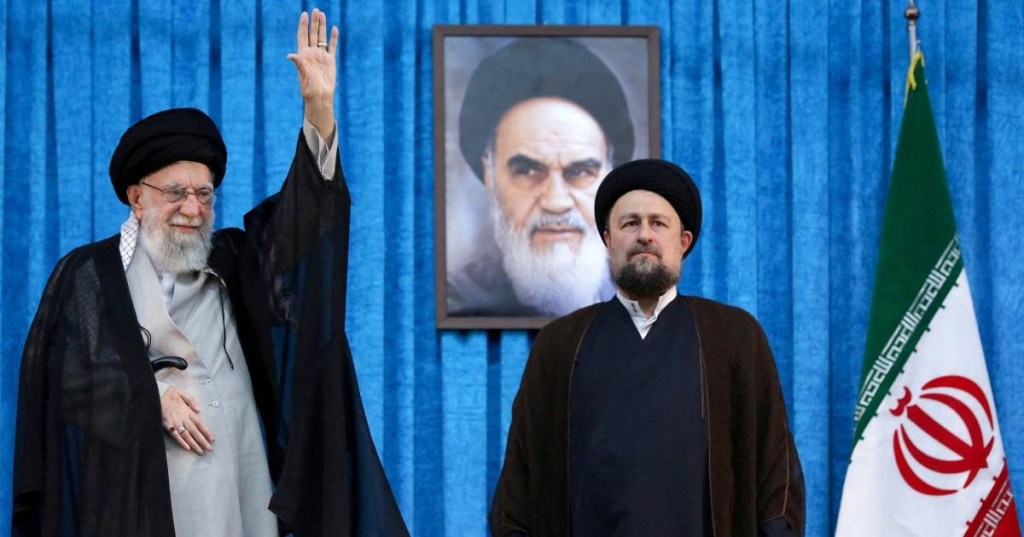
A grandson of Ayatollah Ruhollah Khomeini, the late founder of the Islamic Republic of Iran, is likely to figure prominently in the deliberations of the clerics who will determine who replaces Ayatollah Ali Khamenei as Supreme Leader.

The killing of Khamenei, 86, in a US-Israeli attack has brought new urgency to the question of who will be the next Supreme Leader, a long-simmering issue over which there had been no clarity despite his age.

Hassan Khomeini is the most visible of the late Ayatollah’s 15 grandchildren and is seen as a relative moderate within Iran’s clerical establishment. 

He enjoys close ties to reformists including former presidents Mohammed Khatami and Hassan Rouhani, who both pursued policies of engagement with the West when in office.

Khomeini, 53, holds a symbolically important role in public life as custodian of his grandfather’s mausoleum in southern Tehran. He has never served in government.

Some politicians inside Iran have seen him as a rival to hardliners who gained sway under Khamenei, notably his son, Mojtaba.

The case for installing a moderate successor to Khamenei gained momentum among some Iranian politicians in the wake of unrest that swept Iran in January as a means of shoring up the Islamic Republic in the face of widening dissent.

Khomeini demanded accountability for Amini’s death

While loyal to the Islamic Republic established after the Shah was toppled in 1979, Khomeini has a track record of urging reform and has occasionally voiced dissent against authorities.

In 2021, he criticised the Guardian Council — the branch of Iran’s theocracy responsible for vetting presidential candidates — after it barred reformists from running.

The council’s move paved the way for the victory of hardliner Ebrahim Raisi, who died in a helicopter crash in 2024.

“You can’t pick someone for me and tell me to vote for them!” Khomeini said at the time.

He also demanded accountability after Mahsa Amini, a young Iranian woman, died in 2022 after being taken into custody by morality police, accused of violating conservative dress codes — an incident that ignited countrywide protests.

Authorities “must transparently and precisely account for what has happened to this 22-year-old girl under the pretext of ‘guidance and education'”, he said.

But, reflecting his loyalty to the system, the mid-ranking cleric also criticised protesters who chanted against Khamenei.

During the unrest that swept Iran in December and January — the deadliest since the 1979 revolution — he rallied behind the establishment, accusing rioters of serving Israel, taking part in a pro-government march, and likening some of the violence to the actions of Islamic State.

In a condolence letter, Khomeini said Khamenei would forever “be the hero of the people of Iran and Muslims”, adding: “The noble people of Iran will once again walk the path of the Imam (Khomeini) by overcoming this incident.”

‘Progressive theologian’

A close friend of Khomeini’s, speaking to Reuters in 2015, described him as a progressive theologian, especially when it comes to music, women’s rights, and social freedom. 

He follows trends on social media and is interested in Western philosophy as much as Islamic thought.

His wife, Sayyeda Fatima, is the daughter of an Ayatollah, and they have four children.

Some reformists urged him to run for the presidency in 2012, but he declined.

Khomeini supported the Rouhani government that negotiated the 2015 nuclear agreement, which eased sanctions in return for limits on the nuclear programme — until US President Donald Trump tore it up in 2018.

He has spoken openly about economic hardships endured by Iranians during years of sanctions imposed over the nuclear programme.

Blocked from running for assembly of experts

A decade ago, Khomeini sought to run in an election for the Assembly of Experts, the body responsible for picking the Supreme Leader.

He secured an initial nod of approval for his candidacy from Khamenei, who reportedly gave his blessing while also cautioning Khomeini against doing any harm to his grandfather’s name. But he was later disqualified by the Guardian Council.

Though his religious credentials were cited for the disqualification — Khomeini holds the clerical rank of Hojatoleslam, one notch below Ayatollah — the move was seen as intended to head off a potential challenge by the reformist camp.

In 2008, he was widely regarded as criticising Iran’s powerful Islamic Revolutionary Guards Corps (IRGC) when he said in an interview that those claiming loyalty to his grandfather’s legacy should follow his order that the military must stay out of politics. 

He nevertheless enjoys close ties to the Guards, an elite force tasked with safeguarding the Islamic Revolution.

During the 12-day air war between Israel and Iran last year, Khomeini wrote to Khamenei praising his leadership and saying Iranian missiles had become a nightmare for Israel and a source of satisfaction for the Iranian nation, according to Jamaran, an Iranian news website dedicated to Khomeini’s memory.

Khomeini has described Israel as the “evil Zionist regime” and “a cancerous tumour” backed by the West, and has said the Muslim world should make itself strong to confront Zionism, according to statements reported by Jamaran.

He is fluent in Arabic and English, according to the biography, and was a keen footballer until the age of 21, when his grandfather insisted he go to the city of Qom to study Islamic theology. https://www.asiaone.com/world/khameneis-death-brings-khomeinis-grandson-focus

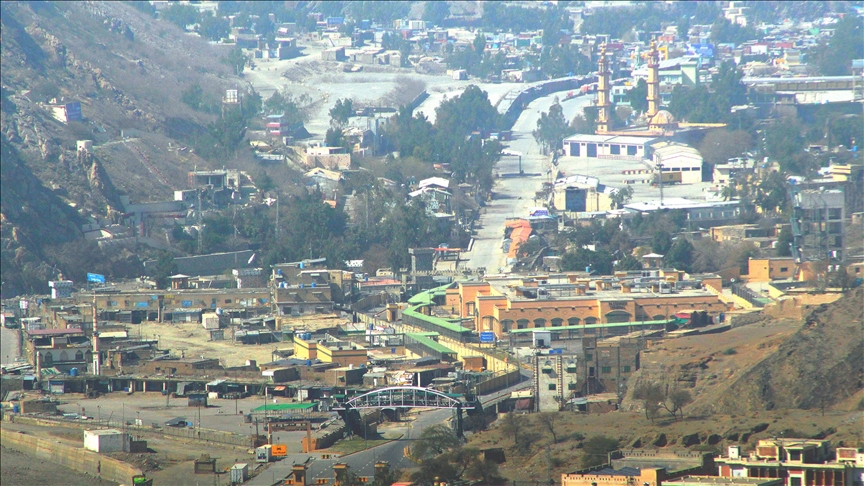
Afghanistan, Pakistan cross-border tensions continue

 – Pakistani army destroyed ammunition depot in eastern Khost province, Pakistan Television reports, citing security sources

KARACHI, Pakistan

Cross-border tensions between Pakistan and Afghanistan continued on Monday, with at least three children killed in ongoing fighting in eastern Kunar province, Afghan media reported.

According to Afghanistan’s broadcaster Tolo News, three children were killed, and two were injured when shells allegedly fired by Pakistani military forces struck a refugee camp in the Khass Kunar district.

However, state broadcaster Pakistan Television reported, citing security sources, that Pakistani army forces destroyed an ammunition depot in eastern Khost province as part of their operations against the “Afghan Taliban regime’s aggression.”

There was no official statement from either party regarding the latest developments.

Pakistan has claimed that its “self-defense” measures ensured that no civilians were targeted.

In a related development, Pakistan on Monday ordered the closure of scores of schools located near the border in the North Waziristan, Mohmand, Khyber, and Bajaur districts until further notice as a precautionary measure in light of the prevailing security situation.

Pakistan’s Information Minister Attaullah Tarar on Monday claimed 435 Afghan Taliban operatives and suspected militants have been killed and more than 630 injured in airstrikes and clashes since Thursday.

Kabul, for its part, claims 56 Pakistani soldiers were killed in the border clashes.

The veracity of casualty claims by Islamabad and Kabul could not be independently verified.

Chinese envoy meets Pakistan’s top diplomat

Separately, Pakistani Foreign Minister Ishaq Dar on Monday received Chinese Ambassador Jiang Zaidong in Islamabad.

“Discussions were held on the evolving regional situation and broader developments,” the Pakistani Foreign Ministry said on the US social media company X.

Dar emphasized the importance of dialogue, diplomacy, and continued consultations, while reaffirming Pakistan’s commitment to peace and stability in the region and beyond.

The statement did not mention whether they discussed border tensions with Afghanistan.

Notably, Beijing has said it was engaging Islamabad as well as Kabul to de-escalate the border situation.

​​​​​Death toll at 84

Tensions between the two neighbors have been running high since last Thursday, when Kabul launched “retaliatory operations” along the border after Pakistani airstrikes in late February.

According to a tally of figures from both sides of the border, 84 people have been killed so far.

They include 12 Pakistani soldiers and one civilian, while 13 Afghan soldiers and 58 civilians lost their lives during the clashes. One Pakistani soldier remains missing.

Pakistan in late February launched airstrikes on “terror targets,” killing 70 “terrorists,” while Afghan officials and the UN reported civilian deaths, claims Pakistan denies.

Relations have deteriorated in recent months as Pakistan accuses militants of operating from Afghan territory, an allegation Kabul rejects, even as regional diplomatic contacts continue amid efforts to ease tensions. https://www.aa.com.tr/en/asia-pacific/afghanistan-pakistan-cross-border-tensions-continue/3846605

2 injured as knife-wielding man goes on stabbing spree in UK’s Edinburgh

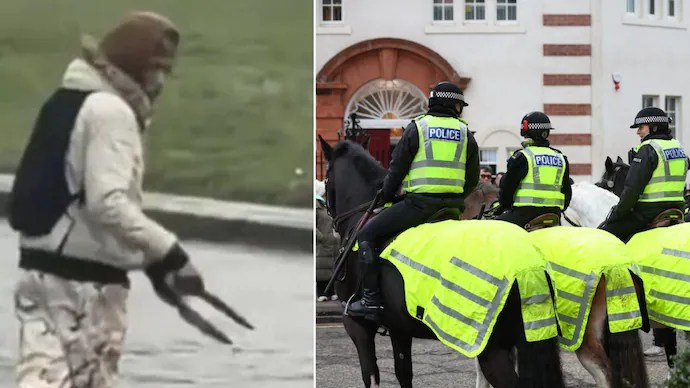
Two people were injured after a man was seen brandishing two knives in a residential part of Edinburgh, prompting a major armed police response and public warnings to avoid the area.

The incident happened in Calder, in the west of Edinburgh, where emergency services were deployed following reports of a man with a bladed weapon. Locals said police activity began before 9 am, with several streets sealed off as officers moved in.

Confirming the injuries, Police Scotland said officers were called to reports of a man with a knife earlier on Monday morning. Chief Inspector Scott Kennedy said the disturbance had been contained and there was no wider risk to the public.

“The incident is not being treated as terror-related,” Kennedy said, adding that officers would remain in the area to reassure residents.

Earlier, police issued a public warning urging people to stay away from Calder. “The public is being advised to avoid the Calder area of Edinburgh following reports of a man with a bladed weapon,” the force said. “Police, including firearms officers, are in attendance.”

Residents described a prolonged and intense police presence. William Ramsay, who lives nearby, told Press Association he believed the man had entered the stairwell of his building.

“He smashed the local shop, possibly stabbed two people unconfirmed,” Ramsay said. “Armed police, dogs been here for about two hours.”

Images from the scene showed at least six police vehicles outside Cobbinshaw House, a tower block of flats, with armed officers positioned around the building as enquiries continued.

Public transport was also disrupted. Lothian Buses said its number 20 service was being diverted away from Calder until further notice.

Police have not released further details about the condition of the injured or any arrests, as officers continue investigations and maintain a visible presence in the area. https://www.indiatoday.in/world/uk-news/story/knife-wielding-man-stabs-multiple-people-in-uks-edinburgh-local-media-2876553-2026-03-02

Indian crew member killed after drone boat hits oil tanker off Oman coast

An Indian crew member was killed after an oil tanker was struck by an unmanned drone boat off the coast of Oman, triggering a fire and forcing the evacuation of all crew on board, officials confirmed on Monday, as hostilities between Israel and Iran continued to escalate across the region.

The Sultanate of Oman’s Maritime Security Centre said the incident occurred about 52 nautical miles northwest of Port Sultan Qaboos in Muscat Governorate on Saturday (March 1). The tanker, identified as MKD VYOM, flying the flag of the Republic of the Marshall Islands, was carrying approximately 59,463 metric tonnes of cargo at the time of the attack.

According to officials, the unmanned vessel hit the tanker, causing a fire and explosion in the main engine room. One crew member, an Indian national, died in the incident.

The vessel had 21 crew members on board, including 16 Indians, four Bangladeshis and one Ukrainian. All survivors were evacuated by the merchant ship MV SAND, which sails under the flag of Panama, in coordination with the Maritime Security Centre.

The Royal Navy of Oman has deployed a vessel to monitor the damaged tanker and is issuing navigational warnings to ships transiting the area. Authorities have not yet disclosed who was behind the attack.

Iran has warned vessels approaching the Strait of Hormuz, the narrow gateway to the Persian Gulf, and is suspected of launching multiple maritime attacks as the Middle East war intensified following major US and Israeli airstrikes on the Islamic Republic.

This marked the second such attack on cargo vessels transiting the Strait of Hormuz since the assassination of Iran’s Supreme Leader, Ayatollah Ali Khamenei, which has triggered widespread tensions across the Middle East.

Earlier, a Palau-flagged oil tanker Skylight, carrying 15 Indian nationals among its crew, was struck near Oman’s Musandam peninsula, injuring four people.

Oman’s Maritime Security Centre said in a post on X that the strike took place about five nautical miles north of Musandam’s Khasab Port, after which the tanker’s 20-member crew was evacuated. The agency did not specify the weapon used. https://www.indiatoday.in/world/story/indian-crew-member-killed-after-drone-boat-hits-oil-tanker-off-oman-coast-2876550-2026-03-02