Qatar’s Prime Minister and Foreign Minister Sheikh Mohammed bin Abdulrahman Al Thani has issued an urgent call for an immediate cessation of hostilities in the region, while strongly condemning Iranian attacks on Arab states. Speaking at a joint press conference alongside Turkish Foreign Minister Hakan Fidan on Thursday, Sheikh Mohammed stressed that the ongoing war benefits no one and that those responsible for dragging the region into conflict are well known.
“We stress the importance of the immediate cessation of Iranian attacks on countries in the region,” Sheikh Mohammed said. “The war must stop immediately, and everyone knows who benefits from it and who is dragging the region into conflict.” His remarks came as the Qatari premier also condemned Iran’s attacks on Türkiye, describing Tehran’s justification of targeting US bases as “unacceptable and unjustified.”
Energy Security and Regional Stability
The Qatari prime minister warned that recent Iranian strikes have direct consequences for global energy markets, specifically pointing to an attack on the Ras Laffan gas facility. “This will have repercussions on energy supplies,” he said, underscoring Qatar’s critical role as one of the world’s largest liquefied natural gas producers. Sheikh Mohammed characterized Iran’s actions as a direct threat to the security and stability of the region, calling for an immediate halt to such operations.
“We believe diplomacy is the first and final solution to conflicts,” Sheikh Mohammed emphasized, reaffirming Qatar’s longstanding commitment to mediation and dialogue as the primary tools for resolving regional disputes.
Escalating Regional Conflict
The Qatari premier’s statements come amid a rapidly intensifying crisis that began with the US-Israeli joint offensive against Iran on Feb. 28, which has claimed approximately 1,300 lives, including former Supreme Leader Ali Khamenei. Iran has responded with drone and missile strikes targeting Israel, Jordan, Iraq, and Gulf nations hosting American military assets. These attacks have caused casualties, damaged critical infrastructure, and disrupted global markets and aviation routes across the region.
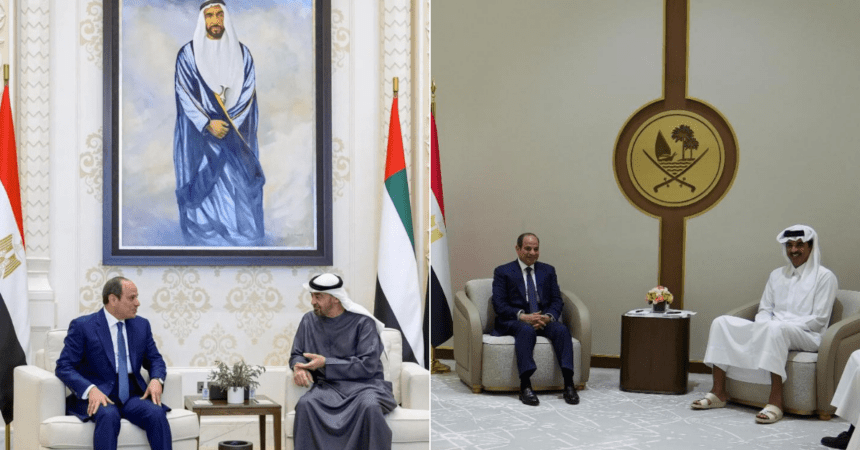
Egypt President Abdel Fattah al-Sisi visited the United Arab Emirates and Qatar on Thursday to declare that the security of Gulf nations is an extension of Egypt’s national security, following what he described as “sinful and unjustified” Iranian attacks on the region.
The Egyptian leader conducted the two-stop tour to express Cairo’s full solidarity with the Gulf Cooperation Council (GCC) under current regional circumstances. During the visit, Sisi emphasised Egypt’s categorical rejection of any attempts to undermine the security or assets of neighbouring Arab states.
In the United Arab Emirates, Sisi was received by President Sheikh Mohamed bin Zayed Al Nahyan and the Egyptian Ambassador to the UAE, Essam Ashour. Following a private bilateral meeting, Sisi affirmed Egypt’s absolute support for the UAE’s measures to maintain its stability and the interests of its people. He specifically condemned Iranian attacks on the UAE and other Arab nations, stating that Egypt is prepared to provide all necessary forms of support to preserve the security of the Gulf.
The official spokesperson for the presidency, Mohamed el-Shenawy, noted that Sisi had conveyed a clear message to Iranian officials stating that Gulf nations are not a party to the ongoing war. Sisi described the Iranian actions as “unacceptable and unjustified,” calling for an immediate cessation of hostilities and a return to diplomatic negotiations based on international law and the UN Charter.
Sheikh Mohamed bin Zayed welcomed the visit, noting it reflects the close brotherly ties between the two countries. He expressed appreciation for Egypt’s steadfast role in maintaining regional peace and stressed the importance of continued coordination to enhance security. The two leaders also discussed bilateral relations and exchanged greetings for Eid al-Fitr.
Following his stop in the UAE, Sisi travelled to Qatar, where he was met at Hamad International Airport by the Emir, Sheikh Tamim bin Hamad Al Thani, and the Egyptian Ambassador to Qatar, Walid el-Feki.
During an expanded meeting with delegations from both nations, Sisi reiterated Egypt’s “full alignment” with Qatar and all Gulf states against the recent condemned attacks. He affirmed Egypt’s support for Qatar’s right to defend its sovereignty and territorial integrity. Sisi briefed the Qatari leadership on Egypt’s efforts to reduce escalation, including direct communications with Iran to demand an end to attacks on sisterly nations.
Sheikh Tamim bin Hamad Al Thani expressed deep appreciation for Sisi’s visit and his proactive communication since the start of the current crisis. The Emir highlighted the “deeply rooted historical relations” between the two countries and stated that Qatar values consultation with Egypt to restore regional stability and reach peaceful solutions.
The leaders agreed to intensify bilateral consultations to focus on de-escalation and the restoration of regional order. Sisi concluded the tour by stating that the shared history and destiny of Egypt and the Gulf necessitate the activation of “collective Arab national security.”
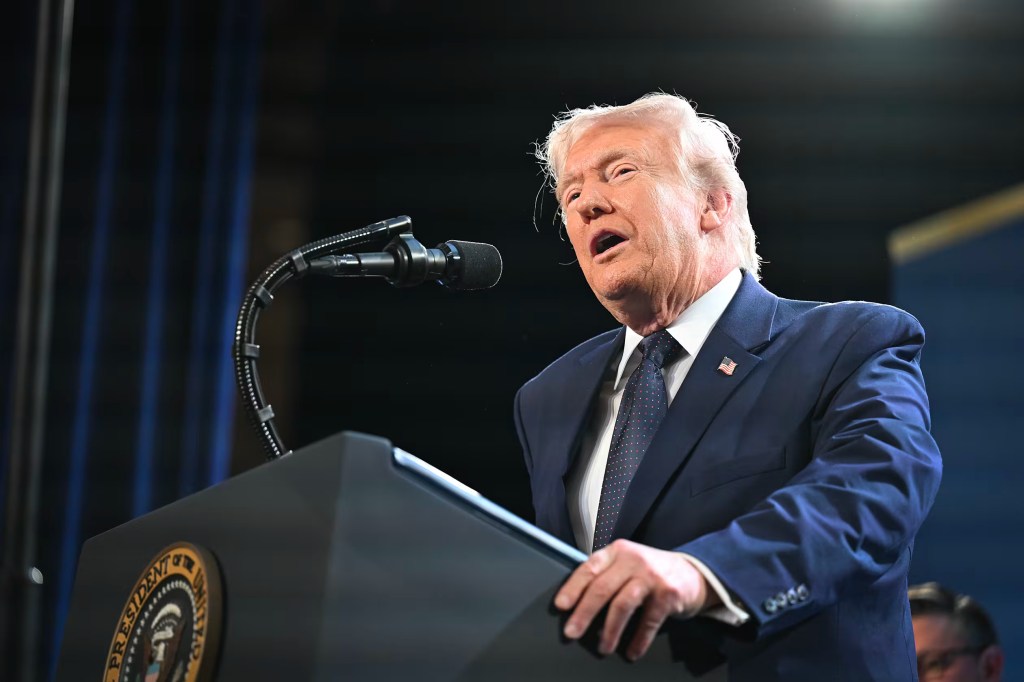
President Donald Trump said the U.S. is waiving oil-related sanctions on certain countries in an effort to ease crude prices, as he estimated the war with Iran would end “very soon.”
“So in some countries, we’re going to take those sanctions off until this straightens out,” Trump said Monday in remarks to reporters in Doral, Fla.
retreated from highs as investors priced in the possibility of a coordinated emergency release of oil reserves. Oil futures were falling another 10% on Monday night.
Trump didn’t name countries on which his administration is mulling the reduction of sanctions. Earlier Monday, Reuters reported that the White House was weighing further easing of sanctions on Russia. The U.S. has allowed India to buy Russian oil without being penalized by the Trump administration. Trump spoke with Russian leader Vladimir Putin on Monday.
Trump predicted a “short-term excursion” in Iran but also suggested U.S. involvement there would continue.
“We could go further, and we’re going to go further,” he said.
Earlier Monday, Trump told a CBS reporter that the conflict with Iran could end soon, saying he thought the war was “very complete, pretty much.” He said Iran has no navy, communications or air force.
And there were signs Monday that the wealthy countries that make up the Group of Seven were discussing an emergency release of crude reserves.
U.S. and global benchmark prices both climbed to nearly $120 a barrel at their peaks in overnight trading, before retreating from those highs as investors priced in the potential G-7 action.
The G-7 development helped ease concerns over disruptions to the global flow of oil resulting from the Iran conflict. Energy ministers from the group are planning a virtual meeting Tuesday to discuss a possible release of oil reserves to address supply disruptions triggered by the Iran war, sources told CNBC.
The United Arab Emirates is weighing freezing billions of dollars of Iranian assets held in the Gulf state, according to people familiar with the discussions, a move that could sever one of Tehran’s most important economic lifelines.
If the U.A.E. goes ahead, it would significantly curb Tehran’s access to foreign currency and global trade networks as its domestic economy, already buckling under inflation, is now engulfed in a military conflict.
Emirati officials have privately warned Iran—which has fired more than 1,000 drones and missiles at targets in the U.A.E.—of the possible action, people familiar with the warnings said. It isn’t clear when, or if, the Emirati government will decide to act.
The Emirati Foreign Ministry didn’t respond to a request for comment.
The U.A.E. has for years functioned as a financial hub for Iranian businesses and individuals seeking a haven from Western sanctions, according to analysts tracking Tehran’s activities and the U.S. Treasury. Iran’s sanctions-evasion infrastructure has allowed Tehran to keep selling oil abroad and use the proceeds to fund weapons programs and regional proxies, they say.
The U.A.E. has previously said it adheres to sanctions and has a strong commitment to protect the integrity of the global financial system.
Any move by the U.A.E. to limit Iranian financial activities there “would be very significant, because the U.A.E. is the most important conduit for Iran’s engagement with the global economy,” said Esfandyar Batmanghelidj, chief executive of Iran-focused think tank Bourse & Bazaar.
U.A.E. authorities are weighing several measures to dismantle illicit Iranian operations, officials familiar with the matter said. They range from freezing the assets of U.A.E.-based shadow companies used to mask trade to a sweeping financial crackdown on local currency exchanges which are used to move money outside of formal banking channels.
If the U.A.E. decides to move on Iran’s shadow-financing empire, a prime target would be accounts affiliated with the Islamic Revolutionary Guard Corps, the powerful group responsible for defending and perpetuating the regime, the officials familiar with the discussions said.
Tehran has allocated a growing portion of its oil for the IRGC, as well as other parts of the defense and security complex, to sell on the international market, according to a Treasury publication last June.
Beyond financial maneuvers, policymakers are also considering direct maritime action, such as seizing Iranian ships, two of the officials familiar with the discussions said. Such moves would be aimed at crippling Iran’s shadow fleet of oil tankers and intermediaries operating across Emirati ports and shipping lanes.
Any efforts to squeeze Iranian assets would mark a sharp departure from the U.A.E.’s historical effort to balance its strategic alliance with the U.S. against its proximity to Iran. Until now, the country has largely refrained from weaponizing its financial sector against its neighbor across the Persian Gulf.
In seeking to become an international financial center, the U.A.E. has welcomed capital from around the world, often with little regard for its provenance. After Russia invaded Ukraine, the U.A.E. was one of the main beneficiaries, playing host to traders of Moscow’s commodities and inviting Russian money and bankers.
The West—including U.S. officials—has previously pressured the U.A.E. to tighten scrutiny on money flows and crack down on sanctions evasion. In 2022, the Financial Action Task Force, a Paris-based global finance watchdog, placed the U.A.E. on its “gray list” for failing to adequately combat money laundering and terrorism financing.
A U.A.E. official has previously told The Wall Street Journal that the U.A.E. had a robust process to deal with sanctioned people and companies and that Emirati banks monitored compliance. In 2024, the Journal reported that Dubai’s main state-owned bank closed some accounts held by Russian oligarchs and oil traders after U.S. officials pressed the U.A.E. to shut Moscow’s backdoor to the international financial system.
Around the same time, the FATF removed the U.A.E. from the list, saying it had strengthened its anti-money-laundering regime.
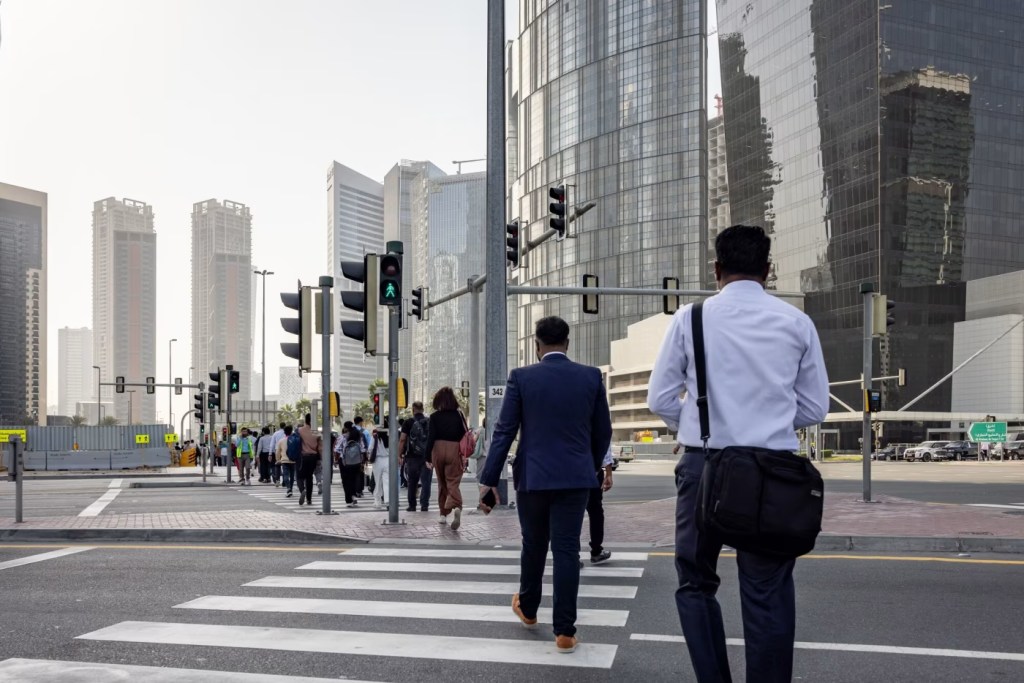
The latest conflict with Iran has put the U.A.E. in a difficult spot, casting doubt on the country’s carefully cultivated reputation as a haven in a volatile region. Iran’s drone and missile attacks have caused some damage at a Dubai airport, as well as residential and tourist areas around the Burj Al Arab hotel and the Palm Jumeirah man-made island.
Several people involved in the discussions said Emirati officials are weighing the risks of an asset freeze, including the possibility that it could trigger prolonged retaliation by Iran against Emirati territory and its critical energy infrastructure. Such a decision would also upend lucrative trade and banking ties with Tehran and damage the U.A.E.’s ability to attract and retain capital from other politically charged sources, such as Russia.
Any asset freeze is unlikely to cover all accounts held by Iranian companies and nationals, hundreds of thousands of whom live in the U.A.E., analysts said.
Andreas Krieg, a senior lecturer at the School of Security Studies at King’s College London, said that a more targeted approach is more likely because the U.A.E. doesn’t want to lose all of this business. Krieg said that IRGC-linked accounts would be frozen first.
“This is the most important nonmilitary lever the U.A.E. have to play against the Iranians,” Krieg said.
In 2024, $9 billion passing through correspondent accounts maintained by U.S. banks appears to have been tied to clandestine Iranian financial activity, according to the Treasury Department. The Treasury said U.A.E.-based firms received 62% of those funds, much in relation to oil sales by Iran-linked companies in Dubai.
Iran has established front companies in the U.A.E. to receive payments for oil, settle trades and disguise the origin of funds, according to the Treasury and analysts tracking Tehran’s activities.
MADRID — Spain “will not be vassals” to another country, Deputy Prime Minister Maria Jesus Montero said on Wednesday (March 4), defying US President Donald Trump’s threats to cut trade with Madrid over its stance against the US-Israeli strikes on Iran.
Trump floated imposing a trade embargo on Madrid over its refusal to allow US aircraft to use jointly operated naval and air bases in southern Spain for the offensive against Tehran.
Spain has denounced the US and Israeli bombings of Iran as reckless and illegal, while most other European nations have withheld direct critique of the attacks.
“We are certainly not going to be anybody’s vassals, we won’t tolerate any threats and we’ll defend our values,” Montero told reporters, citing support for Spain from the European Commission.
The Commission said in a statement on Wednesday it expected the US to abide by its trade deal with the European Union (EU) and expressed “full solidarity” with member states, but stopped short of naming Spain.
The EU requires that third countries treat it as a single customs bloc.
In a televised address earlier on Wednesday, Spanish Prime Minister Pedro Sanchez reiterated Spain’s anti-war stance, warning that the conflict risked triggering a major global disaster.
“We’re not going to be complicit in something that’s bad for the world, nor contrary to our values and interests, simply to avoid reprisals from someone,” said Sanchez.
One of the most outspoken critics of both Trump and Israeli Prime Minister Benjamin Netanyahu, Sanchez criticised leaders who “use the fog of war to hide their failure” at home.
“This is how humanity’s great disasters start … You cannot play Russian roulette with the destiny of millions,” he said, highlighting the negative knock-on effects of the Iraq war, from a rise in jihadist terrorism to soaring energy prices, to argue that the consequences of the attack on Iran were just as nebulous.
Spain has refrained so far from involving itself in defensive operations, even as Britain, France, and Greece have sent armaments to Cyprus, which was struck by a drone on Monday, and British Prime Minister Keir Starmer authorised use of UK bases for defensive strikes on Tehran.
Israel has criticised Sanchez, accusing him of “standing with tyrants”.
Trump says he can impose embargoes
Trump on Tuesday claimed the Supreme Court’s ruling in February, which declared that he could not use the International Emergency Economic Powers Act to impose tariffs because they were a tax measure, confirmed his right to apply embargoes.
Imposing a trade embargo would require making the case that Spain’s refusal to permit use of its bases constituted a national emergency and posed an “unusual or extraordinary” threat to the US, said Peter Shane, a US law professor at New York University.
“It’s hard to see how Spain denying us the use of air bases on its territory for us to launch an unprovoked attack on Iran poses an extraordinary threat to our national security,” Shane said.
Spain sells more to the US than it buys, but certain sectors like pharmaceutical products and olive oil are more exposed through high exports.
A source at Spanish olive oil producer Dcoop expressed worry about possible sanctions, adding it could bring orders forward. “We are farmers who want to market our products without obstacles,” he said.
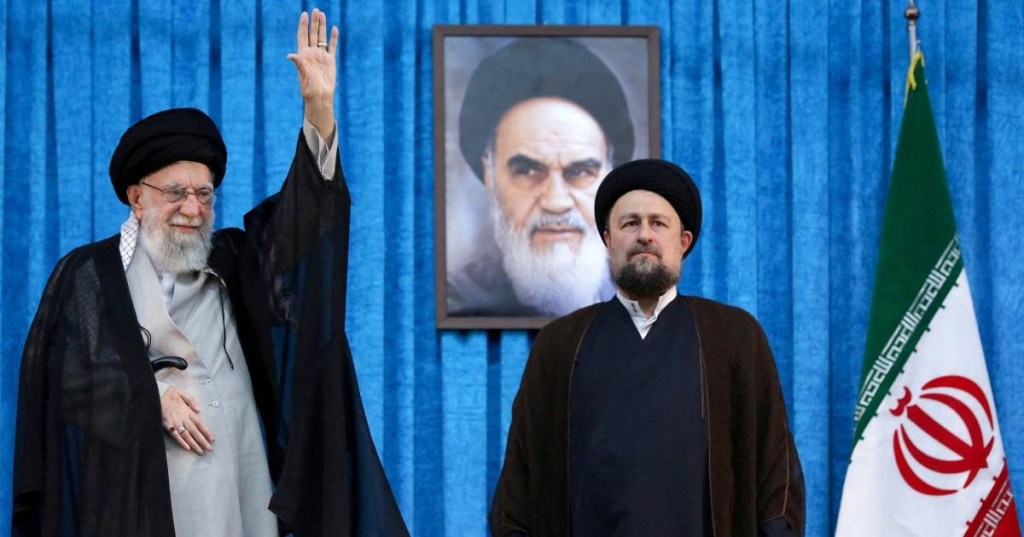
A grandson of Ayatollah Ruhollah Khomeini, the late founder of the Islamic Republic of Iran, is likely to figure prominently in the deliberations of the clerics who will determine who replaces Ayatollah Ali Khamenei as Supreme Leader.
The killing of Khamenei, 86, in a US-Israeli attack has brought new urgency to the question of who will be the next Supreme Leader, a long-simmering issue over which there had been no clarity despite his age.
Hassan Khomeini is the most visible of the late Ayatollah’s 15 grandchildren and is seen as a relative moderate within Iran’s clerical establishment.
He enjoys close ties to reformists including former presidents Mohammed Khatami and Hassan Rouhani, who both pursued policies of engagement with the West when in office.
Khomeini, 53, holds a symbolically important role in public life as custodian of his grandfather’s mausoleum in southern Tehran. He has never served in government.
Some politicians inside Iran have seen him as a rival to hardliners who gained sway under Khamenei, notably his son, Mojtaba.
The case for installing a moderate successor to Khamenei gained momentum among some Iranian politicians in the wake of unrest that swept Iran in January as a means of shoring up the Islamic Republic in the face of widening dissent.
Khomeini demanded accountability for Amini’s death
While loyal to the Islamic Republic established after the Shah was toppled in 1979, Khomeini has a track record of urging reform and has occasionally voiced dissent against authorities.
In 2021, he criticised the Guardian Council — the branch of Iran’s theocracy responsible for vetting presidential candidates — after it barred reformists from running.
The council’s move paved the way for the victory of hardliner Ebrahim Raisi, who died in a helicopter crash in 2024.
“You can’t pick someone for me and tell me to vote for them!” Khomeini said at the time.
He also demanded accountability after Mahsa Amini, a young Iranian woman, died in 2022 after being taken into custody by morality police, accused of violating conservative dress codes — an incident that ignited countrywide protests.
Authorities “must transparently and precisely account for what has happened to this 22-year-old girl under the pretext of ‘guidance and education'”, he said.
But, reflecting his loyalty to the system, the mid-ranking cleric also criticised protesters who chanted against Khamenei.
During the unrest that swept Iran in December and January — the deadliest since the 1979 revolution — he rallied behind the establishment, accusing rioters of serving Israel, taking part in a pro-government march, and likening some of the violence to the actions of Islamic State.
In a condolence letter, Khomeini said Khamenei would forever “be the hero of the people of Iran and Muslims”, adding: “The noble people of Iran will once again walk the path of the Imam (Khomeini) by overcoming this incident.”
‘Progressive theologian’
A close friend of Khomeini’s, speaking to Reuters in 2015, described him as a progressive theologian, especially when it comes to music, women’s rights, and social freedom.
He follows trends on social media and is interested in Western philosophy as much as Islamic thought.
His wife, Sayyeda Fatima, is the daughter of an Ayatollah, and they have four children.
Some reformists urged him to run for the presidency in 2012, but he declined.
Khomeini supported the Rouhani government that negotiated the 2015 nuclear agreement, which eased sanctions in return for limits on the nuclear programme — until US President Donald Trump tore it up in 2018.
He has spoken openly about economic hardships endured by Iranians during years of sanctions imposed over the nuclear programme.
Blocked from running for assembly of experts
A decade ago, Khomeini sought to run in an election for the Assembly of Experts, the body responsible for picking the Supreme Leader.
He secured an initial nod of approval for his candidacy from Khamenei, who reportedly gave his blessing while also cautioning Khomeini against doing any harm to his grandfather’s name. But he was later disqualified by the Guardian Council.
Though his religious credentials were cited for the disqualification — Khomeini holds the clerical rank of Hojatoleslam, one notch below Ayatollah — the move was seen as intended to head off a potential challenge by the reformist camp.
In 2008, he was widely regarded as criticising Iran’s powerful Islamic Revolutionary Guards Corps (IRGC) when he said in an interview that those claiming loyalty to his grandfather’s legacy should follow his order that the military must stay out of politics.
He nevertheless enjoys close ties to the Guards, an elite force tasked with safeguarding the Islamic Revolution.
During the 12-day air war between Israel and Iran last year, Khomeini wrote to Khamenei praising his leadership and saying Iranian missiles had become a nightmare for Israel and a source of satisfaction for the Iranian nation, according to Jamaran, an Iranian news website dedicated to Khomeini’s memory.
Khomeini has described Israel as the “evil Zionist regime” and “a cancerous tumour” backed by the West, and has said the Muslim world should make itself strong to confront Zionism, according to statements reported by Jamaran.
Three U.S. F-15E Strike Eagles flying in support of Operation Epic Fury were shot down over Kuwait in what American military officials described as an apparent friendly fire incident, with all six aircrew safely recovered.
The incident occurred at 11:03 p.m. ET on March 1, according to a statement issued by CENTCO.
“At 11:03 p.m. ET, March 1, three U.S. F-15E Strike Eagles flying in support of Operation Epic Fury went down over Kuwait due to an apparent friendly fire incident,” the release said.
The aircraft were operating during active combat conditions.
During active combat involving attacks from Iranian aircraft, ballistic missiles, and drones, the U.S. Air Force jets were mistakenly shot down by Kuwaiti air defences.
The U.S. military confirmed that all crew members survived the incident.
All six aircrew were safely recovered and are in stable condition, according to the release.
It added that “Kuwait has acknowledged this incident, and we are grateful for the efforts of the Kuwaiti defence forces and their support in this ongoing operation.”
The cause of the incident remains under review.
The cause is under investigation. More details will be released when available.
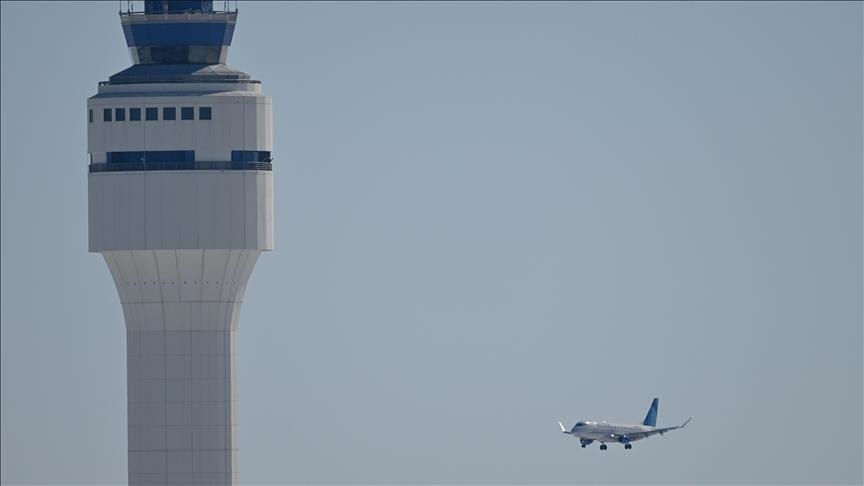
Iraq has extended the closure of its airspace for 48 hours, while Jordan announced a partial daily shutdown, civil aviation authorities in both countries said Monday, citing escalating regional tensions.
Iraq’s Civil Aviation Authority said it would keep the country’s airspace closed to all arriving, departing and overflying aircraft for an additional 48 hours starting at 12 pm local time (0900GMT) Monday as a “temporary and precautionary measure.”
The authority said in a statement carried by the state news agency INA that the decision followed “an ongoing assessment of the security situation and a comprehensive review of developments and regional tensions.”
Iraq initially closed its airspace Saturday following a US-Israeli offensive against Iran.
Jordan’s Civil Aviation Regulatory Commission also said in a statement it would implement a “partial and temporary” closure of the kingdom’s airspace to all arriving, departing and transit flights “in light of current regional developments and a risk assessment conducted in accordance with international standards.”
The closure will take effect from 6 pm local time (1500 GMT) until 9 am (0600 GMT) the following day and the decision will remain in force until further notice “to ensure the safety and security of civil aviation in Jordanian airspace,” the commission said.
The decisions come as Israel and the United States have conducted a military offensive against Iran since early Saturday, killing at least 550 people, including Supreme Leader Ali Khamenei and top military officials.
Tehran has responded by firing missiles and drones toward Israel and US bases in countries across the region. Some of those attacks have caused casualties and damage to civilian infrastructure, prompting condemnation from the Gulf countries, which have called for an end to the attacks.
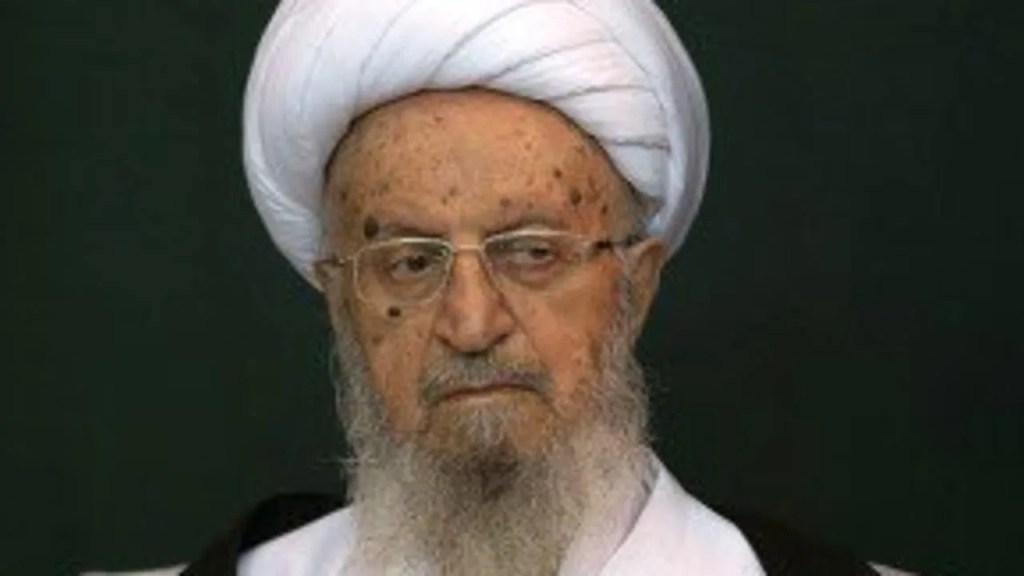
One of two high-profile Shiite religious leaders in Iran who issued fatwas following the death of Ayatollah Ali Khamenei, formerly received a religious tolerance’ £15,000 ‘religious tolerance’ grant from Brent Council.
On Sunday, following the assassination of Ayatollah Ali Khamenei by the US and Israel, Grand Ayatollah Hossein Nouri Hamedani and Grand Ayatollah Naser Makarem Shirazi have issued fatwas calling on Muslims worldwide to take revenge.
Hamedani responded in writing to a request from the presidium of the Assembly of Seminary Students and Scholars in Qom, saying that “avenging the blood of the martyred leader of the revolution is obligatory for all Muslims.”
“Without doubt, criminal America and the bloodthirsty Zionists have reached the end of their path, and this time the powerful armed forces will deliver a decisive and unforgettable response,” he warned.
Shirazi issued a fatwa calling Israel and the US the “most wicked enemies of humanity” and “the principal perpetrators of this crime.”
“The people of Iran and the Islamic world are the avengers of the blood of the martyred leader of the Revolution,” he said, adding that “seeking revenge is the religious duty of all Muslims worldwide so that the evil of these criminals may be removed from the world.”
Brent Council alerted to IRGC links
Shirazi, one of the most important religious figures in Iran, launched a representative office on Harrow Road in London called the Babul Murad Centre in 2008.
Via the Centre, Shirazi also had a charity in the UK named International Islamic Link, which received a £15,000 grant from Brent Council, a local government body in London, to promote “religious tolerance” in 2009.
After being alerted to IRGC links, Brent Council stated that it has “not commissioned this [charity] since and have no future plans to fund them.”
Before being investigated by the Charity Commission, Shirazi’s own website featured several pages about his belief that the Holocaust was a myth invented by Jews to gain support for the Zionist project.
Less than 36 hours after both Israeli Euroleague representatives picked up huge victories, war broke out with Iran, which sent the Israeli sports scene into chaos.
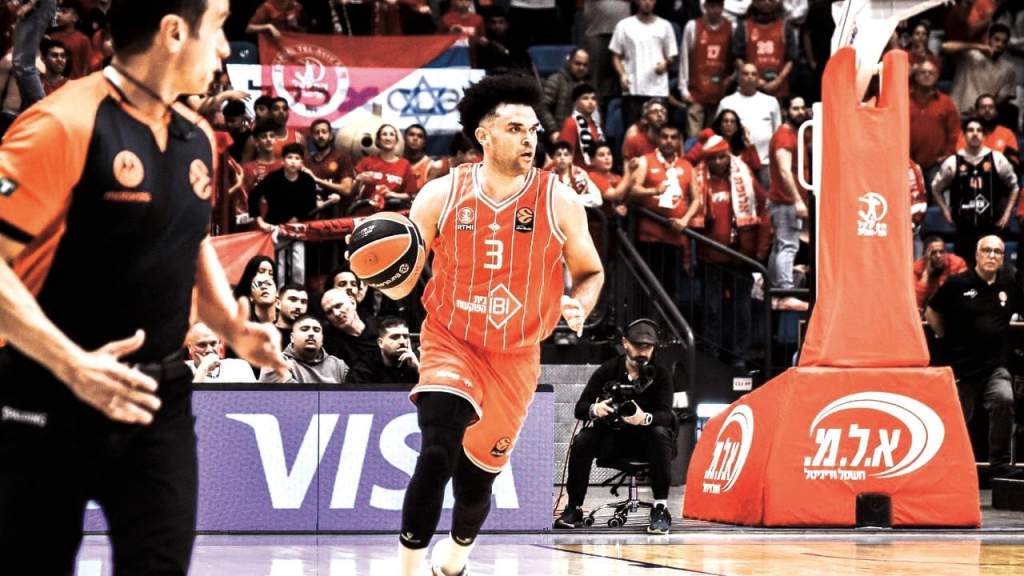
Hapoel Tel Aviv finally snapped its five-game losing streak, while Maccabi Tel Aviv recorded an important win that will keep it in the postseason race as their respective campaigns head into March.
However, with the outbreak of war, the Reds’ home game against Paris this coming Tuesday was postponed, while the Euroleague derby between Maccabi and Hapoel will not take place in Israel and may also be postponed.
Both the local basketball and soccer leagues have been put on hold for the time being, with many of the team’s foreign players heading abroad, primarily through Jordan, until things quiet down in the region. Some important players and teams have decided to stay put in the Holy Land for the time being until more concrete plans are made.
During the FIBA International break, many foreign basketball players were already on vacation outside the country.
The Israeli basketball National Team played in Cyprus on Friday night and crushed the hosts 94-54, with Yam Madar starring.
The two teams were slated to play again on Sunday night, but several Hapoel Tel Aviv players were en route back to Israel on Saturday morning, and their flight had to be turned back to Larnaca. At this time, Hapoel is looking to return to Sofia, Bulgaria, where it had played the Euroleague season before returning to Israel, while Maccabi will return to Belgrade, where it has been based since the October 7, 2023, war with Hamas broke out.
Hapoel Tel Aviv in Euroleague
In Euroleague action, Hapoel Tel Aviv downed Milano 92-86, with Elijah Bryant, Vasilije Micic, and Dan Oturu all helping the Reds end their skid with the home victory at Yad Eliyahu. The win improved Dimitrios Itoudis’s squad’s Euroleague record to 17-11 and kept it in a playoff spot.
“We were in control of the game from the beginning through the end,” Itoudis began. “We had some significant lapses on the defensive end in the last five minutes in the second quarter, where we gave up 23 points, which was too much. But we changed our defense to limit their guards, which is what we did.”
Maccabi Tel Aviv defeated Monaco 91-86 as Lonnie Walker starred in his Euroleague return to help the yellow-and-blue to the road win in the Principality.
With the victory, Oded Katash’s squad improved to 14-15 to remain in 13th place, but moved to just a pair of games in the win column in order to book a place in the Play-In postseason round.
Katash shared his thoughts on the victory, “This was a big win, it wasn’t easy. In the first half, we were good offensively. Both they and we made adjustments heading into the second half, which created a very physical and aggressive game. There were a lot of hard-to-officiate calls, but we stayed in it. We were focused, something we didn’t do at the start of the season. I’m very happy. We have an amazing crowd. They are the main reason we are where we are and why we are making this run right now. It’s thanks to our fans.”
Walker, the game MVP, also spoke about the victory.
“Just resilience. I think we found our groove this second round as a team, and we continue to fight. We did well holding the possession and holding the lead when it was one or two points. We push each other in practices, and we put ourselves in uncomfortable situations, and this translates into the game. But thanks go to all the fans, as it felt like a home game. Their spirit and loudness kept us focused and with the spirit that we needed. Truly grateful to have this set of people.” https://www.jpost.com/israel-news/sports/article-888464
 2026NowNews