Qatar’s Prime Minister and Foreign Minister Sheikh Mohammed bin Abdulrahman Al Thani has issued an urgent call for an immediate cessation of hostilities in the region, while strongly condemning Iranian attacks on Arab states. Speaking at a joint press conference alongside Turkish Foreign Minister Hakan Fidan on Thursday, Sheikh Mohammed stressed that the ongoing war benefits no one and that those responsible for dragging the region into conflict are well known.
“We stress the importance of the immediate cessation of Iranian attacks on countries in the region,” Sheikh Mohammed said. “The war must stop immediately, and everyone knows who benefits from it and who is dragging the region into conflict.” His remarks came as the Qatari premier also condemned Iran’s attacks on Türkiye, describing Tehran’s justification of targeting US bases as “unacceptable and unjustified.”
Energy Security and Regional Stability
The Qatari prime minister warned that recent Iranian strikes have direct consequences for global energy markets, specifically pointing to an attack on the Ras Laffan gas facility. “This will have repercussions on energy supplies,” he said, underscoring Qatar’s critical role as one of the world’s largest liquefied natural gas producers. Sheikh Mohammed characterized Iran’s actions as a direct threat to the security and stability of the region, calling for an immediate halt to such operations.
“We believe diplomacy is the first and final solution to conflicts,” Sheikh Mohammed emphasized, reaffirming Qatar’s longstanding commitment to mediation and dialogue as the primary tools for resolving regional disputes.
Escalating Regional Conflict
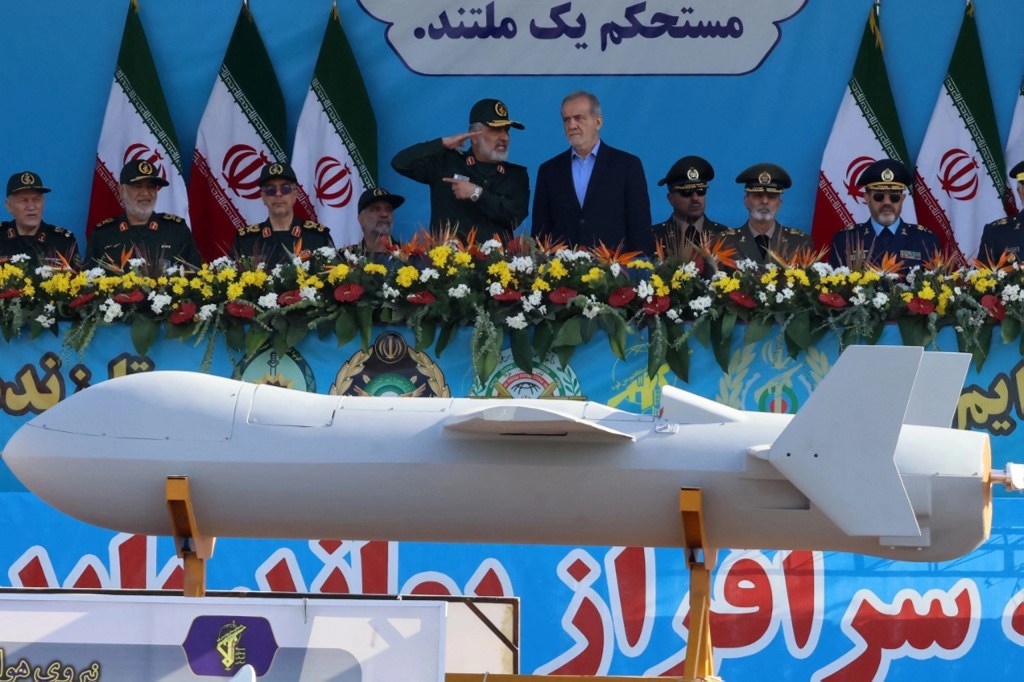
The Qatari premier’s statements come amid a rapidly intensifying crisis that began with the US-Israeli joint offensive against Iran on Feb. 28, which has claimed approximately 1,300 lives, including former Supreme Leader Ali Khamenei. Iran has responded with drone and missile strikes targeting Israel, Jordan, Iraq, and Gulf nations hosting American military assets. These attacks have caused casualties, damaged critical infrastructure, and disrupted global markets and aviation routes across the region.
LONDON — The war in the Middle East is creating the biggest oil supply disruption in the history of the global market, the International Energy Agency (IEA) said on Thursday (March 12), a day after the agency agreed to release a record volume of oil from strategic stockpiles.
Middle East Gulf countries have cut total oil production by at least 10 million bpd — a volume equal to almost 10 per cent of world demand — as a result of the conflict, the agency said in its latest monthly oil market report. Without a rapid restart of shipping flows, these losses are set to increase, IEA said. https://www.asiaone.com/world/world-faces-largest-ever-oil-supply-disruption-middle-east-war-iea-says
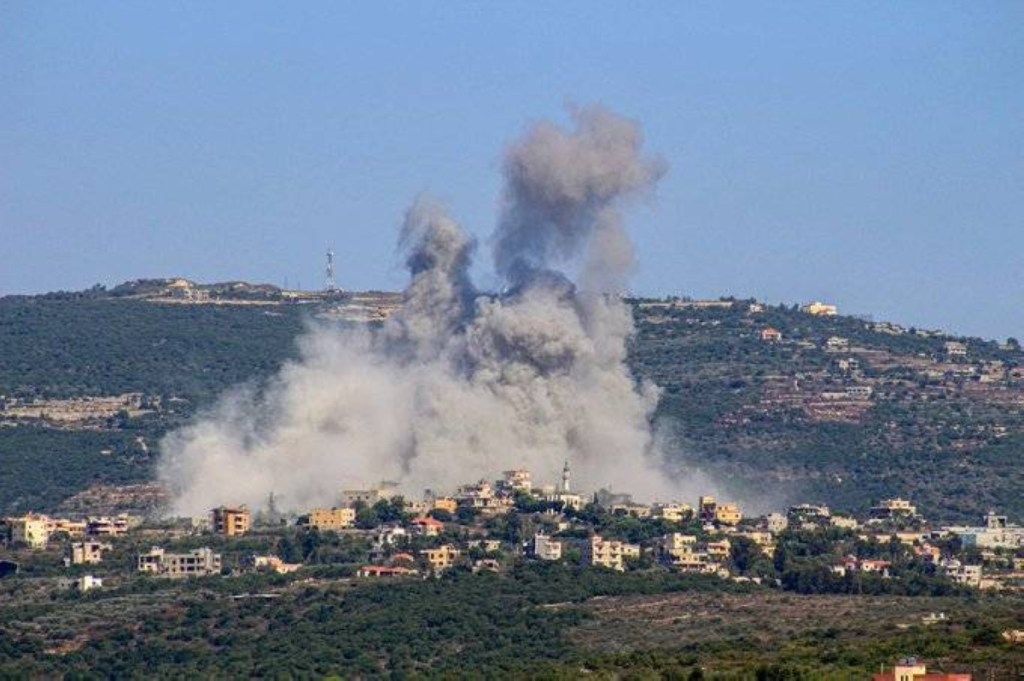
Three people were killed and another injured on Thursday in a new Israeli airstrike on Mount Lebanon Governorate, south of the Lebanese capital, Beirut.The Lebanese Public Health Emergency Operations Center stated in a press release that the Israeli airstrikes on the town of Aramoun resulted, according to initial reports, in the death of three people and injury of a child.Meanwhile, in a related development, the center announced that the death toll from the Israeli airstrike on the Ramlet Al Bayda area of Beirut in the early hours of Thursday has risen to 8 killed and 31 wounded.The Lebanese Ministry of Public Health announced Wednesday that the total number of casualties from the Israeli aggression against Lebanon since March 2 had risen to 634 dead and 1,586 injured. https://www.gulf-times.com/article/722292/region/three-people-killed-one-injured-in-ongoing-israeli-aggression-on-lebanon
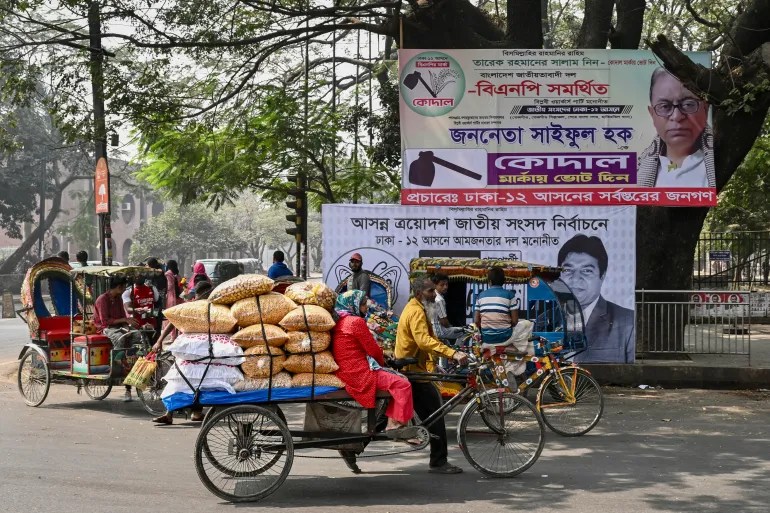
Bangladesh’s parliament has convened for the first time since a deadly 2024 uprising plunged the country into political turmoil and triggered landmark elections last month.
“After more than a decade and a half of fascist and subservient rule, the activities of parliament are beginning today with representatives elected by the people,” the newly elected Prime Minister Tarique Rahman told parliament on Thursday.
Rahman, the leader of the Bangladesh Nationalist Party (BNP), and son of the late leader Khaleda Zia, took over after February 12 elections from the interim administration that had led the country of 170 million people since August 2024.
“The BNP wants to build a prosperous, safe and democratic country,” the party’s leader said, calling on all politicians, whatever their political opinions, to work together.
Rahman blamed the toppled government of Sheikh Hasina, who has been sentenced to death in absentia for the crackdown that killed hundreds, and her Awami League party, for undermining the previous parliament.
About 1,400 people were killed and more than 20,000 injured in the uprising, according to the United Nations.
Hasina, 78 is currently in self-imposed exile in India.
“The fallen dictatorship made parliament dysfunctional, instead of making it the centre of all national activities,” Rahman said, promising it would change under his watch.
“We will make parliament the centre of all debates and arguments aimed at resolving the country’s problems.”
Those urgent problems include tackling a sluggish economy, restoring stability and reviving growth after months of turmoil that rattled investor confidence and strained state finances.
Bangladesh has closed universities and launched fuel rationing amid a worsening energy crisis linked to reverberations from the conflict in the Middle East and Tehran’s retaliatory strikes across the region.
Rahman’s appeal for unity is a bid to heal rifts in a country polarised by years of bitter rivalry.
A new speaker, Hafiz Uddin Ahmad, and his deputy, Kayser Kamal, were elected to office. Both are members of the BNP.
The parliament building was looted during the August 2024 uprising against Hasina, but has since been repaired.
The BNP-led alliance secured 212 seats, while the BNP alone won 209 seats of the 350-seat parliament.
The FBI has warned police departments in California that Iran may have considered launching a surprise drone attack on the US West Coast from an unidentified vessel offshore.
“We recently acquired information that as of early February 2026, Iran allegedly aspired to conduct a surprise attack using unmanned aerial vehicles from an unidentified vessel off the coast of the United States homeland, specifically against unspecified targets in California, in the event that the US conducted strikes against Iran.”
The bulletin added: “We have no additional information on the timing, method, target, or perpetrators of this alleged attack.”
The warning was circulated at the end of February, shortly before the Trump administration launched strikes against Iran. Tehran has since retaliated with drone attacks against targets across the Middle East.
According to a senior law enforcement official cited by ABC News, the intelligence about Iran’s potential plans predates the US and Israeli strikes on the country.
The official said the subsequent 12-day bombardment is believed to have significantly degraded Iran’s ability to carry out such an attack.
A spokesperson for the FBI’s Los Angeles office declined to comment, while the White House did not immediately respond to requests for comment.
US intelligence officials have also grown increasingly concerned about the spread of drone technology among Mexican drug cartels and the possibility it could be used against American personnel near the southern border. https://www.kyivpost.com/post/71748
The eurozone unemployment rate fell to a new record low in January, as the bloc continued to show resilience in the face of global uncertainty.
Unemployment in the currency area fell to 6.1% from 6.2% in December, the European Union’s statistics agency Eurostat said Wednesday.
“Overall, these are robust data which will add to the looming hawkish shift at the ECB as inflation risks now seem to be shifting to the upside,” said Claus Vistesen, chief eurozone economist at Pantheon Macroeconomics.
Across the bloc’s major economies, the decline was driven mainly by falling joblessness in Spain and Italy, he said.
Excluding Bulgaria, which joined the eurozone at the start of 2026, the unemployment rate stood at 6.2%.
“Falling unemployment in Bulgaria of all places…is now helping eurozone joblessness lower,” Vistesen said.
The currency area’s jobless rate is projected to remain relatively stable this year. However, a prolonged attack on Iran by the U.S. and Israel could eventually feed through to employment, as higher energy prices put pressure on businesses.
The figures follow the publication of S&P Global’s purchasing managers’ eurozone survey in late February, which showed companies are reluctant to hire new employees.
In Germany, the bloc’s largest economy, the number of unemployed people fell to just above 3 million in February, with the adjusted rate remaining at 6.3%.
MADRID — Spain “will not be vassals” to another country, Deputy Prime Minister Maria Jesus Montero said on Wednesday (March 4), defying US President Donald Trump’s threats to cut trade with Madrid over its stance against the US-Israeli strikes on Iran.
Trump floated imposing a trade embargo on Madrid over its refusal to allow US aircraft to use jointly operated naval and air bases in southern Spain for the offensive against Tehran.
Spain has denounced the US and Israeli bombings of Iran as reckless and illegal, while most other European nations have withheld direct critique of the attacks.
“We are certainly not going to be anybody’s vassals, we won’t tolerate any threats and we’ll defend our values,” Montero told reporters, citing support for Spain from the European Commission.
The Commission said in a statement on Wednesday it expected the US to abide by its trade deal with the European Union (EU) and expressed “full solidarity” with member states, but stopped short of naming Spain.
The EU requires that third countries treat it as a single customs bloc.
In a televised address earlier on Wednesday, Spanish Prime Minister Pedro Sanchez reiterated Spain’s anti-war stance, warning that the conflict risked triggering a major global disaster.
“We’re not going to be complicit in something that’s bad for the world, nor contrary to our values and interests, simply to avoid reprisals from someone,” said Sanchez.
One of the most outspoken critics of both Trump and Israeli Prime Minister Benjamin Netanyahu, Sanchez criticised leaders who “use the fog of war to hide their failure” at home.
“This is how humanity’s great disasters start … You cannot play Russian roulette with the destiny of millions,” he said, highlighting the negative knock-on effects of the Iraq war, from a rise in jihadist terrorism to soaring energy prices, to argue that the consequences of the attack on Iran were just as nebulous.
Spain has refrained so far from involving itself in defensive operations, even as Britain, France, and Greece have sent armaments to Cyprus, which was struck by a drone on Monday, and British Prime Minister Keir Starmer authorised use of UK bases for defensive strikes on Tehran.
Israel has criticised Sanchez, accusing him of “standing with tyrants”.
Trump says he can impose embargoes
Trump on Tuesday claimed the Supreme Court’s ruling in February, which declared that he could not use the International Emergency Economic Powers Act to impose tariffs because they were a tax measure, confirmed his right to apply embargoes.
Imposing a trade embargo would require making the case that Spain’s refusal to permit use of its bases constituted a national emergency and posed an “unusual or extraordinary” threat to the US, said Peter Shane, a US law professor at New York University.
“It’s hard to see how Spain denying us the use of air bases on its territory for us to launch an unprovoked attack on Iran poses an extraordinary threat to our national security,” Shane said.
Spain sells more to the US than it buys, but certain sectors like pharmaceutical products and olive oil are more exposed through high exports.
A source at Spanish olive oil producer Dcoop expressed worry about possible sanctions, adding it could bring orders forward. “We are farmers who want to market our products without obstacles,” he said.
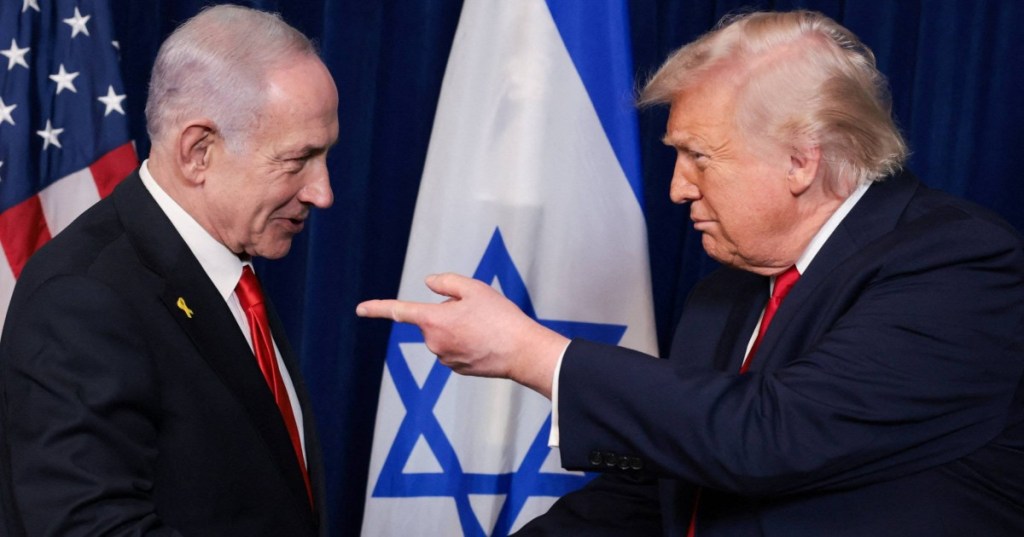
JERUSALEM — Israeli Prime Minister Benjamin Netanyahu delivered on a career-long ambition to topple Iran’s leadership, but his lockstep alignment with US President Donald Trump faces a test as their joint military campaign threatens to drag on, with its goals potentially shifting in the coming weeks.
At the outset of the bombing campaign on Saturday (March 4), both Trump and Netanyahu said regime change was the goal.
But in remarks at the White House on Monday, two days after Israeli air strikes killed Iran’s Supreme Leader Ayatollah Ali Khamenei and much of his leadership, Trump did not mention overthrowing Iran’s government as his top priority.
The US goal, he said, was to destroy Iran’s missiles and navy, and to stop it from obtaining a nuclear weapon.
His Pentagon chief Pete Hegseth said at a press conference that same day that the operation was not a “so-called regime-change war”.
Netanyahu, by contrast, has called on Iran’s citizens to take to the streets and overthrow their rulers as recently as Monday night.
“We’re going to create the conditions, first, for the Iranian people to get control of their destiny,” he told Fox News.
Asked about the US and Israeli goals, a US official familiar with the White House’s objectives told Reuters that the two countries’ military campaigns have different objectives.
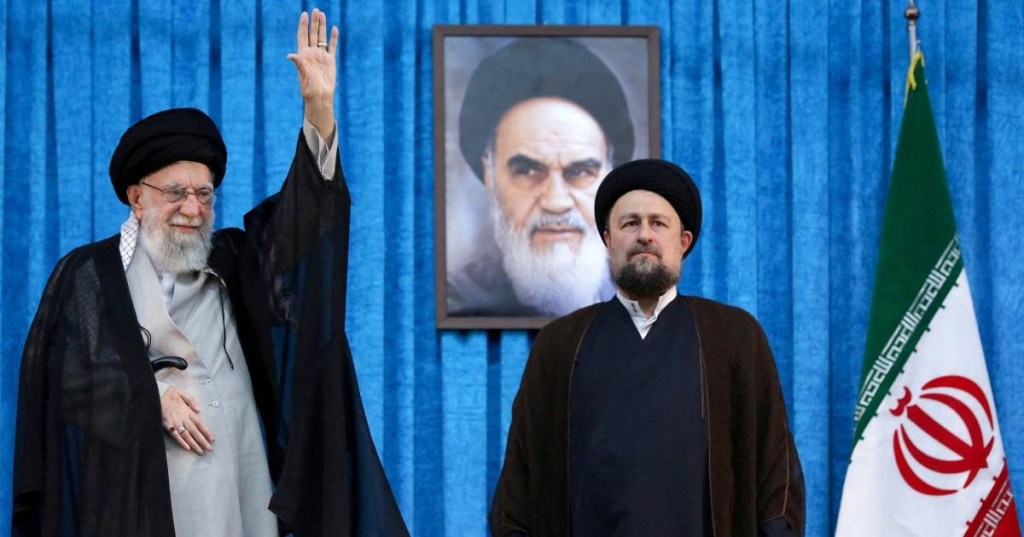
A grandson of Ayatollah Ruhollah Khomeini, the late founder of the Islamic Republic of Iran, is likely to figure prominently in the deliberations of the clerics who will determine who replaces Ayatollah Ali Khamenei as Supreme Leader.
The killing of Khamenei, 86, in a US-Israeli attack has brought new urgency to the question of who will be the next Supreme Leader, a long-simmering issue over which there had been no clarity despite his age.
Hassan Khomeini is the most visible of the late Ayatollah’s 15 grandchildren and is seen as a relative moderate within Iran’s clerical establishment.
He enjoys close ties to reformists including former presidents Mohammed Khatami and Hassan Rouhani, who both pursued policies of engagement with the West when in office.
Khomeini, 53, holds a symbolically important role in public life as custodian of his grandfather’s mausoleum in southern Tehran. He has never served in government.
Some politicians inside Iran have seen him as a rival to hardliners who gained sway under Khamenei, notably his son, Mojtaba.
The case for installing a moderate successor to Khamenei gained momentum among some Iranian politicians in the wake of unrest that swept Iran in January as a means of shoring up the Islamic Republic in the face of widening dissent.
Khomeini demanded accountability for Amini’s death
While loyal to the Islamic Republic established after the Shah was toppled in 1979, Khomeini has a track record of urging reform and has occasionally voiced dissent against authorities.
In 2021, he criticised the Guardian Council — the branch of Iran’s theocracy responsible for vetting presidential candidates — after it barred reformists from running.
The council’s move paved the way for the victory of hardliner Ebrahim Raisi, who died in a helicopter crash in 2024.
“You can’t pick someone for me and tell me to vote for them!” Khomeini said at the time.
He also demanded accountability after Mahsa Amini, a young Iranian woman, died in 2022 after being taken into custody by morality police, accused of violating conservative dress codes — an incident that ignited countrywide protests.
Authorities “must transparently and precisely account for what has happened to this 22-year-old girl under the pretext of ‘guidance and education'”, he said.
But, reflecting his loyalty to the system, the mid-ranking cleric also criticised protesters who chanted against Khamenei.
During the unrest that swept Iran in December and January — the deadliest since the 1979 revolution — he rallied behind the establishment, accusing rioters of serving Israel, taking part in a pro-government march, and likening some of the violence to the actions of Islamic State.
In a condolence letter, Khomeini said Khamenei would forever “be the hero of the people of Iran and Muslims”, adding: “The noble people of Iran will once again walk the path of the Imam (Khomeini) by overcoming this incident.”
‘Progressive theologian’
A close friend of Khomeini’s, speaking to Reuters in 2015, described him as a progressive theologian, especially when it comes to music, women’s rights, and social freedom.
He follows trends on social media and is interested in Western philosophy as much as Islamic thought.
His wife, Sayyeda Fatima, is the daughter of an Ayatollah, and they have four children.
Some reformists urged him to run for the presidency in 2012, but he declined.
Khomeini supported the Rouhani government that negotiated the 2015 nuclear agreement, which eased sanctions in return for limits on the nuclear programme — until US President Donald Trump tore it up in 2018.
He has spoken openly about economic hardships endured by Iranians during years of sanctions imposed over the nuclear programme.
Blocked from running for assembly of experts
A decade ago, Khomeini sought to run in an election for the Assembly of Experts, the body responsible for picking the Supreme Leader.
He secured an initial nod of approval for his candidacy from Khamenei, who reportedly gave his blessing while also cautioning Khomeini against doing any harm to his grandfather’s name. But he was later disqualified by the Guardian Council.
Though his religious credentials were cited for the disqualification — Khomeini holds the clerical rank of Hojatoleslam, one notch below Ayatollah — the move was seen as intended to head off a potential challenge by the reformist camp.
In 2008, he was widely regarded as criticising Iran’s powerful Islamic Revolutionary Guards Corps (IRGC) when he said in an interview that those claiming loyalty to his grandfather’s legacy should follow his order that the military must stay out of politics.
He nevertheless enjoys close ties to the Guards, an elite force tasked with safeguarding the Islamic Revolution.
During the 12-day air war between Israel and Iran last year, Khomeini wrote to Khamenei praising his leadership and saying Iranian missiles had become a nightmare for Israel and a source of satisfaction for the Iranian nation, according to Jamaran, an Iranian news website dedicated to Khomeini’s memory.
Khomeini has described Israel as the “evil Zionist regime” and “a cancerous tumour” backed by the West, and has said the Muslim world should make itself strong to confront Zionism, according to statements reported by Jamaran.
KATHMANDU, Nepal — Nepal is holding parliamentary elections Thursday, a year after a youth-led uprising forced out the government chosen in the last elections.
Here are some figures about the election:
The election is being held just three years after Nepal’s previous national vote, following the political upheaval that led to the government’s collapse in 2025. That paved the way for an interim government, which later called for fresh elections.
Nearly 19 million people are registered to vote in Nepal, according to the Election Commission. About 966,000 are men and 924,000 are women. Another 200 voters are registered under the “others” category, which includes people who do not identify as male or female and members of the LGBTQ+ community.
The number of registered voters has risen by nearly 1 million since the last parliamentary election in November 2022, as the youth-led uprising sparked greater interest in politics.
The voting age in Nepal is 18, and authorities had urged eligible young adults to register.
The youth-led uprising in September 2025 that brought down the previous government and triggered early elections has become a defining issue in the campaign.
Political parties have pledged to amplify the voices of younger voters, promising to tackle corruption and improve governance.
Voters will directly elect 165 members to the House of Representatives, the powerful lower chamber of Parliament. The remaining 110 seats in the 275-member House will be filled through a proportional representation system, with political parties nominating lawmakers based on the share of votes each party receives.
Previous government in Nepal have largely been coalitions, with two or more parties joining forces to command a majority in the House. The country has a history of political instability, having seen 15 governments in the past two decades.

 2026NowNews