The Race for Fashion Smart Glasses Is On


Like them or not, smart glasses are emerging as a major trend from more companies than it feels possible to even keep track of. With Meta already releasing waves of glasses over the last year and having more on deck for this year, and Google prepping its own, more fashion brands are entering the mix. Apparently, Gucci is one of them.

Gucci-branded, Google-powered Android XR smart glasses are coming next year, Luca de Meo, CEO of fashion eyewear maker Kering, told Reuters on Thursday. 

This isn’t a surprise since Kering — which manufactures multiple fashion eyewear brands, including Gucci — already announced its Android XR glasses partnership a year ago. But it’s a sign that many other familiar brands are now moving fast to develop smart eyewear, whether with Meta, Google or others.

Reebok has prescription-ready smart eyewear, made with Lucyd, and Meta’s own Oakley-branded sports gear is aiming for similar territory. Reports have been floating for over a year that EssilorLuxottica, Meta’s major eyewear partner, could be announcing more brands in its portfolio coming on board beyond just the existing Oakley and Ray-Ban smart glasses. Prada, another luxury brand in the Gucci zone, could still be next.

Google is also expected to debut its line of smart glasses this year, alongside Warby Parker and Korean fashion brand Gentle Monster.

The smartwatch precedent for smart fashion glasses

It reminds me heavily of what happened with smartwatches about a decade ago. When Google launched Android Wear (now Wear OS) smartwatches, a ton of fashion brands that also partnered: Tag Heuer, Montblanc and Fossil Group come right to mind. 

Over time, the number of fashion smartwatches faded as more companies vanished or got acquired, and major tech companies started to take over with their iconic brands. It’s more of a tech brand-driven smartwatch world now.

Apple is expected to launch its own smart glasses in the next year, and they’re likely to be made by Apple… but fashion partnerships could still pop up, too. Apple already has Hermès and Nike Apple Watch variants with custom bands. 

Smart glasses still feel like they ride outside the standard eyewear space, but more prescription-friendly models should be the next trend. It’ll have to happen, because anyone who’s already wearing glasses and wants to switch will be expecting it. 

I’m sure a lot more are coming, especially with Meta and Google being so ready to find fashion partners, and Apple looming. And EssilorLuxottica, as well as Kering, have a lot more brands in their portfolios that haven’t even begun to be tapped. https://www.cnet.com/tech/gaming/todays-wordle-hints-answer-and-help-for-april-13-1759/
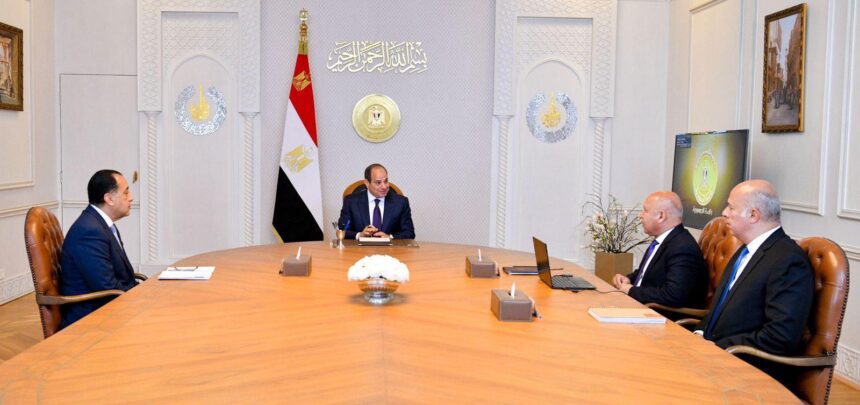
Al-Sisi reviews Damietta Port upgrades, major transport projects

Egyptian President Abdel Fattah Al-Sisi met with Prime Minister Mostafa Madbouly and Minister of Transport Kamel Al-Wazir to review plans for developing Damietta Port and other major transport projects.

According to the presidency, the meeting covered the comprehensive plan for upgrading Damietta Port, as well as progress on expanding and improving Cairo’s 116-kilometre ring road and upgrading the 6th of October Bridge to alleviate traffic congestion.

Officials also discussed expanding environmentally friendly public transport, including the second phase of the Bus Rapid Transit (BRT) system. Minister al-Wazir briefed the meeting on developments in river bus services across Greater Cairo, preparations for the East Nile monorail, progress on the high-speed electric rail network, and plans for the sixth metro line.

The meeting also addressed rerouting sections of the Alexandria-Matrouh railway line as part of wider efforts to modernise Egypt’s rail network. Discussions further focused on Egypt’s strategy to develop its maritime transport sector and position the country as a regional hub for logistics and transit trade through port expansion, construction of new berths, and deepening navigation channels.

Minister Al-Wazir highlighted ongoing cooperation with African nations, including Djibouti and Tanzania, through joint transport initiatives.

Al-Sisi stressed the need to complete all transport projects on schedule and to the highest standards, particularly public transport systems, to improve services, attract investment, and enhance tourism.

He also emphasised the importance of localising transport industries and maximising the benefits of existing infrastructure to support economic growth and create employment opportunities. https://www.dailynewsegypt.com/2026/03/17/al-sisi-reviews-damietta-port-upgrades-major-transport-projects/

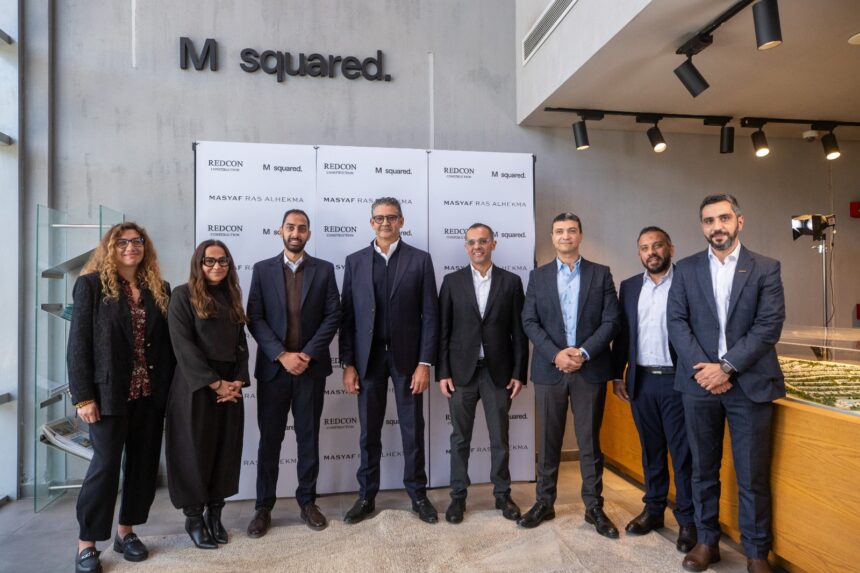
M squared awards EGP 1bn construction contract to REDCON for Masyaf Ras El Hekma

SHARE

Egyptian real estate developer M squared has awarded a construction contract worth EGP 1bn to REDCON Construction to execute and complete 59 residential buildings at its Masyaf Ras El Hekma project on the North Coast.

The 18-month contract covers the delivery of 376 residential units, including lagoon townhouses, twin houses, and chalet buildings, as part of the project’s first development phase.

This marks the first collaboration between M squared, the real estate arm of Intro Investment Holding, and REDCON Construction, which has been appointed as a main contractor for the scheme.

The agreement comes as M squared continues to accelerate on-site progress at Masyaf Ras El Hekma, where construction momentum has picked up in recent periods. The project has already recorded early deliveries, with a portion of units handed over in 2025.

Planned as an integrated coastal destination, the development combines residential offerings with hospitality, retail, and service facilities designed to support year-round utilisation.

Karim Malash, Chairperson and CEO of M squared, said the partnership reflects the company’s strategy of working with contractors capable of delivering large-scale developments while maintaining quality standards and timelines. He added that cooperation with REDCON is expected to extend into future phases of the project.

Omar El Gamal, CEO and Managing Director of REDCON Construction, noted that the partnership enables close coordination across engineering, construction, and finishing stages, supporting efficient project execution. He added that the agreement could open the door for further collaboration in upcoming phases.

The contract primarily covers lagoon-facing residential units, which form a key component of the project’s broader product mix.

Masyaf Ras El Hekma is being developed under a comprehensive model that integrates residential, commercial, hospitality, and wellness elements, alongside supporting infrastructure and service components. The project also involves multiple partnerships across asset management, finishing, and infrastructure works as part of its phased rollout.

The agreement underscores continued construction momentum along Egypt’s North Coast, where developers are increasingly fast-tracking execution and adopting integrated development models that blend residential and service-oriented offerings. https://www.dailynewsegypt.com/2026/03/17/m-squared-awards-egp-1bn-construction-contract-to-redcon-for-masyaf-ras-el-hekma/

120,000 taxpayers voluntarily join simplified tax system: Finance Minister

Egypt’s Minister of Finance Ahmed Kouchouk said that the Egyptian government is maintaining direct communication with investors to tackle tax, customs, and financial challenges through practical, actionable solutions. Speaking at the annual conference of the Federation of Small and Medium Enterprises Investors, which brought together entrepreneurs from across the governorates, Kouchouk praised the open dialogue with “ambitious investors” seeking to expand and grow.

“Last year, we promised the first package of tax facilitation measures, and together we delivered on that promise,” Kouchouk said, noting that the positive results confirm that “betting on the private sector always pays off.”

He explained that 120,000 taxpayers have voluntarily joined the simplified tax system. Additional financing initiatives have also been introduced to encourage further participation in this advanced and incentivised framework. Under the programme, taxpayers voluntarily submitted around 660,000 new and amended tax returns, reported business volumes amounting to EGP 1trn, and paid approximately EGP 80bn in additional taxes.

“We are proud of this valuable trust from our partners in the tax facilitation journey,” Kouchouk added. He also noted that a second package of tax facilitation measures will be presented to the House of Representatives after Eid Al-Fitr.

The Finance Minister highlighted that the government continues efforts to stimulate economic activity, expand initiatives in industry, tourism, and exports, and reduce customs clearance times to ease costs and burdens on investor partners.

Khaled Hashem, Minister of Industry, emphasised the ministry’s commitment to strengthening communication with owners of micro, small, and medium enterprises (MSMEs), describing them as a vital link between large-scale projects and micro-enterprises, and a cornerstone of the productive economy system. He noted that sustainable industrial development requires integration and coordination across all sectors.

Hashem stressed the importance of accurate data on markets, commodities, and industrial activities. The ministry is developing mechanisms to collect and analyse economic data scientifically and systematically, linking it within an integrated knowledge framework. This will allow the private sector to utilise data for investment planning and production expansion while supporting policymakers in setting industrial priorities, identifying production gaps, and targeting investments toward high-growth sectors.

He added that the availability of a precise database on production volumes, domestic demand, and export demand will help build a clear vision for industrial development, guide investments toward sectors with the greatest need and growth potential, and boost exports.

Hashem also underlined that the ministry will focus on developing productive activities in villages and rural areas to improve household incomes, create jobs, and reduce migration to major cities. Expanding productive activities in rural regions, he said, is a key pillar of balanced economic development across governorates.

Regarding exports, Hashem explained that Egypt’s upcoming strategy will prioritise increasing the local content ratio in exported products, aiming to deepen domestic manufacturing and reduce reliance on imported inputs. Strengthening feeder industries and raising the added value of Egyptian products will enhance the competitiveness of Egyptian exports in regional and international markets.

Alaa Al-Saqti, Chairperson of the federation, noted that the current phase requires coordinated efforts between all state institutions and the business community to support the national economy and expand productive sectors, thereby increasing employment rates.

Al-Saqti praised the Finance Minister’s field-oriented approach, highlighting his ability to understand and address the challenges faced by small investors. He described this as a positive model of direct communication between government and business, and expressed hope that it could be replicated across other ministries.

He also stressed the federation’s aspiration to maintain direct and continuous engagement with the Ministry of Industry, noting that its role extends beyond highlighting challenges to actively contributing to the formulation of solutions. https://www.dailynewsegypt.com/2026/03/17/120000-taxpayers-voluntarily-join-simplified-tax-system-finance-minister/

Investment Minister reviews General Motors’ $530m Egypt expansion plans

Egypt’s Minister of Investment and Foreign Trade, Mohamed Farid, held talks with Sharon Nishi, Chairperson and Managing Director of General Motors Egypt and Africa, to review the company’s current investments in Egypt and its future expansion plans.

The meeting, held on Tuesday and attended by Jehan Saleh, economic adviser to the Prime Minister, focused on the government’s efforts to localise the automotive industry, increase its contribution to GDP, and align with GM’s expansion strategy in the Egyptian market.

Farid highlighted the government’s broader agenda to localise industrial production, boost exports, attract foreign direct investment, and enhance the competitiveness of the automotive sector and its feeder industries. He underscored the strategic partnership with General Motors, which has maintained a long-standing presence in Egypt and produced more than one million vehicles locally.

The minister noted that GM’s operations have generated around 1,300 direct jobs and over 30,000 indirect jobs, reflecting sustained investor confidence in Egypt’s market and its ability to attract long-term industrial investments.

Discussions also reviewed the status of GM’s investments in Egypt, which exceed $530m, including approximately $50m allocated to robotic systems and advanced manufacturing technologies aimed at enhancing production efficiency.

Farid pointed out that local content levels in some vehicle models now exceed 60%, supporting the state’s strategy to deepen industrial localisation and increase reliance on domestically produced components.

He added that the ministry is working to develop a comprehensive export incentive framework to maximise the advantages of Egypt’s strategic geographic position as a regional production and export hub serving African and Middle Eastern markets. Improving the competitiveness of locally manufactured products, he stressed, remains central to expanding Egypt’s export footprint.

Farid reaffirmed the government’s commitment to continued coordination with General Motors, pledging full support for expanding its investments in the automotive sector and scaling up industrial exports in line with national development priorities.

For her part, Nishi described Egypt as a key pillar in the company’s long-term regional strategy, citing its strategic location and skilled workforce.

She noted that General Motors is implementing a forward-looking plan that includes launching new vehicle models aligned with evolving market dynamics, while expanding production capacity to meet domestic demand and support export growth.

Nishi also highlighted that the company recently marked 100 years of presence in the region, beginning with Egypt, underscoring the country’s central role in its regional footprint and reaffirming GM’s commitment to advancing industrial localisation and positioning Egypt as a regional hub for automotive manufacturing and exports across Africa and the Middle East. https://www.dailynewsegypt.com/2026/03/17/investment-minister-reviews-general-motors-530m-egypt-expansion-plans/?utm_source=rss&utm_medium=rss&utm_campaign=investment-minister-reviews-general-motors-530m-egypt-expansion-plans

Las Vegas robotaxi rides available on Uber soon with Zoox expansion

Uber has partnered with Zoox to add robotaxi rides bookable on the ride-hailing giant’s smartphone application.

The partnership will launch this summer in Las Vegas, allowing riders to book rides in Zoox’s purpose-built robotaxis using Uber’s app, the two companies announced Wednesday. Rides can still be booked using Zoox’s app.

“We are excited to partner with Uber, a company that shares our vision for transforming mobility,” Zoox CEO Aicha Evans said in a statement. “This partnership is an opportunity to continue advancing the use of autonomous mobility in daily life. Through our collaboration, Zoox will provide a differentiated rider experience to those who already know and love the convenience of riding with Uber.”

Amazon-owned Zoox has been operating a free robotaxi service in Las Vegas since last fall, offering free rides to and from Resorts World, Topgolf, New York-New York and Area 15. The rides bookable on the Uber app will also be limited to Zoox’s approved sites.

Zoox plans to expand its site list this year while implementing a fee to ride the service. Zoox has deals in place with T-Mobile Arena and Sphere to add dedicated ride zones at both properties. Zoox and Uber also plan to expand their partnership, adding shared rides in Los Angeles by the middle of next year.

The partnership with Uber marks the first time Zoox has struck a deal with a third-party ride-hailing platform.

Since 2019, Zoox has been operating in Southern Nevada and are based out a 190,000-square-foot headquarters located in the southwest valley.

Zoox robotaxis are four-seater pods, with two seats on each side facing each other, with no steering wheel or pedals and have the ability to move forward and backward at 75 mph. Riders can charge their phones inside the vehicles and they can control the temperature and music from screens located within the robotaxi.

“The Zoox robotaxi is unlike any other vehicle on the planet – it was purpose-built from the ground up to deliver an extraordinary experience,” Dara Khosrowshahi, CEO of Uber said in a statement. “Zoox’s commitment to safety and their advanced autonomous driving technology make them an ideal partner. We’re thrilled to work together to introduce more riders to the future of mobility.” https://www.reviewjournal.com/local/traffic/las-vegas-robotaxi-rides-available-on-uber-soon-with-zoox-expansion-3723373/?utm_campaign=widget&utm_medium=latest&utm_source=post_3723395&utm_term=Las%20Vegas%20robotaxi%20rides%20available%20on%20Uber%20soon%20with%20Zoox%20expansion

Eurozone Retail Sales Decline Unexpectedly

Eurozone retail sales fell unexpectedly in January despite a rise in consumer confidence at the start of the year, pointing to fragility in household sentiment even before this week’s surge in energy prices.

Volumes were down 0.1% on month, compared with growth of 0.2% in December, the European Union’s statistics agency said Thursday. A consensus of economists polled by The Wall Street Journal expected a 0.3% rise.

The figure for December was revised up from a 0.5% decline.

The fall in January was driven by lower sales of nonfood products and automotive fuel. Volumes were down 0.9% in Germany, the eurozone’s largest economy, while sales rose in France, Spain and Italy.

This comes despite the bloc showing resilience to rising headwinds at the beginning of 2026. On Wednesday, data showed the eurozone unemployment rate falling to a record low in January. Consumer confidence also picked up in the month, according to figures published last week.

But looking ahead, the outlook is likely to be dragged by rising geopolitical uncertainty and energy prices following U.S. and Israeli strikes on Iran.

“This week’s increase in gas and oil prices may dent confidence a bit and lead to higher household inflation expectations,” said Andrew Kenningham, chief Europe economist at Capital Economics.

Even so, household consumption is expected to rise at a moderate pace this year, he said.

Figures also released Thursday showed the Irish economy contracted much more sharply in the final three months of last year than previously estimated. The country’s statistics agency now calculates that gross domestic product was 3.8% lower than in the third quarter, having previously seen a decline of 0.6%.

That may lead to a reduced estimate for growth in the eurozone as a whole during the period. The European Union’s statistics agency had calculated that the currency area’s economy grew by 0.3%.

While Ireland’s economy experienced a sizable contraction at the end of 2025, it recorded one of the world’s fastest expansions over the year as a whole. The Central Statistics Office said annual GDP was 12.3% higher than in 2024, having previously seen growth of 12.6%, on a surge in exports of weight-loss drugs to the U.S.

Copyright ©2026 Dow Jones & Company, Inc. All Rights Reserved. 87990cbe856818d5eddac44c7b1cdeb8

Don Nico Forbes is a reporter for Dow Jones Newswires and The Wall Street Journal, covering European economics. He also writes features on sustainable business. Don joined Dow Jones and the Journal as a publishing editor in 2019. He holds degrees from the University of Manchester and.. https://www.wsj.com/business/retail/eurozone-retail-sales-decline-unexpectedly-f6e3b589?mod=global_news_article_pos1

Global Travel Leaders Formalise Cross-Sector Coordination Through the Global Resilience Network

As geopolitical fragmentation, AI acceleration and infrastructure pressure reshape global mobility, senior leaders across travel, finance, technology and government are consolidating strategic engagement through the Global Resilience Network (GRN).
The Network, now operating across Europe, Asia, the Middle East and the Americas, is strengthening executive-level coordination at a time when industry leaders are questioning whether traditional forums alone can deliver the coherence required for the next phase of global travel growth.

This renewed emphasis on structural resilience, reflected in recent global industry discussions, including the observance of UN Global Tourism Resilience Day on 17 February, underscores the growing recognition that preparedness must be matched by coordinated action across sectors.
While dialogue across the sector has increased, industry stakeholders acknowledge that volume of conversation has not necessarily translated into alignment or actionable coordination. GRN has been structured as a curated, cross-sector convergence platform designed specifically to address that gap.

Rather than functioning as a conference organiser or membership association, the Network is positioned as a selective, invitation-led leadership infrastructure, convening decision-makers whose collective influence shapes global mobility, including aviation, hospitality, destinations, financial services, infrastructure, energy, technology and investment.
The initiative builds on more than a decade of structured engagement with senior industry figures, reflecting consistent demand for more focused, outcome-driven formats that move beyond representation toward responsibility.

The Network has a distinguished panel of international experts drawn from government, tourism, technology and destination development, names include; Ghada Shalaby, former Deputy Minister of Tourism, Arab Republic of Egypt; Egyptian Hotel Association, Christian Mantei, President, Phase 3 Conseil formerly with Montefiore Investment, ATOUT France, IGESA and ATREAM, Alex MacEwan, International Investment and Strategy Advisor; Head of Investment Companies, Capital Access Group, Paras Loomba, CEO and Founder, GHE (Global Himalayan Expeditions), Claude Blanc, Sr. Advisor, travel and tourism; formerly Amadeus, RXGlobal and Rajan Datar, Host and Journalist, BBC.

Laurie Myers, Founding Strategist commented “The global system is not suffering from a lack of dialogue; it is suffering from a lack of coherence. Travel does not operate in isolation; it is shaped by financial systems, infrastructure decisions, technological platforms and geopolitical realities. GRN exists to enable alignment between those with the authority and capacity to shape outcomes.”
The Network reflects a growing recognition that resilience is systemic, not sector specific. In an era where fragmentation has become the default condition, coherence is emerging as the new leadership imperative, and GRN exists to help enable it. https://www.breakingtravelnews.com/news/article/global-travel-leaders-formalise-cross-sector-coordination-through-the-globa/