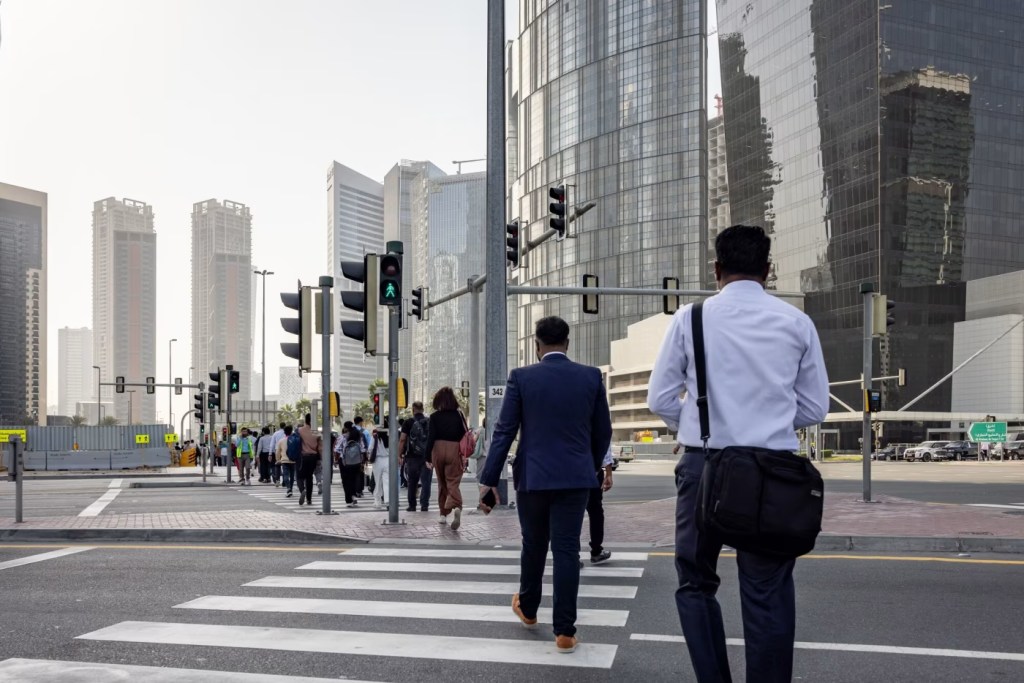
U.A.E. Explores Freezing Iranian Assets to Punish Tehran for Attacks

The United Arab Emirates is weighing freezing billions of dollars of Iranian assets held in the Gulf state, according to people familiar with the discussions, a move that could sever one of Tehran’s most important economic lifelines. 

If the U.A.E. goes ahead, it would significantly curb Tehran’s access to foreign currency and global trade networks as its domestic economy, already buckling under inflation, is now engulfed in a military conflict.

Emirati officials have privately warned Iran—which has fired more than 1,000 drones and missiles at targets in the U.A.E.—of the possible action, people familiar with the warnings said. It isn’t clear when, or if, the Emirati government will decide to act.

The Emirati Foreign Ministry didn’t respond to a request for comment.

The U.A.E. has for years functioned as a financial hub for Iranian businesses and individuals seeking a haven from Western sanctions, according to analysts tracking Tehran’s activities and the U.S. Treasury. Iran’s sanctions-evasion infrastructure has allowed Tehran to keep selling oil abroad and use the proceeds to fund weapons programs and regional proxies, they say.

The U.A.E. has previously said it adheres to sanctions and has a strong commitment to protect the integrity of the global financial system.

Any move by the U.A.E. to limit Iranian financial activities there “would be very significant, because the U.A.E. is the most important conduit for Iran’s engagement with the global economy,” said Esfandyar Batmanghelidj, chief executive of Iran-focused think tank Bourse & Bazaar. 

U.A.E. authorities are weighing several measures to dismantle illicit Iranian operations, officials familiar with the matter said. They range from freezing the assets of U.A.E.-based shadow companies used to mask trade to a sweeping financial crackdown on local currency exchanges which are used to move money outside of formal banking channels.

If the U.A.E. decides to move on Iran’s shadow-financing empire, a prime target would be accounts affiliated with the Islamic Revolutionary Guard Corps, the powerful group responsible for defending and perpetuating the regime, the officials familiar with the discussions said.

Tehran has allocated a growing portion of its oil for the IRGC, as well as other parts of the defense and security complex, to sell on the international market, according to a Treasury publication last June. 

Beyond financial maneuvers, policymakers are also considering direct maritime action, such as seizing Iranian ships, two of the officials familiar with the discussions said. Such moves would be aimed at crippling Iran’s shadow fleet of oil tankers and intermediaries operating across Emirati ports and shipping lanes.

Any efforts to squeeze Iranian assets would mark a sharp departure from the U.A.E.’s historical effort to balance its strategic alliance with the U.S. against its proximity to Iran. Until now, the country has largely refrained from weaponizing its financial sector against its neighbor across the Persian Gulf. 

In seeking to become an international financial center, the U.A.E. has welcomed capital from around the world, often with little regard for its provenance. After Russia invaded Ukraine, the U.A.E. was one of the main beneficiaries, playing host to traders of Moscow’s commodities and inviting Russian money and bankers.

The West—including U.S. officials—has previously pressured the U.A.E. to tighten scrutiny on money flows and crack down on sanctions evasion. In 2022, the Financial Action Task Force, a Paris-based global finance watchdog, placed the U.A.E. on its “gray list” for failing to adequately combat money laundering and terrorism financing.

A U.A.E. official has previously told The Wall Street Journal that the U.A.E. had a robust process to deal with sanctioned people and companies and that Emirati banks monitored compliance. In 2024, the Journal reported that Dubai’s main state-owned bank closed some accounts held by Russian oligarchs and oil traders after U.S. officials pressed the U.A.E. to shut Moscow’s backdoor to the international financial system.

Around the same time, the FATF removed the U.A.E. from the list, saying it had strengthened its anti-money-laundering regime.

The latest conflict with Iran has put the U.A.E. in a difficult spot, casting doubt on the country’s carefully cultivated reputation as a haven in a volatile region. Iran’s drone and missile attacks have caused some damage at a Dubai airport, as well as residential and tourist areas around the Burj Al Arab hotel and the Palm Jumeirah man-made island.

Several people involved in the discussions said Emirati officials are weighing the risks of an asset freeze, including the possibility that it could trigger prolonged retaliation by Iran against Emirati territory and its critical energy infrastructure. Such a decision would also upend lucrative trade and banking ties with Tehran and damage the U.A.E.’s ability to attract and retain capital from other politically charged sources, such as Russia.

Any asset freeze is unlikely to cover all accounts held by Iranian companies and nationals, hundreds of thousands of whom live in the U.A.E., analysts said.

Andreas Krieg, a senior lecturer at the School of Security Studies at King’s College London, said that a more targeted approach is more likely because the U.A.E. doesn’t want to lose all of this business. Krieg said that IRGC-linked accounts would be frozen first. 

“This is the most important nonmilitary lever the U.A.E. have to play against the Iranians,” Krieg said.  

In 2024, $9 billion passing through correspondent accounts maintained by U.S. banks appears to have been tied to clandestine Iranian financial activity, according to the Treasury Department. The Treasury said U.A.E.-based firms received 62% of those funds, much in relation to oil sales by Iran-linked companies in Dubai. 

Iran has established front companies in the U.A.E. to receive payments for oil, settle trades and disguise the origin of funds, according to the Treasury and analysts tracking Tehran’s activities. 

Iran has also maintained a shadow fleet of aging ships that move sanctioned oil, often trying to disguise their location and ownership. Most of the shadow tankers involved in Iran are owned and managed by companies in the U.A.E. and Asia, according to the Treasury. https://www.wsj.com/world/middle-east/u-a-e-explores-freezing-iranian-assets-to-punish-tehran-for-attacks-904503de?mod=WSJ_home_mediumtopper_pos_1
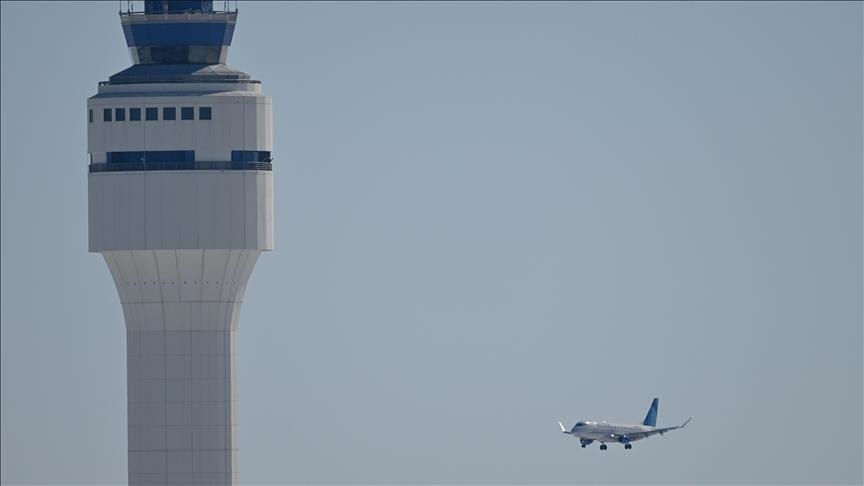

Some key figures about Nepal’s parliamentary election

KATHMANDU, Nepal — Nepal is holding parliamentary elections Thursday, a year after a youth-led uprising forced out the government chosen in the last elections.

Here are some figures about the election:

The election is being held just three years after Nepal’s previous national vote, following the political upheaval that led to the government’s collapse in 2025. That paved the way for an interim government, which later called for fresh elections.

Nearly 19 million people are registered to vote in Nepal, according to the Election Commission. About 966,000 are men and 924,000 are women. Another 200 voters are registered under the “others” category, which includes people who do not identify as male or female and members of the LGBTQ+ community.

The number of registered voters has risen by nearly 1 million since the last parliamentary election in November 2022, as the youth-led uprising sparked greater interest in politics.

The voting age in Nepal is 18, and authorities had urged eligible young adults to register.

The youth-led uprising in September 2025 that brought down the previous government and triggered early elections has become a defining issue in the campaign.

Political parties have pledged to amplify the voices of younger voters, promising to tackle corruption and improve governance.

Voters will directly elect 165 members to the House of Representatives, the powerful lower chamber of Parliament. The remaining 110 seats in the 275-member House will be filled through a proportional representation system, with political parties nominating lawmakers based on the share of votes each party receives.

Previous government in Nepal have largely been coalitions, with two or more parties joining forces to command a majority in the House. The country has a history of political instability, having seen 15 governments in the past two decades.

The Nepali Congress and the Communist Party of Nepal (Unified Marxist–Leninist) are the long-dominant political parties. However, they had been part of the government ousted last year and have faced public dissatisfaction. The National Independent Party, formed in 2022, has drawn significant support on the campaign trail. Former Kathmandu Mayor Balendra Shah, also an ex-rapper, is its candidate for prime minister. https://abcnews.com/International/wireStory/key-figures-nepals-parliamentary-election-130704538

Global Travel Leaders Formalise Cross-Sector Coordination Through the Global Resilience Network

As geopolitical fragmentation, AI acceleration and infrastructure pressure reshape global mobility, senior leaders across travel, finance, technology and government are consolidating strategic engagement through the Global Resilience Network (GRN).
The Network, now operating across Europe, Asia, the Middle East and the Americas, is strengthening executive-level coordination at a time when industry leaders are questioning whether traditional forums alone can deliver the coherence required for the next phase of global travel growth.

This renewed emphasis on structural resilience, reflected in recent global industry discussions, including the observance of UN Global Tourism Resilience Day on 17 February, underscores the growing recognition that preparedness must be matched by coordinated action across sectors.
While dialogue across the sector has increased, industry stakeholders acknowledge that volume of conversation has not necessarily translated into alignment or actionable coordination. GRN has been structured as a curated, cross-sector convergence platform designed specifically to address that gap.

Rather than functioning as a conference organiser or membership association, the Network is positioned as a selective, invitation-led leadership infrastructure, convening decision-makers whose collective influence shapes global mobility, including aviation, hospitality, destinations, financial services, infrastructure, energy, technology and investment.
The initiative builds on more than a decade of structured engagement with senior industry figures, reflecting consistent demand for more focused, outcome-driven formats that move beyond representation toward responsibility.

The Network has a distinguished panel of international experts drawn from government, tourism, technology and destination development, names include; Ghada Shalaby, former Deputy Minister of Tourism, Arab Republic of Egypt; Egyptian Hotel Association, Christian Mantei, President, Phase 3 Conseil formerly with Montefiore Investment, ATOUT France, IGESA and ATREAM, Alex MacEwan, International Investment and Strategy Advisor; Head of Investment Companies, Capital Access Group, Paras Loomba, CEO and Founder, GHE (Global Himalayan Expeditions), Claude Blanc, Sr. Advisor, travel and tourism; formerly Amadeus, RXGlobal and Rajan Datar, Host and Journalist, BBC.

Laurie Myers, Founding Strategist commented “The global system is not suffering from a lack of dialogue; it is suffering from a lack of coherence. Travel does not operate in isolation; it is shaped by financial systems, infrastructure decisions, technological platforms and geopolitical realities. GRN exists to enable alignment between those with the authority and capacity to shape outcomes.”
The Network reflects a growing recognition that resilience is systemic, not sector specific. In an era where fragmentation has become the default condition, coherence is emerging as the new leadership imperative, and GRN exists to help enable it. https://www.breakingtravelnews.com/news/article/global-travel-leaders-formalise-cross-sector-coordination-through-the-globa/

Iraq extends airspace closure 48 hours; Jordan announces partial shutdown

ISTANBUL

Iraq has extended the closure of its airspace for 48 hours, while Jordan announced a partial daily shutdown, civil aviation authorities in both countries said Monday, citing escalating regional tensions.

Iraq’s Civil Aviation Authority said it would keep the country’s airspace closed to all arriving, departing and overflying aircraft for an additional 48 hours starting at 12 pm local time (0900GMT) Monday as a “temporary and precautionary measure.”

The authority said in a statement carried by the state news agency INA that the decision followed “an ongoing assessment of the security situation and a comprehensive review of developments and regional tensions.”

Iraq initially closed its airspace Saturday following a US-Israeli offensive against Iran.

Jordan’s Civil Aviation Regulatory Commission also said in a statement it would implement a “partial and temporary” closure of the kingdom’s airspace to all arriving, departing and transit flights “in light of current regional developments and a risk assessment conducted in accordance with international standards.”

The closure will take effect from 6 pm local time (1500 GMT) until 9 am (0600 GMT) the following day and the decision will remain in force until further notice “to ensure the safety and security of civil aviation in Jordanian airspace,” the commission said.

The decisions come as Israel and the United States have conducted a military offensive against Iran since early Saturday, killing at least 550 people, including Supreme Leader Ali Khamenei and top military officials.

Tehran has responded by firing missiles and drones toward Israel and US bases in countries across the region. Some of those attacks have caused casualties and damage to civilian infrastructure, prompting condemnation from the Gulf countries, which have called for an end to the attacks.

Washington and Tel Aviv accuse Tehran of pursuing nuclear and missile programs that threaten Israel and US allies in the region. Iran says its nuclear program is peaceful and that it does not seek to produce nuclear weapons. https://www.aa.com.tr/en/middle-east/iraq-extends-airspace-closure-48-hours-jordan-announces-partial-shutdown/3846682

2 injured as knife-wielding man goes on stabbing spree in UK’s Edinburgh

Two people were injured after a man was seen brandishing two knives in a residential part of Edinburgh, prompting a major armed police response and public warnings to avoid the area.

The incident happened in Calder, in the west of Edinburgh, where emergency services were deployed following reports of a man with a bladed weapon. Locals said police activity began before 9 am, with several streets sealed off as officers moved in.

Confirming the injuries, Police Scotland said officers were called to reports of a man with a knife earlier on Monday morning. Chief Inspector Scott Kennedy said the disturbance had been contained and there was no wider risk to the public.

“The incident is not being treated as terror-related,” Kennedy said, adding that officers would remain in the area to reassure residents.

Earlier, police issued a public warning urging people to stay away from Calder. “The public is being advised to avoid the Calder area of Edinburgh following reports of a man with a bladed weapon,” the force said. “Police, including firearms officers, are in attendance.”

Residents described a prolonged and intense police presence. William Ramsay, who lives nearby, told Press Association he believed the man had entered the stairwell of his building.

“He smashed the local shop, possibly stabbed two people unconfirmed,” Ramsay said. “Armed police, dogs been here for about two hours.”

Images from the scene showed at least six police vehicles outside Cobbinshaw House, a tower block of flats, with armed officers positioned around the building as enquiries continued.

Public transport was also disrupted. Lothian Buses said its number 20 service was being diverted away from Calder until further notice.

Police have not released further details about the condition of the injured or any arrests, as officers continue investigations and maintain a visible presence in the area. https://www.indiatoday.in/world/uk-news/story/knife-wielding-man-stabs-multiple-people-in-uks-edinburgh-local-media-2876553-2026-03-02

Indian crew member killed after drone boat hits oil tanker off Oman coast

An Indian crew member was killed after an oil tanker was struck by an unmanned drone boat off the coast of Oman, triggering a fire and forcing the evacuation of all crew on board, officials confirmed on Monday, as hostilities between Israel and Iran continued to escalate across the region.

The Sultanate of Oman’s Maritime Security Centre said the incident occurred about 52 nautical miles northwest of Port Sultan Qaboos in Muscat Governorate on Saturday (March 1). The tanker, identified as MKD VYOM, flying the flag of the Republic of the Marshall Islands, was carrying approximately 59,463 metric tonnes of cargo at the time of the attack.

According to officials, the unmanned vessel hit the tanker, causing a fire and explosion in the main engine room. One crew member, an Indian national, died in the incident.

The vessel had 21 crew members on board, including 16 Indians, four Bangladeshis and one Ukrainian. All survivors were evacuated by the merchant ship MV SAND, which sails under the flag of Panama, in coordination with the Maritime Security Centre.

The Royal Navy of Oman has deployed a vessel to monitor the damaged tanker and is issuing navigational warnings to ships transiting the area. Authorities have not yet disclosed who was behind the attack.

Iran has warned vessels approaching the Strait of Hormuz, the narrow gateway to the Persian Gulf, and is suspected of launching multiple maritime attacks as the Middle East war intensified following major US and Israeli airstrikes on the Islamic Republic.

This marked the second such attack on cargo vessels transiting the Strait of Hormuz since the assassination of Iran’s Supreme Leader, Ayatollah Ali Khamenei, which has triggered widespread tensions across the Middle East.

Earlier, a Palau-flagged oil tanker Skylight, carrying 15 Indian nationals among its crew, was struck near Oman’s Musandam peninsula, injuring four people.

Oman’s Maritime Security Centre said in a post on X that the strike took place about five nautical miles north of Musandam’s Khasab Port, after which the tanker’s 20-member crew was evacuated. The agency did not specify the weapon used. https://www.indiatoday.in/world/story/indian-crew-member-killed-after-drone-boat-hits-oil-tanker-off-oman-coast-2876550-2026-03-02