The Sri Lankan military has rescued at least 30 people on board a sinking Iranian ship near Sri Lankan waters on Wednesday (March 4), the country’s foreign minister told parliament.
The Sri Lankan navy dispatched a rescue mission after a distress call from the Iranian ship, a defence ministry spokesperson said earlier on Wednesday.
Foreign minister Vijitha Herath did not give further details but said Sri Lanka would take appropriate action.
Local media reported the ship reported distress off the coast of Galle in the southern part of the country, and that the injured had been admitted to a hospital in Galle.
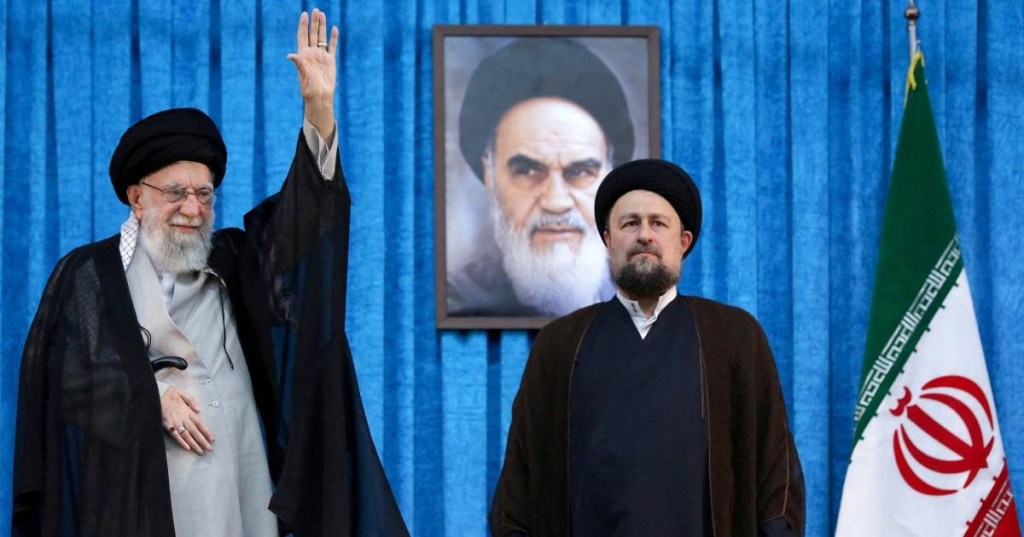
A grandson of Ayatollah Ruhollah Khomeini, the late founder of the Islamic Republic of Iran, is likely to figure prominently in the deliberations of the clerics who will determine who replaces Ayatollah Ali Khamenei as Supreme Leader.
The killing of Khamenei, 86, in a US-Israeli attack has brought new urgency to the question of who will be the next Supreme Leader, a long-simmering issue over which there had been no clarity despite his age.
Hassan Khomeini is the most visible of the late Ayatollah’s 15 grandchildren and is seen as a relative moderate within Iran’s clerical establishment.
He enjoys close ties to reformists including former presidents Mohammed Khatami and Hassan Rouhani, who both pursued policies of engagement with the West when in office.
Khomeini, 53, holds a symbolically important role in public life as custodian of his grandfather’s mausoleum in southern Tehran. He has never served in government.
Some politicians inside Iran have seen him as a rival to hardliners who gained sway under Khamenei, notably his son, Mojtaba.
The case for installing a moderate successor to Khamenei gained momentum among some Iranian politicians in the wake of unrest that swept Iran in January as a means of shoring up the Islamic Republic in the face of widening dissent.
Khomeini demanded accountability for Amini’s death
While loyal to the Islamic Republic established after the Shah was toppled in 1979, Khomeini has a track record of urging reform and has occasionally voiced dissent against authorities.
In 2021, he criticised the Guardian Council — the branch of Iran’s theocracy responsible for vetting presidential candidates — after it barred reformists from running.
The council’s move paved the way for the victory of hardliner Ebrahim Raisi, who died in a helicopter crash in 2024.
“You can’t pick someone for me and tell me to vote for them!” Khomeini said at the time.
He also demanded accountability after Mahsa Amini, a young Iranian woman, died in 2022 after being taken into custody by morality police, accused of violating conservative dress codes — an incident that ignited countrywide protests.
Authorities “must transparently and precisely account for what has happened to this 22-year-old girl under the pretext of ‘guidance and education'”, he said.
But, reflecting his loyalty to the system, the mid-ranking cleric also criticised protesters who chanted against Khamenei.
During the unrest that swept Iran in December and January — the deadliest since the 1979 revolution — he rallied behind the establishment, accusing rioters of serving Israel, taking part in a pro-government march, and likening some of the violence to the actions of Islamic State.
In a condolence letter, Khomeini said Khamenei would forever “be the hero of the people of Iran and Muslims”, adding: “The noble people of Iran will once again walk the path of the Imam (Khomeini) by overcoming this incident.”
‘Progressive theologian’
A close friend of Khomeini’s, speaking to Reuters in 2015, described him as a progressive theologian, especially when it comes to music, women’s rights, and social freedom.
He follows trends on social media and is interested in Western philosophy as much as Islamic thought.
His wife, Sayyeda Fatima, is the daughter of an Ayatollah, and they have four children.
Some reformists urged him to run for the presidency in 2012, but he declined.
Khomeini supported the Rouhani government that negotiated the 2015 nuclear agreement, which eased sanctions in return for limits on the nuclear programme — until US President Donald Trump tore it up in 2018.
He has spoken openly about economic hardships endured by Iranians during years of sanctions imposed over the nuclear programme.
Blocked from running for assembly of experts
A decade ago, Khomeini sought to run in an election for the Assembly of Experts, the body responsible for picking the Supreme Leader.
He secured an initial nod of approval for his candidacy from Khamenei, who reportedly gave his blessing while also cautioning Khomeini against doing any harm to his grandfather’s name. But he was later disqualified by the Guardian Council.
Though his religious credentials were cited for the disqualification — Khomeini holds the clerical rank of Hojatoleslam, one notch below Ayatollah — the move was seen as intended to head off a potential challenge by the reformist camp.
In 2008, he was widely regarded as criticising Iran’s powerful Islamic Revolutionary Guards Corps (IRGC) when he said in an interview that those claiming loyalty to his grandfather’s legacy should follow his order that the military must stay out of politics.
He nevertheless enjoys close ties to the Guards, an elite force tasked with safeguarding the Islamic Revolution.
During the 12-day air war between Israel and Iran last year, Khomeini wrote to Khamenei praising his leadership and saying Iranian missiles had become a nightmare for Israel and a source of satisfaction for the Iranian nation, according to Jamaran, an Iranian news website dedicated to Khomeini’s memory.
Khomeini has described Israel as the “evil Zionist regime” and “a cancerous tumour” backed by the West, and has said the Muslim world should make itself strong to confront Zionism, according to statements reported by Jamaran.
KATHMANDU, Nepal — Nepal is holding parliamentary elections Thursday, a year after a youth-led uprising forced out the government chosen in the last elections.
Here are some figures about the election:
The election is being held just three years after Nepal’s previous national vote, following the political upheaval that led to the government’s collapse in 2025. That paved the way for an interim government, which later called for fresh elections.
Nearly 19 million people are registered to vote in Nepal, according to the Election Commission. About 966,000 are men and 924,000 are women. Another 200 voters are registered under the “others” category, which includes people who do not identify as male or female and members of the LGBTQ+ community.
The number of registered voters has risen by nearly 1 million since the last parliamentary election in November 2022, as the youth-led uprising sparked greater interest in politics.
The voting age in Nepal is 18, and authorities had urged eligible young adults to register.
The youth-led uprising in September 2025 that brought down the previous government and triggered early elections has become a defining issue in the campaign.
Political parties have pledged to amplify the voices of younger voters, promising to tackle corruption and improve governance.
Voters will directly elect 165 members to the House of Representatives, the powerful lower chamber of Parliament. The remaining 110 seats in the 275-member House will be filled through a proportional representation system, with political parties nominating lawmakers based on the share of votes each party receives.
Previous government in Nepal have largely been coalitions, with two or more parties joining forces to command a majority in the House. The country has a history of political instability, having seen 15 governments in the past two decades.
European countries including Denmark, Sweden, Poland, Belgium and the Netherlands expressed support Monday for French President Emmanuel Macron’s initiative to expand France’s nuclear arsenal and launch a European dialogue on nuclear deterrence.
Earlier Monday, Macron announced that France will increase the number of its nuclear warheads and said the country will no longer disclose the size of its stockpile.
He described the move as necessary to strengthen Europe’s defense amid growing global security challenges while insisting it does not signal a new arms race.
“The advanced deterrence we propose is a distinct effort, with its own intrinsic value, and fully complementary to NATO at both the strategic and technical levels,” he said, emphasizing that NATO remains the cornerstone of European security.
Macron added that Germany would play a central role in the new strategic initiative.
Later, German Chancellor Friedrich Merz announced the establishment of a nuclear steering group with France to coordinate deterrence issues.
Merz said Germany plans to take concrete steps this year, including participation in French nuclear exercises, reflecting growing German engagement in strategic defense.
Danish Prime Minister Mette Frederiksen said Denmark will contribute through joint exercises, training and air surveillance updates while stressing that the country will not host French nuclear weapons, according to broadcaster DR.
“It’s also about getting to the table and thus gaining increased access to information and strategic decisions,” she added.
Danish Defense Minister Troels Lund Poulsen stressed that cooperation with France does not mean that Denmark will house French nuclear weapons.
Swedish Prime Minister Ulf Kristersson described the nuclear dialogue as being in an early stage but said closer cooperation with France could enhance security in Northern Europe, broadcaster SVT reported.
“We have said that we would like to participate in such a dialogue, which could be beneficial for security in our part of the world,” he said, reiterating that Sweden has no plans to acquire nuclear weapons or allow them on its territory.
Polish Prime Minister Donald Tusk expressed support on the US social media company X’s platform, saying Poland is in talks with France and other close European allies on advanced nuclear deterrence.
“We are arming up together with our friends so that our enemies will never dare to attack us,” he wrote.
Belgian Prime Minister Bart de Wever also endorsed Macron’s plan, describing the initiative as a step toward strengthening European security and defense.
Dutch Foreign Minister Tom Berendsen and Dutch Defense Minister Dilan Yesilgoz-Zegerius confirmed that the Netherlands will engage in closer dialogue with France on nuclear matters, public broadcaster NOS reported.
As geopolitical fragmentation, AI acceleration and infrastructure pressure reshape global mobility, senior leaders across travel, finance, technology and government are consolidating strategic engagement through the Global Resilience Network (GRN). The Network, now operating across Europe, Asia, the Middle East and the Americas, is strengthening executive-level coordination at a time when industry leaders are questioning whether traditional forums alone can deliver the coherence required for the next phase of global travel growth.
This renewed emphasis on structural resilience, reflected in recent global industry discussions, including the observance of UN Global Tourism Resilience Day on 17 February, underscores the growing recognition that preparedness must be matched by coordinated action across sectors. While dialogue across the sector has increased, industry stakeholders acknowledge that volume of conversation has not necessarily translated into alignment or actionable coordination. GRN has been structured as a curated, cross-sector convergence platform designed specifically to address that gap.
Rather than functioning as a conference organiser or membership association, the Network is positioned as a selective, invitation-led leadership infrastructure, convening decision-makers whose collective influence shapes global mobility, including aviation, hospitality, destinations, financial services, infrastructure, energy, technology and investment. The initiative builds on more than a decade of structured engagement with senior industry figures, reflecting consistent demand for more focused, outcome-driven formats that move beyond representation toward responsibility.
The Network has a distinguished panel of international experts drawn from government, tourism, technology and destination development, names include; Ghada Shalaby, former Deputy Minister of Tourism, Arab Republic of Egypt; Egyptian Hotel Association, Christian Mantei, President, Phase 3 Conseil formerly with Montefiore Investment, ATOUT France, IGESA and ATREAM, Alex MacEwan, International Investment and Strategy Advisor; Head of Investment Companies, Capital Access Group, Paras Loomba, CEO and Founder, GHE (Global Himalayan Expeditions), Claude Blanc, Sr. Advisor, travel and tourism; formerly Amadeus, RXGlobal and Rajan Datar, Host and Journalist, BBC.
Laurie Myers, Founding Strategist commented “The global system is not suffering from a lack of dialogue; it is suffering from a lack of coherence. Travel does not operate in isolation; it is shaped by financial systems, infrastructure decisions, technological platforms and geopolitical realities. GRN exists to enable alignment between those with the authority and capacity to shape outcomes.” The Network reflects a growing recognition that resilience is systemic, not sector specific. In an era where fragmentation has become the default condition, coherence is emerging as the new leadership imperative, and GRN exists to help enable it. https://www.breakingtravelnews.com/news/article/global-travel-leaders-formalise-cross-sector-coordination-through-the-globa/
At the opening press conference of ITB Berlin 2026, Márcio de Jesus Lopes Daniel, Minister of Tourism of the Republic of Angola, highlighted the role of host country and welcomed the international media and industry representatives.
The minister thanked ITB Berlin, Messe Berlin and the city of Berlin for their partnership and praised Germany as an important partner. Angola’s participation as host country at the 60th edition underlined the country’s growing international role in the dialogue on worldwide tourism, he said.
He highlighted tourism as a key element of Angola’s economic diversification – with the aim of creating long-term and stable added value beyond the oil sector. Sustainability was at the heart of the country’s tourism strategy: economic resilience, social inclusion and ecological responsibility were integral parts of the direction development was taking, he said.
With regard to Angola’s young population, the minister described the country’s demographic situation as a huge asset. Tourism offered good employment prospects – including in the hotel industry, culture, service sectors and creative industries. There was a particular focus on training, entrepreneurship and community-based tourism models designed to promote local added value, he said.
Under the heading ’The Rhythm of Life’, the minister presented Angola’s brand of tourism. Culture, music and dance, diverse natural beauty and vibrant communities were what made up the country. Angola was positioning itself as an authentic, culturally rich and hitherto undeveloped destination with great potential.
Summarising, the minister invited visitors to get to know Angola better at ITB Berlin and beyond, and called for partnerships, investment and deeper international dialogue to jointly advance the development of the tourism sector.
The total lunar eclipse on Tuesday, March 3, (12 Phalguna, 1947 Saka Era) will be visible from most parts of India, except some extreme western regions.
The eclipse will be observable across eastern Asia, Australia, the Pacific Ocean, and the Americas, as per reports.
In India, most areas will witness the end of the eclipse at moonrise, while parts of North-East India and the Andaman and Nicobar Islands will see the end of totality as well.
A lunar eclipse occurs when the Earth comes between the Sun and the Moon, casting a shadow on the Moon. A total lunar eclipse happens when the entire Moon passes through the Earth’s umbra, while a partial eclipse occurs when only a portion of the Moon is shaded.
The previous total lunar eclipse visible in India was on 7-8 September 2025, and the next lunar eclipse visible in India will be a partial one on 6 July 2028.
Three U.S. F-15E Strike Eagles flying in support of Operation Epic Fury were shot down over Kuwait in what American military officials described as an apparent friendly fire incident, with all six aircrew safely recovered.
The incident occurred at 11:03 p.m. ET on March 1, according to a statement issued by CENTCO.
“At 11:03 p.m. ET, March 1, three U.S. F-15E Strike Eagles flying in support of Operation Epic Fury went down over Kuwait due to an apparent friendly fire incident,” the release said.
The aircraft were operating during active combat conditions.
During active combat involving attacks from Iranian aircraft, ballistic missiles, and drones, the U.S. Air Force jets were mistakenly shot down by Kuwaiti air defences.
The U.S. military confirmed that all crew members survived the incident.
All six aircrew were safely recovered and are in stable condition, according to the release.
It added that “Kuwait has acknowledged this incident, and we are grateful for the efforts of the Kuwaiti defence forces and their support in this ongoing operation.”
The cause of the incident remains under review.
The cause is under investigation. More details will be released when available.
Iraq has extended the closure of its airspace for 48 hours, while Jordan announced a partial daily shutdown, civil aviation authorities in both countries said Monday, citing escalating regional tensions.
Iraq’s Civil Aviation Authority said it would keep the country’s airspace closed to all arriving, departing and overflying aircraft for an additional 48 hours starting at 12 pm local time (0900GMT) Monday as a “temporary and precautionary measure.”
The authority said in a statement carried by the state news agency INA that the decision followed “an ongoing assessment of the security situation and a comprehensive review of developments and regional tensions.”
Iraq initially closed its airspace Saturday following a US-Israeli offensive against Iran.
Jordan’s Civil Aviation Regulatory Commission also said in a statement it would implement a “partial and temporary” closure of the kingdom’s airspace to all arriving, departing and transit flights “in light of current regional developments and a risk assessment conducted in accordance with international standards.”
The closure will take effect from 6 pm local time (1500 GMT) until 9 am (0600 GMT) the following day and the decision will remain in force until further notice “to ensure the safety and security of civil aviation in Jordanian airspace,” the commission said.
The decisions come as Israel and the United States have conducted a military offensive against Iran since early Saturday, killing at least 550 people, including Supreme Leader Ali Khamenei and top military officials.
Tehran has responded by firing missiles and drones toward Israel and US bases in countries across the region. Some of those attacks have caused casualties and damage to civilian infrastructure, prompting condemnation from the Gulf countries, which have called for an end to the attacks.
At least 17 Israelis were injured in Beersheba in southern Israel on Monday by shrapnel from a missile launched by Iran amid ongoing regional escalation, Israeli media reported.
Channel 12 said that the injuries ranged from minor to moderate.
Israel’s emergency service MDA said its teams were providing first aid to 15 people wounded by missile shrapnel.
The public broadcaster KAN reported that sirens had sounded in Beersheba and surrounding areas, and that rocket debris had been reported.
According to Israel’s Institute for National Security Studies, 12 people have been killed and 834 injured in Iranian attacks in Israel since Saturday, the majority with minor injuries.
The US and Israel launched a large-scale attack on Iran on Saturday, killing several top Iranian leaders, including Supreme Leader Ayatollah Ali Khamenei.
 2026NowNews