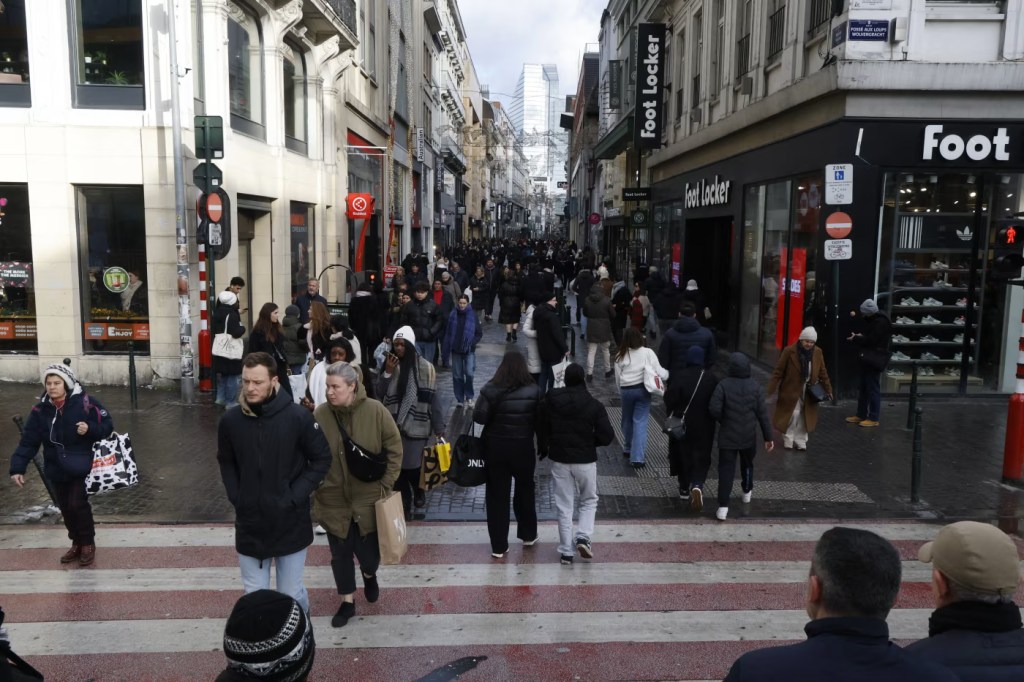
Eurozone retail sales fell unexpectedly in January despite a rise in consumer confidence at the start of the year, pointing to fragility in household sentiment even before this week’s surge in energy prices.
Volumes were down 0.1% on month, compared with growth of 0.2% in December, the European Union’s statistics agency said Thursday. A consensus of economists polled by The Wall Street Journal expected a 0.3% rise.
The figure for December was revised up from a 0.5% decline.
The fall in January was driven by lower sales of nonfood products and automotive fuel. Volumes were down 0.9% in Germany, the eurozone’s largest economy, while sales rose in France, Spain and Italy.
This comes despite the bloc showing resilience to rising headwinds at the beginning of 2026. On Wednesday, data showed the eurozone unemployment rate falling to a record low in January. Consumer confidence also picked up in the month, according to figures published last week.
But looking ahead, the outlook is likely to be dragged by rising geopolitical uncertainty and energy prices following U.S. and Israeli strikes on Iran.
“This week’s increase in gas and oil prices may dent confidence a bit and lead to higher household inflation expectations,” said Andrew Kenningham, chief Europe economist at Capital Economics.
Even so, household consumption is expected to rise at a moderate pace this year, he said.
Figures also released Thursday showed the Irish economy contracted much more sharply in the final three months of last year than previously estimated. The country’s statistics agency now calculates that gross domestic product was 3.8% lower than in the third quarter, having previously seen a decline of 0.6%.
That may lead to a reduced estimate for growth in the eurozone as a whole during the period. The European Union’s statistics agency had calculated that the currency area’s economy grew by 0.3%.
While Ireland’s economy experienced a sizable contraction at the end of 2025, it recorded one of the world’s fastest expansions over the year as a whole. The Central Statistics Office said annual GDP was 12.3% higher than in 2024, having previously seen growth of 12.6%, on a surge in exports of weight-loss drugs to the U.S.
The United Arab Emirates is weighing freezing billions of dollars of Iranian assets held in the Gulf state, according to people familiar with the discussions, a move that could sever one of Tehran’s most important economic lifelines.
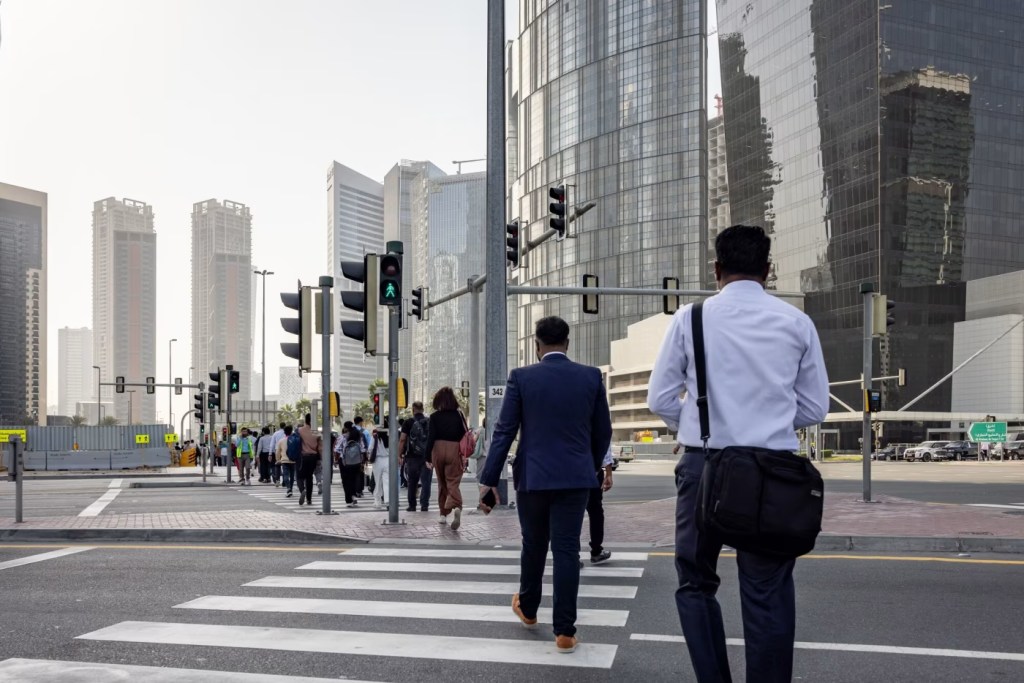
If the U.A.E. goes ahead, it would significantly curb Tehran’s access to foreign currency and global trade networks as its domestic economy, already buckling under inflation, is now engulfed in a military conflict.
Emirati officials have privately warned Iran—which has fired more than 1,000 drones and missiles at targets in the U.A.E.—of the possible action, people familiar with the warnings said. It isn’t clear when, or if, the Emirati government will decide to act.
The Emirati Foreign Ministry didn’t respond to a request for comment.
The U.A.E. has for years functioned as a financial hub for Iranian businesses and individuals seeking a haven from Western sanctions, according to analysts tracking Tehran’s activities and the U.S. Treasury. Iran’s sanctions-evasion infrastructure has allowed Tehran to keep selling oil abroad and use the proceeds to fund weapons programs and regional proxies, they say.
The U.A.E. has previously said it adheres to sanctions and has a strong commitment to protect the integrity of the global financial system.
Any move by the U.A.E. to limit Iranian financial activities there “would be very significant, because the U.A.E. is the most important conduit for Iran’s engagement with the global economy,” said Esfandyar Batmanghelidj, chief executive of Iran-focused think tank Bourse & Bazaar.
U.A.E. authorities are weighing several measures to dismantle illicit Iranian operations, officials familiar with the matter said. They range from freezing the assets of U.A.E.-based shadow companies used to mask trade to a sweeping financial crackdown on local currency exchanges which are used to move money outside of formal banking channels.
If the U.A.E. decides to move on Iran’s shadow-financing empire, a prime target would be accounts affiliated with the Islamic Revolutionary Guard Corps, the powerful group responsible for defending and perpetuating the regime, the officials familiar with the discussions said.
Tehran has allocated a growing portion of its oil for the IRGC, as well as other parts of the defense and security complex, to sell on the international market, according to a Treasury publication last June.
Beyond financial maneuvers, policymakers are also considering direct maritime action, such as seizing Iranian ships, two of the officials familiar with the discussions said. Such moves would be aimed at crippling Iran’s shadow fleet of oil tankers and intermediaries operating across Emirati ports and shipping lanes.
Any efforts to squeeze Iranian assets would mark a sharp departure from the U.A.E.’s historical effort to balance its strategic alliance with the U.S. against its proximity to Iran. Until now, the country has largely refrained from weaponizing its financial sector against its neighbor across the Persian Gulf.
In seeking to become an international financial center, the U.A.E. has welcomed capital from around the world, often with little regard for its provenance. After Russia invaded Ukraine, the U.A.E. was one of the main beneficiaries, playing host to traders of Moscow’s commodities and inviting Russian money and bankers.
The West—including U.S. officials—has previously pressured the U.A.E. to tighten scrutiny on money flows and crack down on sanctions evasion. In 2022, the Financial Action Task Force, a Paris-based global finance watchdog, placed the U.A.E. on its “gray list” for failing to adequately combat money laundering and terrorism financing.
A U.A.E. official has previously told The Wall Street Journal that the U.A.E. had a robust process to deal with sanctioned people and companies and that Emirati banks monitored compliance. In 2024, the Journal reported that Dubai’s main state-owned bank closed some accounts held by Russian oligarchs and oil traders after U.S. officials pressed the U.A.E. to shut Moscow’s backdoor to the international financial system.
Around the same time, the FATF removed the U.A.E. from the list, saying it had strengthened its anti-money-laundering regime.
The latest conflict with Iran has put the U.A.E. in a difficult spot, casting doubt on the country’s carefully cultivated reputation as a haven in a volatile region. Iran’s drone and missile attacks have caused some damage at a Dubai airport, as well as residential and tourist areas around the Burj Al Arab hotel and the Palm Jumeirah man-made island.
Several people involved in the discussions said Emirati officials are weighing the risks of an asset freeze, including the possibility that it could trigger prolonged retaliation by Iran against Emirati territory and its critical energy infrastructure. Such a decision would also upend lucrative trade and banking ties with Tehran and damage the U.A.E.’s ability to attract and retain capital from other politically charged sources, such as Russia.
Any asset freeze is unlikely to cover all accounts held by Iranian companies and nationals, hundreds of thousands of whom live in the U.A.E., analysts said.
Andreas Krieg, a senior lecturer at the School of Security Studies at King’s College London, said that a more targeted approach is more likely because the U.A.E. doesn’t want to lose all of this business. Krieg said that IRGC-linked accounts would be frozen first.
“This is the most important nonmilitary lever the U.A.E. have to play against the Iranians,” Krieg said.
In 2024, $9 billion passing through correspondent accounts maintained by U.S. banks appears to have been tied to clandestine Iranian financial activity, according to the Treasury Department. The Treasury said U.A.E.-based firms received 62% of those funds, much in relation to oil sales by Iran-linked companies in Dubai.
Iran has established front companies in the U.A.E. to receive payments for oil, settle trades and disguise the origin of funds, according to the Treasury and analysts tracking Tehran’s activities.
China-born action star Jet Li attended a spiritual lecture in Taipei yesterday (March 4), where he opened up about fatherhood.
Also at the lecture was his youngest daughter Jada, who is 23 this year. With her consent, the 62-year-old revealed that she had suffered from severe depression at the age of seven. At the time, Jada would lock herself in her room after school and not speak to him, straining their relationship.
Jet, who has been a Singaporean since 2009, reflected: “I felt guilty. I was doing charity work outside instead of caring for her. Buddhism wasn’t working either.
“I eventually changed my approach – I accompanied Jada on her journey. I didn’t tell her what she should do, but rather, I followed what she did. She taught me how to listen.”
Jet has daughters Si, 37, and Taimi, 36, from his first marriage as well as Jane, 25 and Jada from his second marriage to former Hong Kong actress Nina Li.
Following his survival of the 2004 South Asian tsunami, Jet began to take time away from films to focus on charity work and established the One Foundation in January 2007. In December 2010, the organisation became officially registered as an independent non-governmental public fundraising foundation.
Sharing her recovery journey during the lecture, Jada recalled: “Growing up, I always watched my parents and felt they were becoming more relaxed… Once, I came home and saw my dad happy and singing. They were under so much pressure and yet they could still be happy, it meant they had let go of a lot of things.”
Her recovery process spanned several years, where she would visit psychologists, learn meditation and study Buddhism. She and Jet embarked on trips together, travelling all over China for three years to learn about Buddhism.
She noted that Jet put everything aside and focused on being with her, always there whenever she needed him.
A college student in Taiwan died after playing video games for four days straight without sleep, according to a video uploaded on Facebook by user Lin Ting on Sunday (March 1).
Lin, an ICU nurse in Taiwan who frequently posts stories about her daily life and of her professional experiences, shared what had happened after the college student’s final winter break.
Right after the break, he played games for four days and three nights, without sleep or proper rest, Lin said in the video.
“What in the world is this game that was so fun? Even his mother’s advice fell on deaf ears,”Lin said.
One night, he went to the bathroom when his family suddenly heard him cry out.
He had fainted, with both eyes rolled back into his head, prompting them to send him to hospital, she said in the video.
Lin said that he was suspected to have suffered a ruptured cerebral artery, causing a brain haemorrhage and requiring emergency surgery.
He was then put on life support.
After a couple of days, the family instructed the doctors to pull the plug as they were told that he would not wake up.
“On the day where his life support was to be removed, his mother had… how do I explain this,” Lin clicked her tongue as she struggled to find words.
MADRID — Spain “will not be vassals” to another country, Deputy Prime Minister Maria Jesus Montero said on Wednesday (March 4), defying US President Donald Trump’s threats to cut trade with Madrid over its stance against the US-Israeli strikes on Iran.
Trump floated imposing a trade embargo on Madrid over its refusal to allow US aircraft to use jointly operated naval and air bases in southern Spain for the offensive against Tehran.
Spain has denounced the US and Israeli bombings of Iran as reckless and illegal, while most other European nations have withheld direct critique of the attacks.
“We are certainly not going to be anybody’s vassals, we won’t tolerate any threats and we’ll defend our values,” Montero told reporters, citing support for Spain from the European Commission.
The Commission said in a statement on Wednesday it expected the US to abide by its trade deal with the European Union (EU) and expressed “full solidarity” with member states, but stopped short of naming Spain.
The EU requires that third countries treat it as a single customs bloc.
In a televised address earlier on Wednesday, Spanish Prime Minister Pedro Sanchez reiterated Spain’s anti-war stance, warning that the conflict risked triggering a major global disaster.
“We’re not going to be complicit in something that’s bad for the world, nor contrary to our values and interests, simply to avoid reprisals from someone,” said Sanchez.
One of the most outspoken critics of both Trump and Israeli Prime Minister Benjamin Netanyahu, Sanchez criticised leaders who “use the fog of war to hide their failure” at home.
“This is how humanity’s great disasters start … You cannot play Russian roulette with the destiny of millions,” he said, highlighting the negative knock-on effects of the Iraq war, from a rise in jihadist terrorism to soaring energy prices, to argue that the consequences of the attack on Iran were just as nebulous.
Spain has refrained so far from involving itself in defensive operations, even as Britain, France, and Greece have sent armaments to Cyprus, which was struck by a drone on Monday, and British Prime Minister Keir Starmer authorised use of UK bases for defensive strikes on Tehran.
Israel has criticised Sanchez, accusing him of “standing with tyrants”.
Trump says he can impose embargoes
Trump on Tuesday claimed the Supreme Court’s ruling in February, which declared that he could not use the International Emergency Economic Powers Act to impose tariffs because they were a tax measure, confirmed his right to apply embargoes.
Imposing a trade embargo would require making the case that Spain’s refusal to permit use of its bases constituted a national emergency and posed an “unusual or extraordinary” threat to the US, said Peter Shane, a US law professor at New York University.
“It’s hard to see how Spain denying us the use of air bases on its territory for us to launch an unprovoked attack on Iran poses an extraordinary threat to our national security,” Shane said.
Spain sells more to the US than it buys, but certain sectors like pharmaceutical products and olive oil are more exposed through high exports.
A source at Spanish olive oil producer Dcoop expressed worry about possible sanctions, adding it could bring orders forward. “We are farmers who want to market our products without obstacles,” he said.
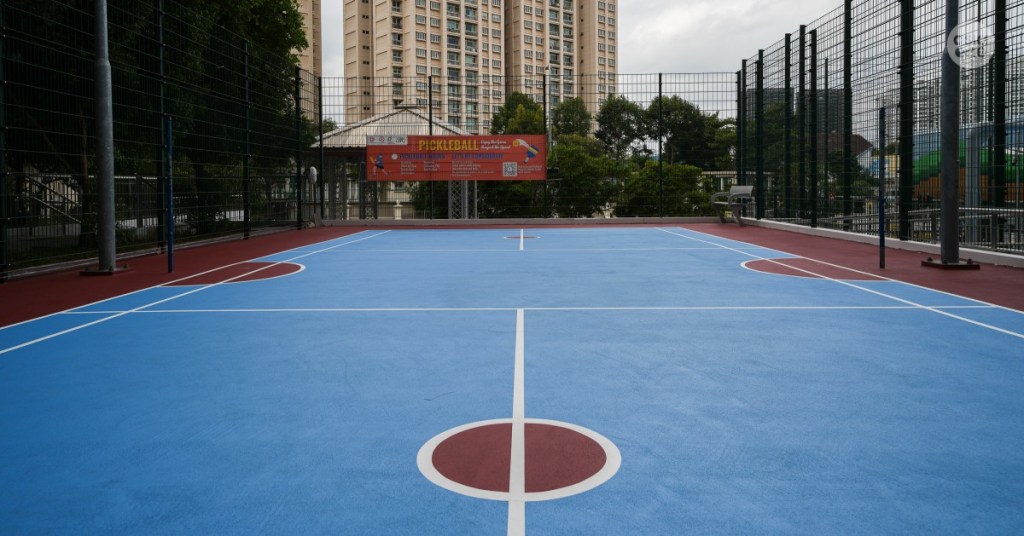
A total of 50 multipurpose courts for badminton or pickleball will be built over the next five years as part of plans by Sport Singapore (SportSG) to democratise sports in the community, said Acting Minister for Culture, Community and Youth David Neo.
Neo, who is also Senior Minister for Education, made the announcement at the Ministry of Culture, Community and Youth’s (MCCY) Committee of Supply debate on Thursday (March 5).
The 50 courts include the recently opened eight dual-use pickleball courts at The Kallang and soon-to-be completed eight pickleball courts at the Little India Bus Terminal.
The acting minister acknowledged that there may be issues relating to noise levels at courts near residential estates, adding that SportSG will work with community stakeholders to mitigate this.
Citing efforts by Mountbatten SMC to manage noise levels by using foam balls, Neo said this is an example of “We First” in action.
MCCY will also activate underutilised spaces such as those under viaducts so that facilities can be conveniently located to Singaporeans, but far enough to manage noise levels.
Heartland sporting spaces
Neo also updated the House on the status of sport facilities in the heartlands.
He said that renovation work on four facilities, including Delta Sport Centre and ActiveSG Sport Park @ Teck Ghee, have been completed, alongside 15 development projects such as Bukit Canberra.
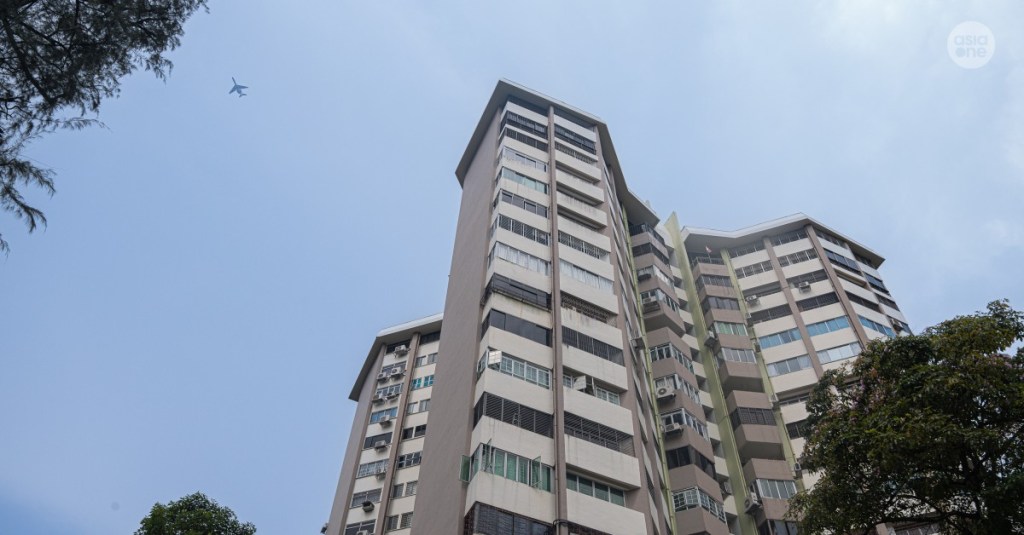
The Ministry of National Development (MND) is looking at ways to improve governance, liveability and maintenance in strata-titled properties such as apartments and condominiums, said Second Minister for National Development Indranee Rajah.
Indranee, who is also Second Minister for Finance and Minister in the Prime Minister’s Office, noted concerns from Management Corporation Strata Title (MCSTs) and unit owners about rising maintenance costs, ageing facilities, and the challenges of collective decision making to make improvements.
“We must address these to ensure that these developments continue to be liveable and meet residents’ needs, especially for our seniors,” said Indranee during MND’s Committee of Supply debate on Wednesday (March 4).
The measures being reviewed to strengthen the Building (Strata Management) Act are: helping MCSTs work towards accumulating adequate sinking funds; reducing consent thresholds for essential work; strengthening self-governance frameworks; and, clarifying the responsibilities of strata-titled stakeholders.
Limiting proxies, maintaining sinking funds
To make estate management fairer and more efficient, the Building and Construction Authority (BCA) is considering limiting the percentage of total proxies which can be held by each household.
It is also considering training for MCST council members to ensure that they can carry out their duties appropriately.
The considerations follow feedback on situations where a small group collects many proxy votes and controls decisions.
“This may not necessarily reflect the best interests of the majority of owners,” the second minister explained.
To address the issue of MCSTs not having sufficient sinking funds to carry out essential repair and replacements such as lifts, MND and BCA are also studying the feasibility of mandating MCSTs to submit and publish key information about their budgets and finances in a standard format.
“This would make it easier for unit owners and prospective buyers to understand and track the financial health and sinking fund adequacy of the MCSTs,” added Indranee.
Improving safety, accessibility of older buildings
On an ageing population and increased accessibility needs, Indranee noted that many older buildings were built in the years when accessibility standards were less well developed.
To better support seniors, persons with disabilities and families, she said that MND is reviewing potential enhancements to the accessibility fund (AF), which was introduced in 2007.
This provides co-funding to encourage private building owners to upgrade their properties with accessibility and universal design features.
However, the fund does not presently cover active ageing and dementia-friendly features.
“Under the review, we will consider expanding AF funding to cover senior-related features, such as senior-friendly fitness stations and dementia friendly signages.
“These enhancements aim to create living spaces that enable seniors to stay mobile and physically active, and continue living comfortably in familiar surroundings as they age,” Indranee said.
She added that MND is exploring the expansion of AF eligibility to include more private buildings, beyond those built before the implementation of the 1990 and 2013 Code on Accessibility.
It is also reviewing the amount of co-funding support with details to be announced at a later date.
Meanwhile, MND is also exploring providing co-funding support to eligible private building owners and operators to enhance the safety of older lifts and escalators.
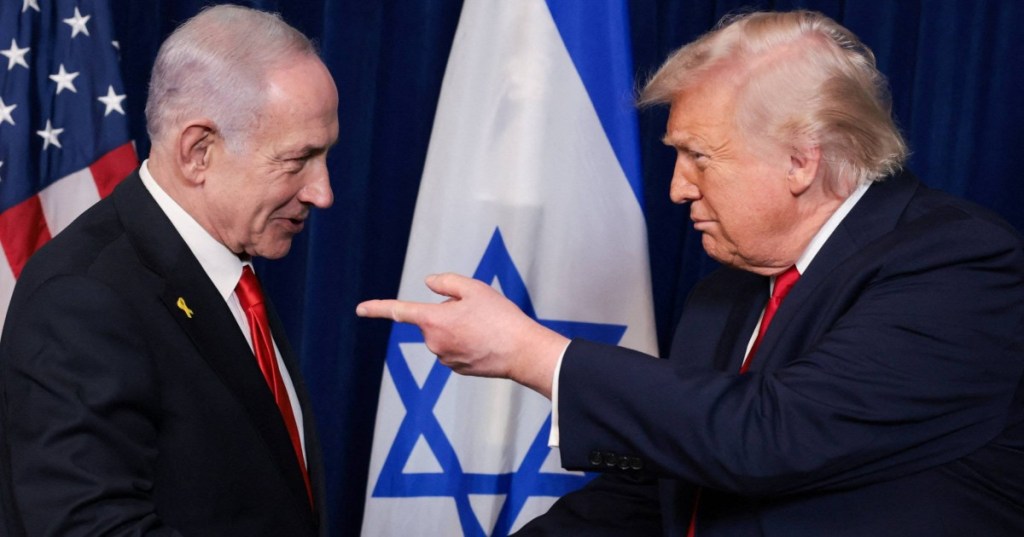
JERUSALEM — Israeli Prime Minister Benjamin Netanyahu delivered on a career-long ambition to topple Iran’s leadership, but his lockstep alignment with US President Donald Trump faces a test as their joint military campaign threatens to drag on, with its goals potentially shifting in the coming weeks.
At the outset of the bombing campaign on Saturday (March 4), both Trump and Netanyahu said regime change was the goal.
But in remarks at the White House on Monday, two days after Israeli air strikes killed Iran’s Supreme Leader Ayatollah Ali Khamenei and much of his leadership, Trump did not mention overthrowing Iran’s government as his top priority.
The US goal, he said, was to destroy Iran’s missiles and navy, and to stop it from obtaining a nuclear weapon.
His Pentagon chief Pete Hegseth said at a press conference that same day that the operation was not a “so-called regime-change war”.
Netanyahu, by contrast, has called on Iran’s citizens to take to the streets and overthrow their rulers as recently as Monday night.
“We’re going to create the conditions, first, for the Iranian people to get control of their destiny,” he told Fox News.
Asked about the US and Israeli goals, a US official familiar with the White House’s objectives told Reuters that the two countries’ military campaigns have different objectives.
A woman who bought food at a Ramadan bazaar in Malaysia in an attempt to support local stallholders was shocked to discover live maggots in her fried chicken.
In a video posted on her TikTok account on Feb 23, the woman expressed disappointment over what she described as poor food quality standards among some stallholders.
“Very sad and disappointed that some stallholders are dishonest. We buy with money, not for free. I didn’t want to cook today because I wanted to support the stallholders, but I never expected this would be what I received,” she said.
“Don’t push cleanliness and food quality aside just because you want to make a quick profit.”
According to the post’s caption, the bazaar is believed to be located in Taman Jana in Taiping, Perak.
While she felt upset over the incident, the woman added that she was thankful her son had spotted the pests before eating the fried chicken.
“This is not only a loss of money, but it has also spoiled a family’s mood while breaking fast,” she said, adding that she had paid via QR code, which could serve as proof of purchase.
In the comments section, several netizens raised concerns about food safety, while others advised her to seek a refund.
“Go back and ask them for a refund. You can also file a report at a clinic. You can say you have eaten contaminated food and the clinic will provide treatment,” one user wrote.
“My brother bought fried chicken in the morning. The chicken was still hot on the outside. It tasted fine at first, but then he saw the bones were full of worms. He vomited,” one commenter shared.
Another user suggested that the food may have been left exposed.
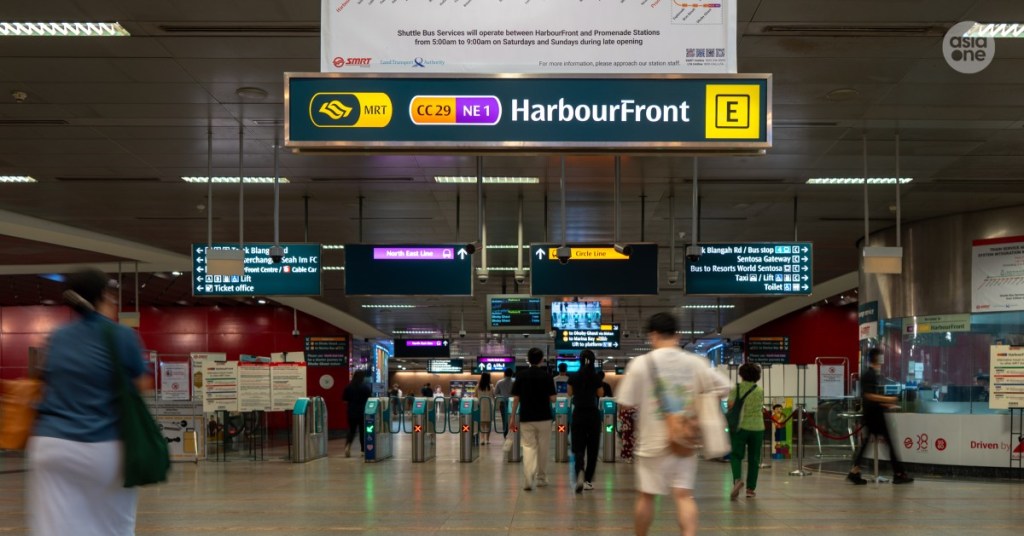
The Land Transport Authority will close the loop on the Circle Line (CCL) by the middle of the year, said Acting Minister for Transport Jeffrey Siow during the Committee of Supply debates in Parliament on Wednesday (March 4).
As part of Circle Line Stage 6, three new stations will open between HarbourFront and Marina Bay stations — Keppel, Cantonment and Prince Edward Road stations.
The opening of the final three stations comes 17 years after the first stretch between Bartley and Marymount stations opened in May 2009. In all, the CCL will have 33 stations, including 12 interchange stations that connect to other rail lines.
Separately, three new stations under the Thomson-East Coast Line Stage 5 (TEL5) and Downtown Line 3 extension (DTL3e) are also on track to open in the second half of the year, according to the Ministry of Transport (MOT).
“An MRT Line takes about 15 years to build, but in just 20 years, we have almost doubled the length of our MRT network. This is a remarkable achievement and we are still building,” Siow said.
Seletar Line engineering studies to start this year
Siow also said that engineering studies for the Seletar Line, Tengah Line and West Coast extension of the Jurong Region Line (JRL) are set to begin later this year.
The Seletar Line in particular will provide more travel options for residents in the north-east.
It could serve areas such as Woodlands, Sembawang, Sengkang West, Serangoon North, Whampoa, Kallang and the Greater Southern Waterfront, former Transport Minister Chee Hong Tat told Parliament during last year’s Committee of Supply debates.
Additionally, MOT will explore the possibility of a corridor serving the Sengkang West and Serangoon North areas, and how to connect this to the Cross Island Line and Circle Line.
New station added to Jurong Region Line
Under the JRL, a new J2SA station will be added between the JS2 and JS3 stations that will serve commuters in the Tengah area in the future.
This will bring the total number of stations along the JRL to 25, with construction for this new station underway.
The station will open in tandem with the completion of other developments in the area, which will likely take place around the mid-2030s, Siow said.
“Many of my residents, especially in Tengah, are looking forward to it (the JRL), because it will be a game changer for them in terms of their transport options,” he added.
However, the opening of the JRL will be shifted to mid-2028, six months after the original expected timeline of end-2027 due to construction delays and testing.
Two interim shuttle bus services will be introduced towards the end of 2027 to improve transport capacity and connectivity within the area that the JRL Stage 1 is meant to serve.
More details on this will be announced when ready, said MOT.
NEL commuters shift away from morning peak period
Around eight per cent of commuters along the North East Line (NEL) have shifted off the morning peak periods, said Acting Minister Siow.
Siow said the shift can be attributed to free morning off-peak travel on the NEL and Sengkang-Punggol LRT which was introduced in Dec 27 last year.
“This has resulted in a less crowded ride for other commuters travelling during morning peak hours,” he said, adding that the decrease in crowd is akin to the effect of adding two extra trains or 20 buses.
MOT shared that the proportion of commuters who shifted out of the morning peak has increased over the months from about six per cent in early January to nearly eight per cent in the week of Feb 2.


 2026NowNews