Pakistan and Afghanistan: a war, not a development corridor

For decades, Islamabad sought to resolve its security problems by befriending the regime in Kabul. Fears of a war on two fronts, with Afghanistan in the west and India in the east, gave rise to the notion of using Afghanistan as a strategic safe haven (“strategic depth” doctrine). To this end, Pakistan’s intelligence agency ISI armed Islamist actors: initially to fight the Soviet Union in the 1980s, later in Kashmir (since the 1990s) and then against the Afghan Republic (from around 2005). This led in 2007 to the emergence of the Pakistani Taliban (Tehrik-e-Taliban Pakistan, TTP) – a ­loose collection of militants who were originally fighting “for Pakistan” in Afghanistan. For as long as they were active on the other side of the border, they were considered “good” Taliban. Only when certain factions of the TTP turned their weapons against Pakistan were they declared to be “bad” Taliban – but by then their infrastructure was already firmly established in their own country and difficult to control.

Today’s war is the military manifestation of this dilemma. Islamabad accuses the Islamic Emirate of Afghanistan of violating its sovereignty by providing TTP members with safe havens, training and logistics. The Taliban, in turn, condemn Pakistani airstrikes against Kabul and Kandahar, calling them a blatant violation of their sovereignty. Pakistan frames the war as necessary self-defence against attacks launched from Afghanistan. 

TTP cadres and the Afghan Taliban are linked by close family ties and deep-seated loyalties, bonds the Emirate can’t credibly deny despite its claims not to support terror. At the same time, terrorism in Pakistan is largely homegrown, not imported: it is fed by precisely those networks that the state created itself and has only combated selectively. Airstrikes, drones, declarations of “open war” – all of these serve merely to turn an internal security problem into an external one, without tackling its root causes.

Oppression of women in Afghanistan, powerful military in Pakistan

Neither of the warring parties can claim the moral high ground. The Taliban regime has institutionalised a system that systematically oppresses women. It enjoys only limited support within Afghan society. Pak­istan’s policymaking is heavily influenced by the ­military: issues such as border areas, the extraction of raw materials, the decades-long presence of Afghans in Pakistan and grassroots movements fighting for the rights of ethnic minorities are viewed and addressed primarily as security concerns. 

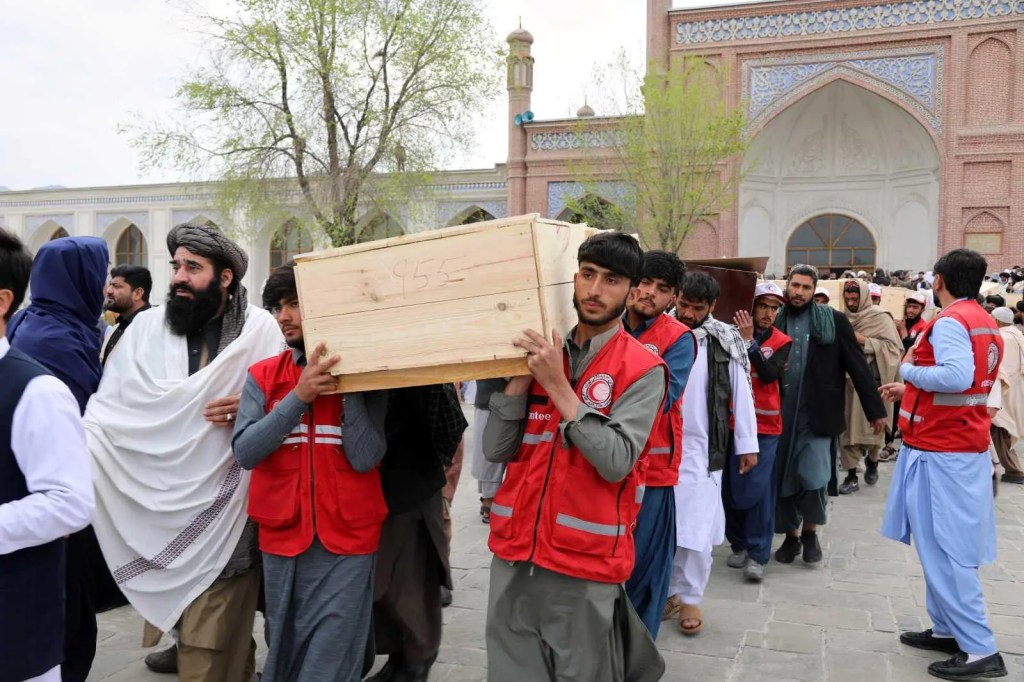
In this situation it is the civilian population in both states that pays the highest price. Afghans have been living in a near-constant state of war and crisis since 1978; for many, “everyday life” is synonymous with uncertainty and poverty. In Pakistan, especially in the border province of Khyber ­Pakhtunkhwa, people have been experiencing extreme vio­lence since 9/11 – in the form of attacks by the TTP and military operations carried out by their own state. 

The economic costs to the region are already high – and will continue to rise as the situation further escalates. Border closures, disruptions to trade and discontinued transport and pipeline projects are seriously hampering links between Central Asia and Pakistan. Hopes that the region could serve as a corridor between markets have given way to a reality characterised by buffer zones, bombardments and mass deportations. More than 2 million Afghans have been expelled from Pakistan since September 2023, with families torn violently apart, arrests and expropriations – a means of exerting political pressure that severs social and economic ties. In an environment further compounded by the war in Iran, volatile energy prices and global rivalries, it is becoming increasingly unlikely that Afghanistan and Pak­istan will profit in the foreseeable future from the planned cross-border energy and infrastructural projects. Where connectivity once appeared a tangible possibility, collective isolation is in fact the result. https://www.dandc.eu/en/article/pakistan-afghanistan-war-causes
US attempt to reopen Strait of Hormuz draws Iran warning, risks ceasefire

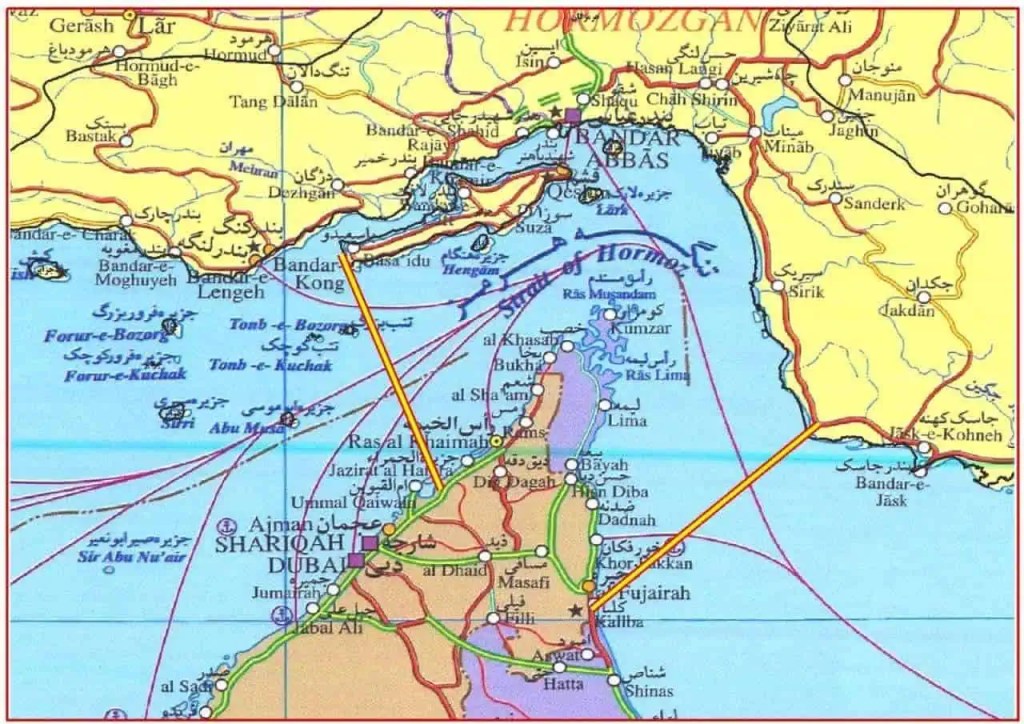
Dubai: The ceasefire in the Iran war abruptly faced its most perilous moment on Monday after the United States began trying to open the Strait of Hormuz to allow hundreds of stranded commercial ships to sail out.

There had been warning signs in the hours before the United Arab Emirates said it came under attack for the first time since the early April ceasefire, and before a British military monitor said two cargo vessels were ablaze off the UAE.

Iran had called the new US military-aided effort to guide ships through the strait a violation of the fragile, three-week ceasefire. There were a few signs of ships taking advantage of “Project Freedom,” announced Sunday by President Donald Trump, though the US said two US-flagged merchant ships safely transited with its help.

Caution is quickly growing among shippers and in markets over the lack of details from Washington. Who would risk their crew and cargo to possible Iranian fire?

Here’s what to know.

US appears to be going it alone

Iran’s grip on the crucial waterway has left hundreds of commercial ships and tens of thousands of sailors stuck since the war broke out over two months ago.

Backed up in the Strait are weeks’ worth of supplies of globally needed oil, gas, fertiliser, and other goods. This has been Iran’s strategic advantage in the war, one that has pinched economies and dimmed the outlook for the Republican president’s party in this year’s midterm US elections.

Oil prices rose on Monday as uncertainty continued around the Strait and the US effort, which Trump has described as a humanitarian one to help countries that have been “neutral and innocent” in the war.

While countries in Europe and elsewhere have fretted over the strait and have been urged by Trump to help solve the issue, it was not immediately clear whether any other nation was involved on Monday.

The US military said the initiative would involve guided-missile destroyers, more than 100 aircraft and 15,000 service members, but did not say how they would be deployed.

Trump warned that interference in the effort “will, unfortunately, have to be dealt with forcefully.”

The US military said it sank six small Iranian boats that were targeting civilian vessels. It said Iran also launched missiles and drones at ships the US was protecting.

Iran calls the effort part of Trump’s delirium’

Iran effectively closed the Strait by attacking some ships over the past two months, and told others not affiliated with the US or Israel that they could pass if they paid a toll.

Concerns remain about Iranian mines in the waterway as shippers consider the new US effort.

Iran’s military command on Monday said ships still must coordinate with Tehran to transit the strait and warned that “any foreign military force — especially the aggressive US military — that intends to approach or enter the Strait of Hormuz will be targeted,” the state broadcaster reported.

Iran’s state-run IRNA news agency called Trump’s plan to reopen the strait part of his “delirium.”

Iranian news agencies claimed that Iran struck a US vessel southeast of the strait, accusing it of “violating maritime security and navigation norms.” The US military, which has been blockading Iranian ports for weeks, denied it.

Wary shippers say security situation remains unchanged

The threat level around the Strait remains critical, according to the US-led Joint Maritime Information Centre, even as it issued an advisory earlier Monday on the new US effort.

The head of security for the Baltic and International Maritime Council, a leading shipping trade group, said no formal guidance or details about the effort had been issued to the industry.

“Without consent from Iran to let commercial ships transit safely through the Strait of Hormuz, it is currently not clear whether the Iranian threat to ships can be degraded or suppressed,” Jakob Larsen, BIMCO’s chief safety and security officer said in a statement.

Larsen questioned whether the effort is sustainable in the long run or is envisioned as a more limited operation, and said there is a “risk of hostilities breaking out again” if it goes ahead.

The Joint Maritime Information Center has advised ships to cross the strait in Oman’s waters, saying the US has set up an “enhanced security area.” It warned that passing close to usual routes “should be considered extremely hazardous due to the presence of mines that have not been fully surveyed and mitigated.”

The center urged mariners to coordinate closely with Omani authorities “due to anticipated high traffic volume.” https://www.siasat.com/us-attempt-to-reopen-strait-of-hormuz-draws-iran-warning-risks-ceasefire-3465458/

CBI brings wanted criminal to India after UAE extradition

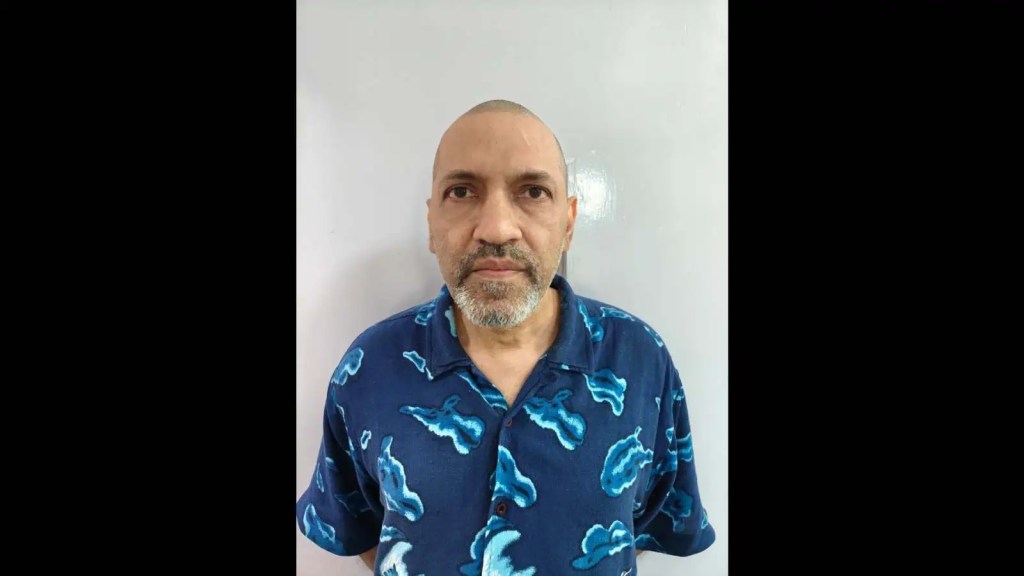
New Delhi: The CBI has successfully secured the extradition of a fugitive and Interpol Red Notice subject Mohammad Navas Kakkat Ismail from the United Arab Emirates (UAE), officials said.

Ismail was wanted by the Delhi Police in connection with a case of extortion, cheating, criminal misappropriation, forgery, impersonation, participating in an organised crime syndicate etc., they said.

A key conspirator in a racket involved in extortion by impersonating government officers, Ismail was brought to the Indira Gandhi International Airport on Sunday where he was taken into custody by the Delhi Police, a spokesperson of the Central Bureau of Investigation (CBI) said in a statement.

“At the request of Delhi Police, CBI got a Red Notice published against the subject through Interpol channels. Subsequently, the subject was geo-located and arrested by the UAE authorities,” the spokesperson for the federal agency said in a statement.

A Red Notice is an international request to law-enforcement agencies worldwide to detain a person wanted by a member state of the Interpol.

An extradition request was submitted to the UAE authorities and after close follow up, the subject was extradited to India, the CBI spokesperson said.

“More than 150 wanted criminals have been successfully brought back to India in the last few years through coordination via Interpol channels,” she added. https://www.siasat.com/cbi-brings-wanted-criminal-to-india-after-uae-extradition-3465469/