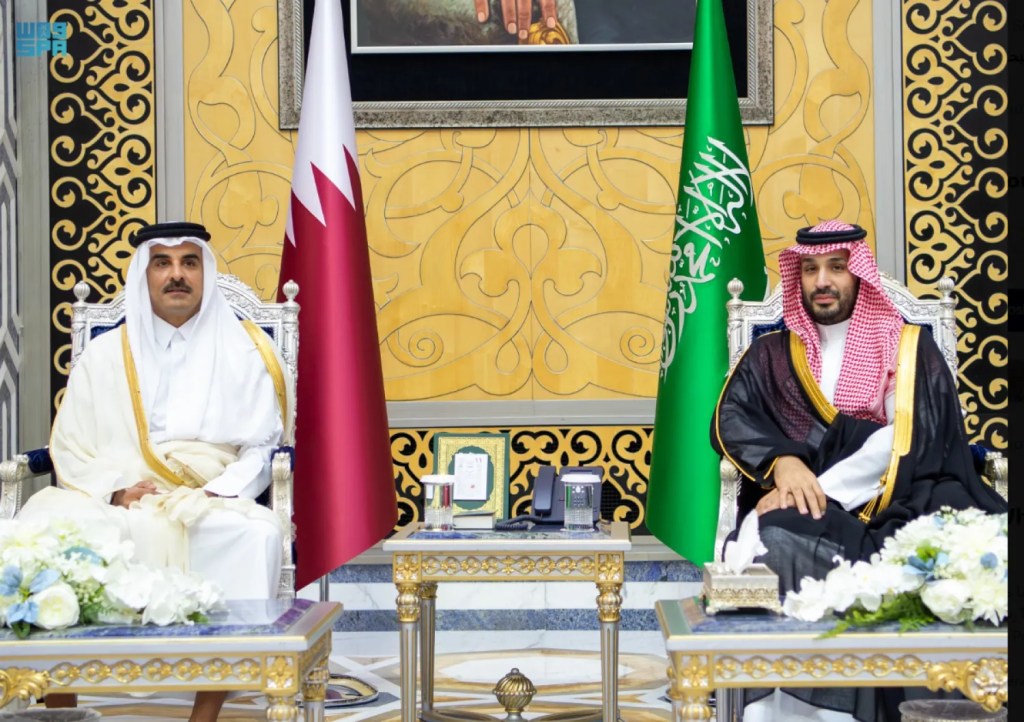
Observers said Saudi Arabia’s hosting of a consultative meeting of the Gulf Cooperation Council (GCC) in Jeddah on Tuesday underscores a push by Prince Mohammed bin Salman, Saudi Crown Prince and Prime Minister, to bolster joint Gulf work, contain the fallout of the current security and economic crisis, and ensure that solutions to the conflict ensure the interests of the GCC.
Recent developments and their unprecedented repercussions have exposed a major shift in the regional security order, underscoring the need for stronger Gulf cooperation and a more integrated crisis-response strategy.
Containing fallout
Informed sources said Saudi Arabia, alongside fellow Gulf states, has led diplomatic efforts to avoid escalation in the region.
GCC countries have repeatedly stressed their territories will not be used to launch attacks against Iran, seeking to prevent a wider conflict and its economic and security consequences.
Despite this, Iran and allied militias have expanded the conflict through unjustified attacks on GCC states.
Political analyst Munif Al-Harbi told Asharq Al-Awsat that Saudi Arabia has condemned Iranian attacks targeting the Kingdom, GCC states, and several Arab and Islamic countries, warning of escalation, breaches of international law, and threats to regional stability.
He said Riyadh considers GCC security indivisible, with any attack on one member treated as an attack on all, underscoring the need to protect shared interests.
Al-Harbi said the crisis has reinforced the urgency of deeper Gulf integration and stronger defense coordination. He said GCC states have shown a strong ability to intercept most missile and drone attacks, reflecting the resilience of their defense systems.
He added that economic and logistical coordination has also intensified, with Saudi Arabia helping stabilize global markets by maintaining oil exports.
Fragile ceasefire
Political analyst Khaled Al-Habbas agreed, saying the summit came at a sensitive moment shaped by stalled negotiations and a fragile ceasefire.
He underscored the consistent GCC stance since the start of the war, including support for the Pakistani mediation and efforts to ensure a Gulf voice at the negotiating table, even without direct participation, given the damage Gulf states have sustained from the Iranian attacks, including the closure of the Strait of Hormuz.
Al-Habbas said the summit is expected to reaffirm Gulf unity, condemn Iranian attacks, and back ongoing mediation efforts.
He said it would likely stress reopening the Strait of Hormuz in line with international law, reject any unilateral Iranian arrangements, and highlight risks linked to Iran’s nuclear and missile programs and its regional proxies, as well as continued attacks on some Gulf states even after the ceasefire.
Both analysts said the summit will stress tighter coordination across defense, logistics, and supply chains, which they said has helped limit the war’s impact on GCC states.
The summit is also expected to back regional and international efforts toward a political settlement addressing all aspects of the conflict and Gulf concerns over Iran’s conduct.
Any deal reached must reflect those concerns and be backed by firm international guarantees. https://english.aawsat.com/gulf/5267524-jeddah-summit-highlights-saudi-push-gulf-coordination
 2026NowNews