
Colombia Pays Off US$5.4B in IMF Debt Incurred During Pandemic

Colombia has fully repaid the debt it incurred with the International Monetary Fund (IMF) during the 2020 pandemic. The country returned about US$5.4 billion, corresponding to the flexible credit line requested six years ago to confront the economic shock of COVID-19, thus closing a key and controversial chapter of its recent fiscal policy.

The payment brings to an end a commitment that, beyond the financial aspect, was surrounded by political debate. The decision to resort to this instrument, taken during the government of Ivan Duque (2018–2022), has been questioned by the current president, Gustavo Petro, who has insisted that the country assumed high costs for a strategy he considers debatable.

In addition, Petro insists that Colombia was the only country in the world to request this type of economic assistance, something that Duque has categorically denied, which led to a new — and by now habitual — confrontation between the two through social media.

Colombia pays off US$5.4B in IMF debt incurred during the pandemic

This week, Finance Minister German Avila reported on the repayment of the debt at an economic forum convened by the executive branch. “The total debt with the IMF has been paid, incurred under the Duque administration, and repaid in a very short period. This means that Colombia is no longer subject to the onerous conditions that the IMF imposes on debtor countries,” the minister said, in a remark that was later echoed by President Petro on social media.

In 2020, with the global economy paralyzed by the spread of COVID-19, Colombia turned to the IMF’s Flexible Credit Line as a backstop amid uncertainty. This instrument, designed for countries with solid macroeconomic fundamentals, allows immediate access to resources without the traditional conditionalities of other programs run by the institution.

The government at the time defended the decision as a preventive measure. The line did not necessarily imply an immediate full disbursement, but rather functioned as insurance against potential tensions in international markets. However, given the magnitude of the crisis, the country ultimately used part of those resources to sustain public spending and mitigate the effects of the recession.

Over the years, the credit ceased to be seen solely as a technical tool and came to occupy a central place in political confrontation. Colombia’s current president, Gustavo Petro, has on several occasions questioned the use of this mechanism, arguing that it involved the payment of high interest and that it was not the only available alternative.

From his perspective, Colombia took on an unnecessary financial burden in a context in which other countries opted for different strategies. Petro has even claimed that the country was the only one to resort to this type of financing under similar conditions, an argument that has been challenged by economists and by sectors close to the previous government.

Ivan Duque, for his part, has defended the decision as responsible and aligned with the recommendations of international organizations. In his view, the Flexible Credit Line helped strengthen market confidence, prevent a deeper economic deterioration, and guarantee liquidity at a critical moment. He has also emphasized that this type of instrument has been used by other emerging economies in contexts of high volatility.

The controversy, in fact, is not new. Since the agreement was approved, experts have debated its convenience, its cost, and its long-term impact. While some consider it a prudent decision that helped stabilize the economy, others argue that it unnecessarily increased the country’s debt.

Was Colombia the only country to request this type of loan from the IMF?

Following the announcement of the end of the debt, a dispute arose between the current government and the one that requested the credit over its necessity and conditions. Petro boasted that his administration fulfilled the country’s obligations and repaid a loan he had always criticized, which quickly drew a response from the main figure targeted: former president Duque, who defended his decision to seek this support.

“Oh, Gustavo, four years and you still couldn’t learn about public finances. You repaid a loan taken on by the Colombian state under the best conditions with the IMF to confront a pandemic at a time of global crisis,” Duque wrote, before going on to question the state of the public finances that the Petro administration would leave for the coming years.

“On the contrary, you are leaving future generations the highest fiscal deficit of the century, a debt cost that is double what it was in 2022, and the country’s fiscal credibility in tatters,” the former president added, concluding his remarks with an ironic question about “the rate at which debt is being issued today” by the Petro government, in reference to a rate even higher than the one obtained from the IMF in 2020.

Amid the controversy on social media, Petro repeated that Colombia had been the only country in the world to use this type of IMF credit, a claim that was challenged by former Deputy Finance Minister under Duque, Andres Pardo.

“It is false that Colombia was the only country on the planet that took out a loan with the IMF during the pandemic. According to official IMF data, more than 80 countries received emergency financing from the institution, totaling more than US$110 billion,” he said.

He added: “Colombia, in particular, received US$5.3 billion in financing during the government of Ivan Duque, and had one of the most favorable loans of all: Access to the Flexible Credit Line, with immediate disbursement and no conditionality.”

Meeting obligations to creditors and closing a chapter

Beyond the political debate, the fact is that Colombia met its obligations. The full repayment of the debt reflects a fiscal management strategy aimed at reducing exposure to external commitments and improving debt sustainability indicators.

The timely fulfillment of these payments also has implications in terms of international credibility. For markets and investors, the fact that the country honored its commitments reinforces the perception of stability and fiscal discipline, a key factor in a global environment marked by uncertainty.

In addition, the end of this obligation frees up space in public finances, which could allow for greater flexibility to face new economic challenges. However, this does not mean that fiscal pressures disappear, especially in a context of economic slowdown and growing social demands.

The end of this debt marks the close of a period that began at one of the most critical moments in recent history. The pandemic forced governments to make rapid and, in many cases, exceptional decisions. In that context, the IMF’s Flexible Credit Line was one of the tools chosen by Colombia to confront the crisis.

Today, with the debt fully repaid, the country leaves that episode behind, although the debate over its appropriateness persists. The discussion between Gustavo Petro and Iván Duque reflects different visions on how to manage the economy in times of crisis and on the role of international organizations in national finances.

What is not in dispute is the final outcome: Colombia met its obligations to its creditors and closed the financial chapter of the pandemic with respect to this credit. It remains to be seen how this decision will be interpreted in the long term and what lessons it leaves for future crises. https://colombiaone.com/2026/04/23/colombia-pays-off-imf-debt-incurred-during-the-pandemic/
Use of Tutela to Access Health Increases in Colombia

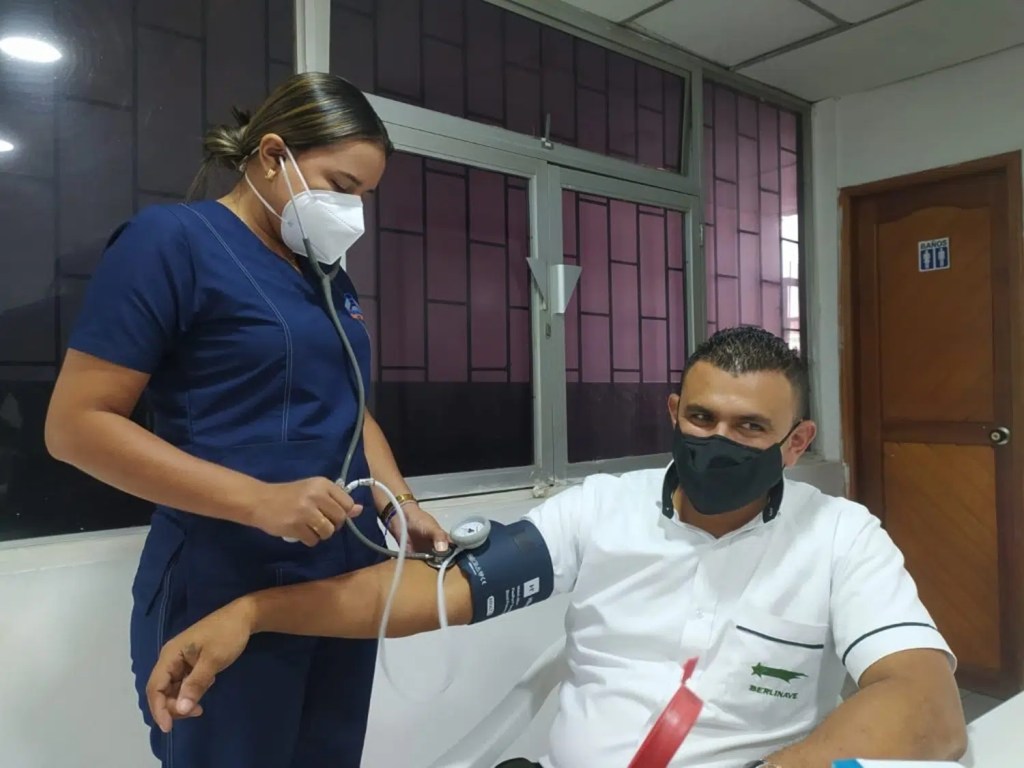
The Ombudsman’s Office has just presented one of the most discouraging reports on the state of health in Colombia. For several years, the tutela (a legal action to protect a person’s fundamental rights) has become the most important tool to protect this fundamental right, something that has been proven because in the country these actions went from more than 265,000 in 2024 to around 312,500 in 2025, which translates into an increase of close to 47,500 cases (17.9%) and confirms the persistence of structural barriers in effective access to that right.

According to the entity in charge of protecting and promoting human rights, which presented its report at the Book Fair taking place in Bogota, health-related tutelas account for 34 percent of the total of these legal actions, consolidating themselves as one of the main causes of judicialization in Colombia.

The figures, based on information from the Constitutional Court, show that, for thousands of people in Colombia, the tutela action continues to be the main — and in many cases the only — mechanism to access health services and medications on time.

The diseases for which tutelas are most frequently filed

In this wave of tutelas, those filed for diseases of the circulatory system lead the list (12.2 percent), followed by those corresponding to osteomuscular, neurological, and endocrine conditions. Hypertension is the most frequent diagnosis, and there is also a significant presence of mental disorders such as anxiety, autism, and depression. The most complex diseases — such as cancer, severe neurological pathologies, and severe epilepsy — are overrepresented in tutelas.

On the other hand, the cost of these cases is, on average, 20% higher than that of general care, which reflects greater barriers to access for high-complexity conditions. Added to this is the fact that the report shows an inverse relationship between poverty and judicialization: Departments with high levels of poverty, such as Vichada, La Guajira, and Choco, record the lowest rates of tutelas. In contrast, regions with lower poverty show significantly higher rates.

Faced with this situation, the Ombudsman’s Office offers another bleak reading: The most vulnerable populations face a double exclusion: Difficulties in accessing both health services and justice. The low level of judicialization in these territories does not reflect better conditions, but rather greater structural barriers. In addition, 39.57% of health tutelas correspond to subjects of special constitutional protection. Among them are people with disabilities (15.37%), older adults (24.65%), and people with serious illnesses (35.30%).

A structural reform of the health system is necessary

On the other hand, persons deprived of liberty have the highest rates of judicialization, revealing serious failures in care within the penitentiary system. The Ombudsman’s Office warns that the high recurrence of tutelas in these groups reflects structural gaps and the lack of effective application of a differential approach in guaranteeing the right to health.

“Health cannot continue to depend on judicialization,” warned Ombudswoman Iris Marin Ortiz. “A system that forces citizens to resort massively to tutela shows failures in its capacity to respond, in guaranteeing timeliness, and in the continuity of care. The high rate of granting of these actions, close to 74.3%, shows that in most cases there is a real violation of rights.”

The Ombudsman’s Office concluded that what is happening reveals structural failures of the system, associated with problems of financing, management, access, and deep territorial inequalities. These findings demand a structural reform of the health system so that effective access is guaranteed, judicialization is reduced, and the needs of the population are addressed promptly. The entity also called for a rigorous look at the deep territorial and social inequalities revealed by this phenomenon. https://colombiaone.com/2026/04/23/tutela-access-health-increases-colombia/

New Clash Between the Registrar and Gustavo Petro Over Source Code

In the same way that the first round of the presidential elections, next May 31, is approaching, tensions are growing between President Gustavo Petro and the National Civil Registry, the entity in charge of organizing the electoral day. Faced with the insistence of the president in asserting that there are risks of fraud, the registrar, Hernan Penagos, made known a robust General Audit Plan to guarantee transparency.

The plan presented by Penagos this Thursday has four strategic components to ensure a comprehensive analysis and a systematic evaluation of the different electoral software systems involved in the process by political organizations, oversight bodies, and electoral observation missions. It includes a specialized international audit led by the Center for Electoral Advisory and Promotion (IIDH / CAPEL).

This audit is aimed at strengthening transparency and confidence in the presidential elections with three modules: specialized international external audit, systems audit, and international technical assistance. “For the first time in the electoral history of the country, there is an international audit of the presidential elections. This audit is in charge of a technical body with broad experience in the matter, which provides independent rigor, international standards, and a comparative perspective,” said Penagos.

Source code will not be delivered, it will be exposed

But perhaps the boldest measure that the Registry is going to take in the interest of transparency is to allow the audit of the source code of the software for the selection of polling jurors, pre-count, scrutiny, and consolidation and dissemination of results by the auditors of the accredited political parties.

At first, the registrar announced that the source code of the four software systems involved in the elections will not be delivered, but will be exposed, something that is planned for two weeks, from May 11 to 24, enough time for party auditors to verify it. In addition, he assured that access to 100% of the code is guaranteed. The process will have the accompaniment of oversight bodies and electoral observation missions.

He then explained why the source code would not be delivered, as requested by President Petro. “Delivering the source code has serious difficulties for processing, for integrity, and for the viability of elections in Colombia,” said Penagos. “The first difficulty generated by that delivery is the possibility of software impersonation, that is, that malicious or ill-intentioned actors want to impersonate it, deriving obviously in the knowledge of the essence and in the possibility of misinforming and establishing fraudulent codes.”

“The delivery of the source code also generates risks because it allows ill-intentioned actors to design attacks on the logic of that source code, causing alterations to it,” continued the registrar. “That also produces evasion of the security controls that are implemented by the IT management, and also allows those actors to look for vulnerabilities to later be able to modify it.”

New clash between Gustavo Petro and the registrar

“The delivery of the source code is not carried out in any democratic nation. In Latin America, no one thinks of delivering or requesting that source code. The risks in terms of vulnerability and attacks on that source code are extremely high,” he concluded.

The response of President Petro was immediate and confrontational: “What registrar Penagos says is a lie. In the world, most countries do not have software with private source codes, but are property of the State. This was ordered by the plenary chamber of the Council of State in 2018, and since that date, all registrars until today have ignored justice,” he wrote on the social network X. “They keep the source code secret in the registry and in the hands of a private company whose owners were prosecuted in the U.S. for bank fraud, and not even the registry can audit it, since it has not learned the lesson when it is its duty.”

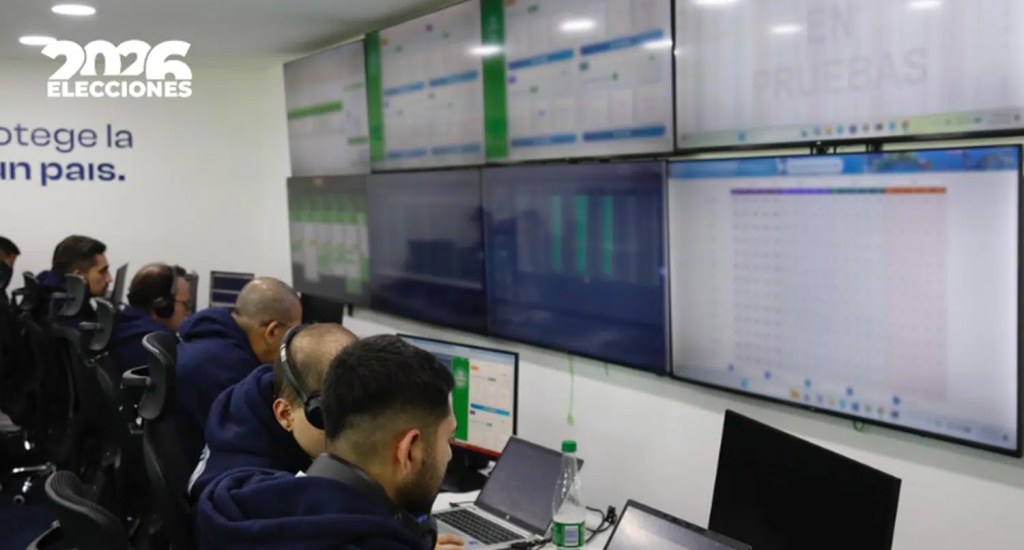
In any case, registrar Penagos announced that the process of freezing the pre-count, scrutiny, and digitization software of form E-14, as well as the software for consolidation and national dissemination of results, is planned for May 28. He also reported that as part of the preparatory activities for the presidential elections, multiple simulations will be carried out to evaluate the functionality, security, reliability and productivity of the IT and logistics solutions arranged for these elections.

Among the most decisive simulations are the national and international pre-count simulation, on May 16, the national and consulate scrutiny simulation on May 19 and 20, and the digitization of form E-14 on May 21.

The General Audit Plan also includes carrying out load and stress tests to measure the capacity of the different technological solutions involved in the process: pre-count, scrutiny, consolidation and dissemination, forms E-14 and E-11 (installation record and general voter registry), as well as platforms for jurors, Infovoters, control of polling stations, significant groups of citizens, among others.

The National Civil Registry emphasizes that cybersecurity is an essential component of electoral transparency. Therefore, access to the systems is carried out under controlled schemes, with technical audits, accompaniment of specialized organizations and strict security protocols, which guarantee both the integrity of the process and protection against threats. https://colombiaone.com/2026/04/23/new-clash-between-the-registrar-and-gustavo-petro-over-source-code/

Colombia is the country with the most lawyers: how much do they earn on average?

Judging by the data, Colombia would be experiencing a paradox: it has serious problems in the provision of the justice service, but it ranks as the country with the most lawyers in the world. In 2020, according to figures from the Corporacion Excelencia en la Justicia, there were about 330,568 active lawyers throughout the country, and by 2021 the figure increased to 352,037.

In the year 2022 the number continued to rise until reaching 375,580. In that same year a retrospective look was made going back to 1996. It was established that in that period the number of lawyers had grown by 472%, which provoked a deep reflection on the supply of that career in universities.

Recent high school graduates had a marked interest in studying law, and their demand also led to the emergence of programs that teach law. As anywhere else, in the country lawyers are needed to ensure and defend the rights of citizens, as well as to provide legal guarantees for a more just and orderly society.

The following year, always following the data of the Corporacion Excelencia en la Justicia, cited by the newspaper La Republica, there were already 397,766 active lawyers; and in 2024 the figure of 400,000 lawyers was surpassed for the first time, reaching 410,491.

Colombia, the country that has the most lawyers

In the year 2025 active lawyers reached the number of 425,016. When comparing that latest figure with that of 2015 it is revealed that the number of active lawyers in the country has increased by 73.9% in the last 10 years.

The number of lawyers that Colombia has today is also measured at a rate of 801 per 100,000 inhabitants. With that proportion, according to World Population Review, also cited by the economic daily, the country leads that ranking in the world.

In the list follow Israel, with 694; Dominican Republic, with 564; Brazil, with 473; Italy, with 403; and the United States, with 401. Further down also appear Greece, Portugal, New Zealand, Cyprus, Canada, United Kingdom, Germany, Bulgaria and Russia.

Erick Rincon Cardenas, vice dean of the Faculty of Jurisprudence of the Universidad del Rosario, told the same outlet that the problem in Colombia is not that there are too many lawyers, but that, on the contrary, “there is an unequal distribution of legal talent and, in some segments, training that does not respond to the demands of the contemporary world.”

How much does a lawyer earn in Colombia?

“There is indeed a saturation in certain traditional practices: low value civil litigation, routine family procedures, generic legal consulting,” admitted Rincon, and explained that this can occur because many law programs continue training for the profile of the 20th century when the market is demanding something different.

In any case, law is a field in which prestigious law firms have also flourished in Colombia. In 2025 its ranking was led by the firms Brigard & Urrutia Abogados and its subsidiary Brigard & Castro, followed by Philippi Ferrero DU & Uria in second place, Baker & McKenzie in third, Belisario Velasquez y Asociados in fourth, and Posse Herrera & Ruiz in fifth.

In this type of recognized firms, as well as in high-level positions or in highly demanded specialties, lawyers’ salaries are considerably above the average of what these professionals earn, which ranges, according to a report from the Faculty of Legal Sciences of the Universidad Javeriana, based on recent data from job portals and different labor surveys, between 2,500,000 pesos (US$700) and 4,000,000 pesos (US$1,122).

In addition, for that academic unit, the salary landscape in Colombia may be influenced by the national economic context, changes in labor regulations and even by the demand for legal services in specific areas. For example, in recent years, the boom of sectors such as finance or technology has increased the need for lawyers expert in digital law and financial law, which has opened new opportunities and salary scales.

The report offers an approximation of salaries by ranges. For a junior lawyer (who has been practicing for a short time), the starting salary is usually between two million pesos (US$561) and 2,800,000 pesos (US$785) per month. But this range may change depending on whether the job is in the public or private sector, and also on the size or prestige of the organization.

A lawyer with experience (between four and seven years of professional practice) can expect monthly salaries ranging between three million pesos (US$842) and five million pesos (US$1,400). And a senior lawyer (more than eight years of experience) with a track record in law firms, multinational companies or high-level public entities can exceed eight million pesos per month (US$2,245), especially if they have recognized specialization studies or a master’s degree in Law. https://colombiaone.com/2026/04/23/colombia-is-the-country-with-the-most-lawyers-how-much-do-they-earn-on-average/

Colombia Matches Haiti on List of Countries with Food Insecurity in the Americas

The Hunger Map, recently released by the United Nations World Food Programme (WFP), leaves Colombia in a very poor position. Despite the efforts announced by President Gustavo Petro to support agricultural production and facilitate access to financing with the aim of reducing costs for producers, in the country, around 6.6 million people face acute food insecurity, which is equivalent to approximately 12% of the population. Colombia and Haiti are on the list of countries with food insecurity.

Globally, these figures place Colombia among a group of 16 nations with worrying levels of hunger, alongside historically complex countries such as Nigeria, Sudan, Yemen, or Afghanistan. And in terms of the Latin America and Caribbean region, the Andean country resembles Haiti. Both are marked in intense red, an alert signal associated with Phase 3 or higher (crisis or worse). Colombia with 6.6 million people exposed to food insecurity and Haiti with 5.9 million (53% of its population).

Discrepancies with information from the Government of Colombia

The WFP report finds no point of coincidence with what President Petro has reported. The head of state strongly defends what he says his Government has done in the fight against hunger, and highlights the increase in agricultural production, the relative reduction in food prices, and the exit of millions of people from poverty.

The Hunger Map also offers a very different perspective from the one presented, for example, by the National Administrative Department of Statistics (DANE), which stated that in 2024, more than 167,000 people came out of food insecurity. It also said that in Colombia, there were more than 14.4 million people affected that year, equivalent to 27.6% of the total population, which represents a reduction of 0.8 percentage points compared to 2023.

The following year, President Petro reported on the social network X that food production had increased, its relative price had fallen, and that more than two and a half million people had come out of poverty during his government up to the end of 2024. But today, access to three meals a day is not something that occurs with certainty for Colombians. It is a reality that in many households is experienced as a daily pressure.

The situation is framed in a broader context: in the Americas, countries such as Ecuador, Honduras, Guatemala, the Dominican Republic, and El Salvador also record high levels, but not as critical as those of Colombia and Haiti. In addition, the global food crisis continues to worsen, to the point that, in total, 318 million people in 68 countries suffer from acute food insecurity, driven mainly by armed conflicts, climate shocks, and economic crises.

This is how the WFP Hunger Map is built

HungerMap Live offers AI-assisted forecasting capabilities on expected food needs in the “hunger hotspots” designated by the WFP: 16 countries with populations already facing catastrophic famine. Studies have shown that early warning of emerging food security problems can generate enormous cost savings and operational efficiencies.

The launch of the platform comes at a critical moment in which the number of people facing food insecurity in Phase 5 (catastrophe, the most severe form of hunger) has multiplied by 15, rising from 85,000 in 2019 to 1.4 million in 2025. The platform brings together data from the WFP’s extensive network, made up of more than 300 analysts working on monitoring and mapping food security, with information from dozens of trusted partners.

This includes the global benchmark index for the analysis of food insecurity (IPC), statistics validated by governments, as well as climate, market, agricultural, and economic data. Through predictive models, provided with the support of Google, HungerMap Live answers three fundamental questions: What is the current situation of food security worldwide? Which countries and regions require urgent attention? And what are the underlying factors that contribute to food security needs? https://colombiaone.com/2026/04/21/colombia-matches-haiti-on-the-list-of-countries-with-food-insecurity-in-the-americas/